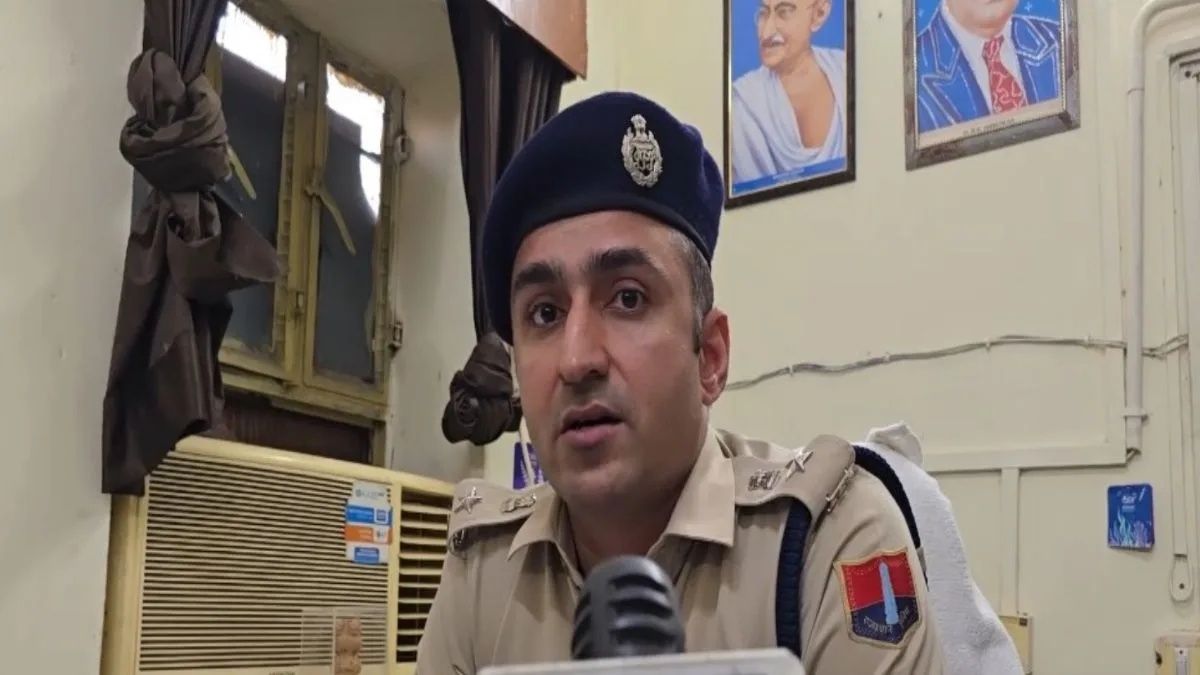
A tragic case of alleged honour killing has unfolded in Rajasthan's Dholpur district, where two sisters are believed to have lost their lives after being thrown into a river by their own family members. The incident, which took place near Sagarpada Bridge on the night of June 11, has triggered a criminal investigation that exposes the deadly intersection of family honour codes and romantic autonomy. Superintendent of Police Vikas Sangwan confirmed on Friday that authorities have begun a comprehensive inquiry into the circumstances surrounding the deaths, with the father of the victims and several other family members identified as suspects in what appears to be a case of honour-related violence.
Bharat Lodha, a resident of Pharakpur village and father of four, has been named as the primary accused in the case. Police received information alleging that Lodha had murdered two of his daughters, prompting the Sadar Police to dispatch teams to the location immediately. Upon arrival at the scene, investigators began the painstaking work of reconstructing events leading up to the alleged drowning. The initial examination of evidence and preliminary witness statements pointed towards the involvement of multiple family members, leading authorities to classify the incident within the framework of honour-based violence—a particularly severe form of familial crime that remains a persistent problem across parts of northern India.
According to the police investigation so far, the motivation behind the alleged crime centres on the victims' romantic relationships, which were reportedly not sanctioned by their family. In many parts of India, particularly in conservative rural areas, such unapproved romantic connections can trigger extreme reactions from family members who view them as violations of family honour and social standing. The Superintendent confirmed that preliminary inquiries had established this romantic angle as a significant factor in the deaths. This detail is particularly significant because it demonstrates how deeply entrenched honour-based violence remains in certain communities, where family members feel entitled to make life-and-death decisions about their relatives' personal relationships.
The alleged crime is believed to have occurred between 9 pm and 10 pm on June 11, though police have indicated that the exact timing remains subject to further verification as the investigation progresses. Initial information suggested that the two sisters were taken to the Sagarpada Bridge location and subsequently pushed into the river below. The deliberate nature of allegedly transporting the victims to a specific location before committing the act suggests premeditation and coordination among multiple family members. This progression—removing the victims from their home, transporting them to an isolated spot, and then carrying out the alleged killing—indicates a planned operation rather than a crime of passion, which has serious implications for the criminal charges that may be brought against the accused.
The investigative process has become complex because authorities must establish numerous factual elements to build a comprehensive case. Police teams are currently working to determine the exact route taken to transport the victims to the bridge location, identify which specific family members were involved in each stage of the alleged crime, and establish what vehicle was used for transportation. These details are crucial not only for establishing guilt but also for determining the degree of complicity and the specific roles played by each suspect. The inquiry extends beyond simply confirming that the deaths occurred; investigators must construct a detailed narrative that demonstrates how the alleged honour killing was planned, executed, and concealed.
The site where the alleged crime took place continues to yield evidence that police teams are systematically collecting and analysing. While authorities have not provided detailed information about what evidence has been recovered, the riverside location presents both opportunities and challenges for investigators. Water can wash away physical evidence, yet the bridge location and surrounding areas may contain trace evidence linking specific individuals to the alleged crime. Investigators are also questioning individuals connected to the case, gathering statements that may help corroborate or contradict the emerging narrative of what transpired that night.
Superintendent Sangwan emphasised that the investigation remains in its preliminary stages, with many aspects still requiring verification and clarification. He noted that full details of the case would be revealed as the inquiry progresses, suggesting that investigators are continuing to uncover new information. The cautious approach taken by authorities reflects both the complexity of honour-killing cases and the need for a thorough investigation before formal charges are filed. The officer acknowledged that while initial findings point in a particular direction, the complete picture has yet to emerge.
Honour killings represent one of the most disturbing manifestations of gender-based violence in South Asia, where family members justify murdering relatives—particularly women—to protect what they view as family reputation. Cases like this one in Dholpur underscore how deeply rooted such practices remain despite legal prohibitions and public awareness campaigns. The involvement of multiple family members in what appears to be a coordinated act of violence illustrates how such crimes often enjoy tacit or active support within extended family networks. In conservative communities, the perpetrators may not view their actions as murder but rather as the enforcement of family discipline and honour restoration.
The legal framework in India provides provisions specifically addressing honour killings. Under the Indian Penal Code, such crimes can be prosecuted as murder under Section 302, with enhanced penalties available. Additionally, cases can be pursued under various other sections depending on the specific circumstances and evidence. However, successful prosecution of honour killings often faces challenges, including reluctant witnesses within the family, limited physical evidence, and cultural attitudes that sympathise with the perpetrators. The Rajasthan police will need to build an irrefutable case based on evidence and credible testimony to secure convictions against those accused in this particular incident.
For the broader South Asian and Southeast Asian context, this case serves as a reminder of the persistent threat posed by honour-based violence despite years of legal reform and advocacy efforts. Malaysia and other regional nations have their own complex relationships with family violence, communal honour, and women's autonomy. The Dholpur case illustrates how traditional patriarchal structures can override fundamental human rights, particularly affecting young women who assert independence in matters of romance and marriage. It also highlights the critical need for sustained public education, community intervention programmes, and robust law enforcement responses to protect vulnerable individuals from family-based violence.
As the investigation proceeds, authorities have indicated that legal action will follow based on their findings. The case against Bharat Lodha and his relatives will likely take months or years to conclude, moving through the Indian judicial system where delays are common. The eventual outcome—whether convictions are secured, what sentences are imposed, and how the case is perceived by the community—will have implications for similar cases in the region and for the broader struggle against honour-based violence. For now, the focus remains on gathering comprehensive evidence and establishing the facts surrounding this tragic incident that has taken two young women's lives.
%22%2F%3E%3C%2Fpattern%3E%3C%2Fdefs%3E%3Crect%20width%3D%22100%25%22%20height%3D%22100%25%22%20fill%3D%22url(%23ph5kreng)%22%2F%3E%3Crect%20width%3D%22100%25%22%20height%3D%22100%25%22%20fill%3D%22url(%23ph5krenp)%22%2F%3E%3Ctext%20x%3D%2250%25%22%20y%3D%2250%25%22%20text-anchor%3D%22middle%22%20dominant-baseline%3D%22central%22%20fill%3D%22rgba(255%2C255%2C255%2C0.95)%22%20font-family%3D%22Georgia%2C%20'Times%20New%20Roman'%2C%20serif%22%20font-weight%3D%22700%22%20font-size%3D%22226%22%20letter-spacing%3D%22-0.02em%22%3EHAWANA%3C%2Ftext%3E%3C%2Fsvg%3E)
%22%2F%3E%3C%2Fpattern%3E%3C%2Fdefs%3E%3Crect%20width%3D%22100%25%22%20height%3D%22100%25%22%20fill%3D%22url(%23ph1q69ng)%22%2F%3E%3Crect%20width%3D%22100%25%22%20height%3D%22100%25%22%20fill%3D%22url(%23ph1q69np)%22%2F%3E%3Ctext%20x%3D%2250%25%22%20y%3D%2250%25%22%20text-anchor%3D%22middle%22%20dominant-baseline%3D%22central%22%20fill%3D%22rgba(255%2C255%2C255%2C0.95)%22%20font-family%3D%22Georgia%2C%20'Times%20New%20Roman'%2C%20serif%22%20font-weight%3D%22700%22%20font-size%3D%22320%22%20letter-spacing%3D%22-0.02em%22%3ETV3%3C%2Ftext%3E%3C%2Fsvg%3E)