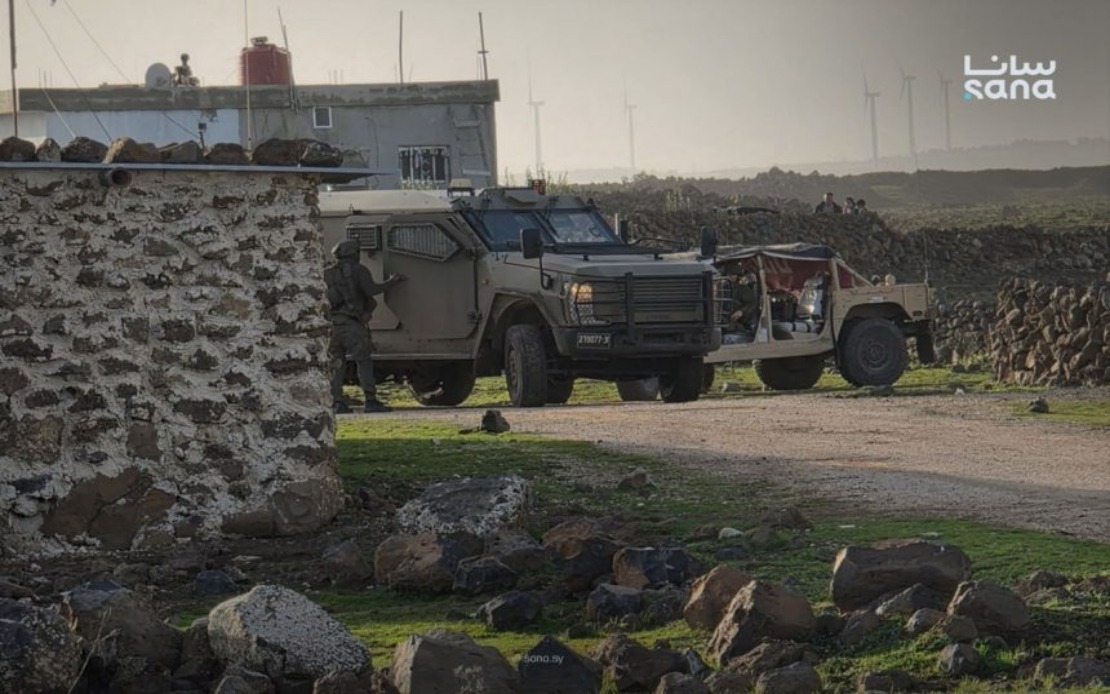
Israeli forces consisting of six military vehicles crossed into Syria's southwestern Quneitra province on Saturday, according to reports from the Syrian Arab News Agency (SANA). The column advanced toward the Kudna Dam in the central Quneitra countryside whilst unmanned aircraft operated overhead, intensifying concerns about Israeli military activity in the war-torn nation.
The incursion represents the latest in a series of Israeli military operations in southern Syria that have accelerated dramatically since the collapse of Bashar al-Assad's government in December 2024. Prior to Assad's fall, a 1974 disengagement agreement had established a demilitarised buffer zone separating Israeli and Syrian forces on the Golan Heights. Israel's declaration terminating this accord signalled a fundamental shift in its regional posture and its willingness to exercise greater military freedom within Syrian territory.
For Malaysian and Southeast Asian observers, the episode underscores the destabilising effects of regime change in strategically important Middle Eastern nations. The Syrian situation mirrors broader Middle Eastern instability that can affect global energy markets, refugee flows, and international security arrangements. As a country deeply engaged in regional dialogue through ASEAN and its various institutional frameworks, Malaysia has traditionally advocated for peaceful resolution of conflicts and respect for national sovereignty—principles clearly tested by the Israeli operations.
The frequency and boldness of Israeli military actions in southern Syria have escalated markedly since Assad's December exit. Repeated incursions, armed raids, systematic searches, detentions of Syrian individuals, and the establishment of military checkpoints have created a situation of near-continuous Israeli military presence in Syrian sovereign territory. These activities suggest a calculated reassessment of Israeli strategic interests now that Assad's government, which maintained a degree of control over the border region, no longer exists.
The targeting of the Kudna Dam holds particular significance, as infrastructure assets of this nature can hold military, strategic, or resource-related value. Israel's apparent focus on infrastructure sites alongside broader military operations suggests a comprehensive approach to establishing effective control over key locations in southwestern Syria. The deployment of drones alongside ground vehicles indicates coordination between air and ground elements, reflecting sophisticated military planning rather than isolated incidents.
The power vacuum left by Assad's collapse has created conditions that Israel perceives as permissive for military operations. Without a functioning Syrian government capable of mounting credible resistance or diplomatic protests backed by international enforcement mechanisms, Israeli forces face minimal constraints on their freedom of movement. This situation illustrates how the sudden collapse of state authority can invite external military intervention, a cautionary tale relevant to regional stability broadly.
From a broader Middle Eastern perspective, these incursions form part of a larger Israeli strategy to reshape its military position following significant developments in 2024. The reshaping of Israeli control over buffer zones and its military operations in Syria must be understood within the context of Israel's security calculations, its relationships with other regional powers, and changing geopolitical alignments in the eastern Mediterranean. The operations also reflect confidence in Israel's military superiority and reduced concern about diplomatic repercussions.
Syria's diminished capacity to resist or challenge these violations highlights the consequences of years of civil conflict and now the collapse of state institutions. The Syrian government that emerged from Assad's fall faces enormous challenges in establishing control over its entire territory, deterring external powers, and preventing further incursions. This weakness invites further intervention and complicates any eventual international efforts to stabilise the country and facilitate its reconstruction.
The international community's response to these incursions remains muted, reflecting complex diplomatic considerations. Arab nations have limited leverage to enforce Syrian sovereignty, whilst Western powers maintain strategic ambiguity regarding developments in Syria. This diplomatic vacuum leaves Syria particularly vulnerable to unilateral military action by better-resourced state actors. For Malaysia and other nations committed to international law and national sovereignty, the situation presents a troubling precedent of repeated border violations with minimal international consequence.
The ongoing military activities in Quneitra province signal that Israeli operations are not ad hoc but rather part of a sustained campaign to consolidate control over strategically important areas of Syrian territory. The involvement of air assets alongside ground forces, combined with the targeting of specific infrastructure, demonstrates planning and intent beyond simple security patrols. These patterns suggest Israel intends to maintain pressure on Syria regardless of changes in international attention or diplomatic developments.
Looking forward, the trajectory of Israeli-Syrian military interactions depends heavily on whether Syrian state capacity recovers and whether international actors choose to impose costs on continued incursions. The current trajectory—escalating Israeli operations meeting Syrian incapacity—appears unsustainable in the long term, but the immediate outlook suggests further incidents are likely. For regional stakeholders and international observers, including Malaysia, these developments underscore the importance of supporting mechanisms for conflict resolution and strengthening international norms around territorial sovereignty and respect for borders.

