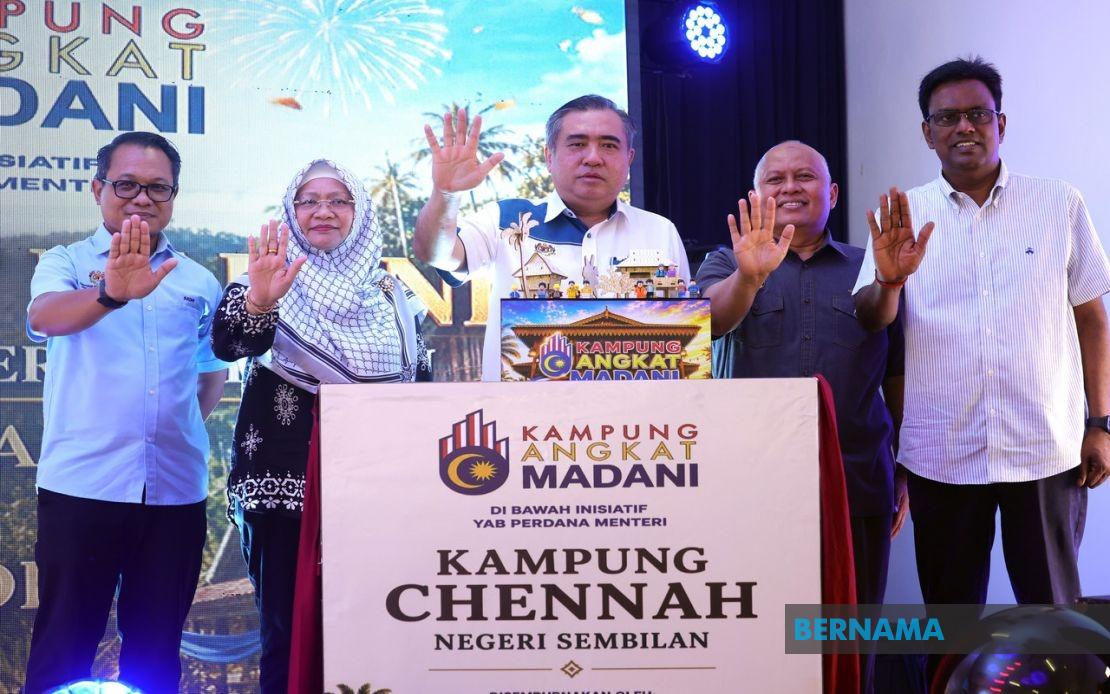
Transport Minister Anthony Loke Siew Fook has defended the implementation of the Kampung Angkat MADANI programme as a long-standing national initiative entirely separate from ongoing state electoral campaigns, speaking in Jelebu on July 12 after launching the scheme in Kampung Chennah. The clarification comes as the government faces scrutiny over the timing of public sector activities during politically sensitive periods, with Loke stressing that the rollout follows established protocols designed to prevent the appearance of electoral advantage.
Loke explained that the programme, which began two years ago, operates through a carefully phased approach intended to systematically address the needs of rural settlements across Malaysia. Rather than a hasty response to electoral considerations, the scheme represents part of a broader strategic effort to identify and prioritise villages—particularly those in remote areas lacking adequate basic infrastructure—for targeted improvements. He noted that implementation in Kampung Chennah was specifically chosen because of its geographic isolation and the community's pressing requirements for enhanced amenities and services.
The Transport Minister provided concrete examples of previous deployments to demonstrate the programme's operational history, referencing his involvement in rolling out Kampung Angtat MADANI initiatives during the previous year, including work in an Orang Asli settlement in Lenggeng. This track record, he argued, underscores that the current phase represents continuation rather than invention, with multiple government agencies having already coordinated efforts across various communities. The July timing, Loke maintained, had been predetermined through normal planning processes rather than shaped by the election calendar.
Loke placed particular emphasis on the government's adherence to regulations governing official activities during campaign periods. He explained that scheduling decisions reflect a policy directive from the Prime Minister establishing new administrative boundaries between government operations and electoral activity. Under this framework, ministerial officials—even those performing routine duties—must abstain from participating in official government programmes and events within constituencies undergoing elections during the formal campaign phase. This self-imposed constraint, he suggested, demonstrates institutional commitment to maintaining clear separation between governance and politics.
The practical implications of this election-period protocol prompted early implementation in Kampung Chennah. Because the Jelebu constituency is involved in the ongoing state election, the window for conducting official government activities narrows significantly once nomination day arrives. By proceeding with the launch before that threshold, the government ensures that the village receives attention within permissible boundaries while remaining compliant with the administrative guidelines. This necessitates deliberate timing that accommodates electoral requirements without compromising service delivery.
Kampung Chennah's selection as the 2024 recipient reflects a needs-based assessment conducted by the Land Public Transport Agency (APAD). The village's remote situation and infrastructure deficiencies made it a logical candidate within the broader Kampung Angkat MADANI framework. Authorities identified five distinct projects requiring immediate attention, with a government allocation of RM500,000 designated for implementation. The initiatives span library facility upgrades, futsal court refurbishment, and drainage system improvements around the mosque—interventions designed to enhance both recreational and community infrastructure simultaneously.
The scope of planned works demonstrates the programme's holistic approach to rural development. Rather than limiting assistance to a single sector, the intervention addresses multiple dimensions of village life, from educational facilities to recreational spaces and essential drainage infrastructure. Completion timelines estimated at two to three months suggest a methodical implementation schedule, with Loke committing ministerial oversight to ensure adherence to deadlines. This supervisory commitment signals government seriousness about translating announced allocations into tangible outcomes within defined periods.
Loke's broader framing of the Transport Ministry's role proved significant, as he articulated an expanded conception of institutional responsibility extending beyond conventional sector functions. The ministry, he suggested, bears social accountability to engage meaningfully with communities and improve quality of life, not merely regulate ports, airports, railways, and public transport systems. This characterisation positions the Kampung Angkat MADANI programme within a narrative of governmental purpose that transcends administrative technicality, positioning infrastructure and service provision as inherently connected to ministerial identity and public legitimacy.
For Malaysian observers tracking government activity during electoral periods, Loke's statements offer insight into institutional mechanisms attempting to maintain boundaries between state capacity and political interest. The Kampung Angkat MADANI scheme, whether genuinely independent of electoral calculation or deliberately structured to appear so, illustrates how modern democratic governance manages the tension between continuous service delivery and electoral fairness. The programme's two-year history provides plausible foundation for claims of non-alignment with current campaigns, though the timing of accelerated implementation during election periods inevitably invites scrutiny about underlying motivations.
The episode reflects broader Southeast Asian trends where development programmes frequently intersect with electoral cycles, creating persistent questions about distinguishing genuine development priorities from politically-motivated distribution. Malaysia's institutional attempt to regulate this boundary through administrative directives represents one governance model, establishing formal rules rather than relying on political restraint alone. Whether such mechanisms successfully insulate public resource allocation from electoral influence remains contested, but their existence indicates recognition that electoral credibility increasingly depends on demonstrable separation between governance and campaigning.

