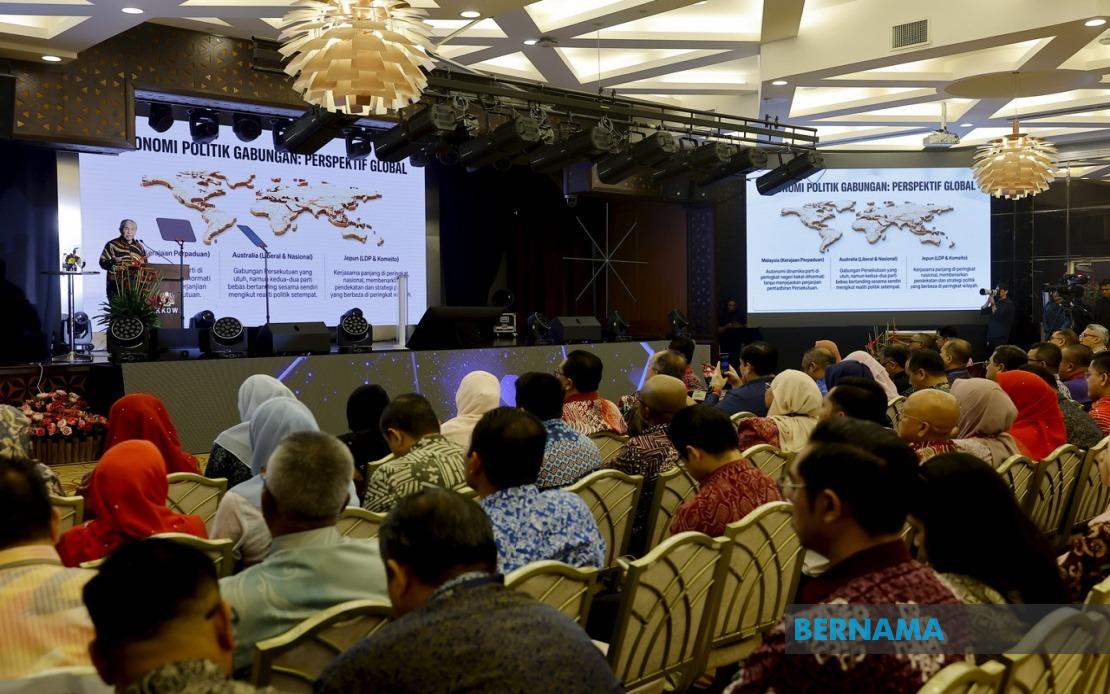
Malaysia's Community Development Department (KEMAS) has unveiled an ambitious plan to transform access to special needs early education across the country. Deputy Prime Minister Datuk Seri Dr Ahmad Zahid Hamidi announced during a ministry gathering in Putrajaya that the agency will establish at least one Tabika Tunas Istimewa — a special needs kindergarten — in every district nationwide by 2027. The expansion represents a significant commitment to inclusive early childhood development, a critical area where rural Malaysia has historically faced service gaps.
The current programme operates from just 19 classes, a figure that underscores both the scale of the opportunity and the challenge ahead. KEMAS plans to add as many as 132 additional classes through a combination of new facility construction and strategic upgrades to existing infrastructure. When fully realised, this expansion will create a network of 151 specialised early learning centres across the country, fundamentally reshaping the landscape of special needs education at the foundational level. For families in remote and economically disadvantaged areas, the initiative offers a pathway to early intervention services that might otherwise remain inaccessible.
Ahmad Zahid, who serves concurrently as Rural and Regional Development Minister, stressed that affordability would remain central to the programme's design. Monthly fees will be capped at RM100, a deliberately modest amount intended to remove financial barriers for lower-income households. This pricing strategy reflects a broader policy orientation toward ensuring that service expansion translates into tangible improvements for ordinary Malaysians rather than widening disparities. For many rural families, access to subsidised special needs kindergarten can prove transformative, allowing parents to participate in the workforce while their children receive professional developmental support.
The Deputy Prime Minister framed the expansion within a larger vision of rural transformation and community-led development. He articulated a philosophy that government performance must ultimately be measured not by bureaucratic metrics alone, but by demonstrable changes in people's lived experiences. This rhetoric, while familiar in Malaysian politics, gains practical weight when paired with concrete resource allocation. The KEMAS expansion requires significant capital investment and sustained operational funding, suggesting this is more than rhetorical positioning.
Ahmad Zahid's emphasis on finding "game changers" that create new opportunities and increase rural incomes indicates that the special needs kindergarten programme sits within a broader rural economic strategy. Early childhood development, particularly for children with special needs, has well-documented long-term benefits for educational outcomes, employment prospects, and social integration. By investing in this foundational layer, the government positions itself to address structural inequalities that often begin in early life. For rural communities, where specialised services have historically been concentrated in urban centres, this represents a meaningful shift in resource distribution.
Beyond the kindergarten initiative, Ahmad Zahid announced additional measures targeting asset utilisation across regional development authorities. Each Regional Development Authority (LKW) has been directed to achieve a Return on Assets of between four and six per cent, reflecting a performance-oriented approach to managing government resources. All LKWs must prepare Asset Activation Plans within 100 days, a compressed timeline that signals organisational urgency. This emphasis on efficiency and measurable returns reflects contemporary governance trends emphasising accountability and productivity across the public sector.
The Rural Economic Council Executive Committee (MEXCLUB) has similarly prioritised cooperative sector development, particularly through the Sustainable Village Programme. A new task force will focus on enhancing governance standards, branding strategies, market access channels, and strategic networking for cooperative enterprises. For Malaysia's rural economy, which remains heavily dependent on primary sector activities and small-scale agricultural production, strengthening cooperative structures offers a pathway to improved bargaining power and market positioning. Cooperatives that function effectively can help smallholder farmers and rural entrepreneurs achieve economies of scale and access premium markets.
The interconnection between these initiatives — special needs education, regional asset management, and cooperative development — suggests a coordinated approach to rural modernisation. Special needs kindergartens create conditions for broader labour force participation by allowing parents of children with disabilities to work more continuously. Improved regional asset returns and cooperative efficiency generate the economic growth necessary to fund expanded social services sustainably. These elements reinforce one another in creating more resilient rural economies.
For Malaysian policymakers and Southeast Asian observers, the KEMAS expansion carries broader significance. Inclusive early education remains underdeveloped across the region, with many countries lacking comprehensive special needs kindergarten networks. Malaysia's commitment to district-level coverage by 2027 positions it as a regional leader in this domain, potentially offering a model for neighbouring countries considering similar expansions. The affordable fee structure is particularly noteworthy in a regional context where private special needs services often price out lower and middle-income families.
Implementation challenges will inevitably arise. Training sufficient numbers of qualified special needs educators, ensuring quality consistency across diverse districts, and maintaining funding commitments through political cycles all represent genuine obstacles. Rural infrastructure limitations may complicate facility construction timelines. However, the explicit timeline and measurable expansion targets suggest serious intent rather than aspirational rhetoric. Success will likely depend on sustained ministerial attention and protected budget allocations beyond current political cycles.
The initiative also reflects evolving understanding of inclusive development within Malaysian policymaking. Rather than treating special needs services as peripheral or charitable additions to mainstream education, KEMAS positions them as essential infrastructure for equitable rural development. This reframing has important implications for how future social policy debates unfold, particularly regarding education and disability services. When special needs provision is linked explicitly to rural economic development and family opportunity, it gains political traction and resource priority that purely social justice arguments sometimes lack.
For families with children requiring special educational support, particularly those in rural and underserved areas, the KEMAS expansion offers tangible hope of improved access and affordability. The maintained RM100 monthly fee, while modest by urban standards, reflects realistic pricing for rural household budgets. Implementation success could significantly influence educational trajectories for an estimated tens of thousands of Malaysian children over the coming years, creating ripple effects across multiple generations as improved early intervention translates into better long-term outcomes.

