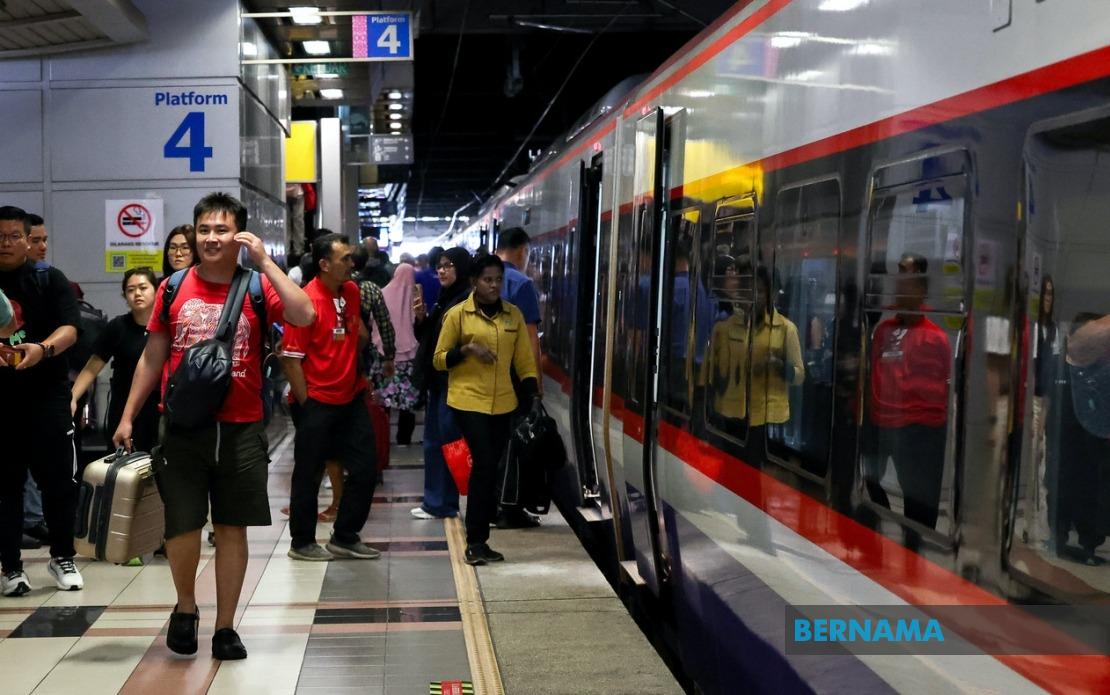
Keretapi Tanah Melayu Berhad (KTMB) is mounting a substantial transport expansion in response to surging demand from voters heading to Johor for the state election taking place this weekend. The national railway operator announced it will deploy an additional 7,464 seats across its Electric Train Service (ETS) network, focusing on routes connecting Kuala Lumpur and Johor Bahru with intermediate stops. This move represents the second wave of capacity enhancement after the initial batch of supplementary tickets released on June 19 sold out completely, underscoring the scale of electoral-related travel expected across the peninsula's main north-south transport corridor.
The enhanced service involves four additional trains on the KL Sentral to JB Sentral to KL Sentral route and four supplementary services on the JB Sentral to Gemas to JB Sentral route. These extra trains will run for three consecutive days from July 10 through July 12, providing 2,488 seats daily across both directions. The timing is calibrated to capture outbound travel as voters journey homeward to cast their ballots, followed by return services for those heading back to their workplaces and residences in the Klang Valley and other northern destinations. The strategic scheduling reflects KTMB's experience managing electoral travel patterns in previous state and general elections, when significant population movements typically concentrate in the 48 hours surrounding polling day.
To incentivise railway travel during the election period, KTMB is offering a 20 percent discount on fares for all newly added ETS services during the three-day operation window. This pricing strategy aims to compete with private road transport options and encourage voters to utilise the rail network, potentially easing congestion on the North-South Expressway and other major highways. The discount applies uniformly across both route segments, making rail travel a more economical option compared to standard ETS pricing, petrol costs for private vehicles, or alternative coach services. Such promotional measures are typical during high-demand electoral periods and reflect transport operators' commitment to facilitating voter participation by reducing practical barriers to movement.
The ticketing process has been staggered to manage system load and ensure orderly sales. KTMB opened sales for the JB Sentral-Gemas-JB Sentral route at 3 pm on July 7, while reservations for the KL-JB-KL route commenced the following morning at 9 am. This phased approach, combined with the earlier sell-out of June's allocation, suggests genuine high demand rather than speculative booking behaviour. Passengers are being directed toward digital and self-service purchasing channels to streamline transactions, including the KITS Style mobile application, KTMB's official website, and automated kiosk machines stationed throughout the network. The emphasis on cashless, advance booking reduces physical crowding at ticket counters and provides KTMB with better demand forecasting data for future electoral events.
Practical guidance for travellers includes recommendations to arrive at stations no fewer than 30 minutes before departure, as platform access closes five minutes before trains depart. This instruction reflects standard ETS operational protocols but becomes particularly important during high-volume travel periods when station facilities experience congestion. Passengers unfamiliar with specific routes or requiring assistance can contact the KTMB Call Centre at 03-9779 1200 or access real-time information through the operator's social media channels. The provision of multiple customer service touchpoints recognises that electoral voters may include older or digitally-less-comfortable populations who benefit from telephone assistance.
For Malaysian readers and Southeast Asian observers, this expansion illustrates how state elections generate significant logistical challenges for transport infrastructure operators. The near-complete sell-out of June's supplementary allocation demonstrates that local demand for inter-state travel during electoral periods continues to outpace baseline capacity assumptions. This pattern has implications for infrastructure planning, suggesting that even mature transport networks may struggle to accommodate concentration of travel demand within narrow timeframes. The willingness of a state-linked transport operator to deploy additional rolling stock on short notice, at a fiscal cost, reflects broader national priorities around facilitating electoral participation and managing public expectations during politically significant periods.
The JB Sentral-KL Sentral corridor represents the busiest ETS route in Malaysia by passenger volume, and the Johor election provides a natural stress test for the network's ability to absorb sudden demand spikes. Beyond the immediate electoral context, patterns observed during Johor voting may inform capacity planning for the anticipated general election in the coming years, when voter movement across multiple states will create compounded transport demands. Regional transport authorities across Southeast Asia often benchmark their electoral-period planning against Malaysian experiences, given the region's reliance on rail and road networks for inter-city movement.
The discount pricing strategy also merits examination in the context of broader transport subsidy policies. By offering temporary fare reductions keyed to specific events rather than implementing permanent price cuts, KTMB maintains revenue assumptions while demonstrating responsiveness to voter needs. This approach has precedent in Malaysian transport policy but becomes contentious when applied selectively—some observers question whether electoral-period subsidies represent justified investment in democratic participation or inefficient resource allocation that could benefit regular commuters through permanent fare reductions. The political economy of transport pricing, particularly when state entities are involved, remains an understudied aspect of Malaysian electoral management.
The ability of KTMB to source and deploy an additional 2,488 daily seats within weeks reflects the railway operator's existing asset base and operational flexibility. These trains were presumably either held in reserve or redeployed from less-demand-intensive services, indicating that the baseline ETS schedule possesses some slack capacity that can be mobilised during crises or predictable surge-demand events. Such flexibility differs markedly from networks that run near-constant maximum capacity, where electoral accommodation would require reducing service elsewhere—a politically difficult proposition. Understanding Malaysia's transport utilisation patterns helps contextualise why the national railway system can accommodate these temporary expansions without system-wide service degradation.
Election-related transport initiatives inevitably become matters of political scrutiny, with opposition voices sometimes questioning whether such enhancements favour certain constituencies or demographic groups. KTMB's uniform pricing and broad route coverage across the KL-Johor corridor mitigates these concerns by applying consistent policies across multiple communities. Nevertheless, voters in regions without comparable ETS connectivity, or those relying on longer-distance coach or air services, effectively lack access to equivalent subsidised options, perpetuating regional disparities in electoral cost-of-participation. This structural reality, evident across Southeast Asian democracies, remains underappreciated in public discourse about electoral accessibility and franchise equity.
The Johor election response also reflects KTMB's learning from the 2023 general election, when transport bottlenecks during the voting weekend strained both road and rail networks. That experience likely prompted the operator to build more flexible capacity allocation into its operational planning, resulting in the rapid deployment announced for July 2023. Such organisational learning, when translated into improved public services, represents one dividend of regular electoral cycles—operational systems become progressively more responsive to predictable demand patterns through accumulated experience. Whether these improvements extend beyond electorally-driven surges to benefit regular commuters remains a persistent question in Malaysian transport policy debates.

