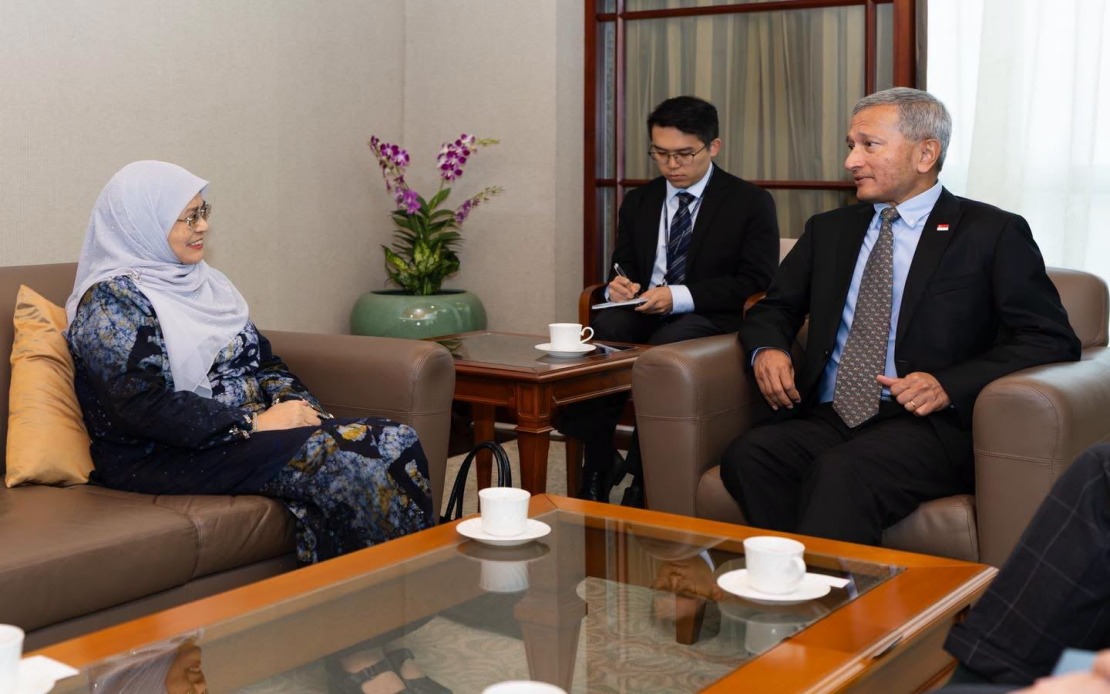
The diplomatic relationship between Malaysia and Singapore received fresh momentum this week as the two countries signalled their determination to build on decades of close ties. During an introductory meeting between Singapore's Foreign Minister Dr Vivian Balakrishnan and Malaysia's newly appointed High Commissioner Datin Paduka Anizan Siti Hajjar Adnin, both governments underscored the strategic importance of maintaining positive trajectory in their bilateral engagement. The courtesy call, conducted on Wednesday at Singapore's foreign ministry, reflected the protocol and substance both nations place on their neighbouring relationship, which remains among the most significant diplomatic partnerships in Southeast Asia.
The encounter served as an opportunity for the two governments to take stock of their existing cooperation framework and identify areas where additional progress might be achieved. Officials from both delegations acknowledged that the foundation for deeper engagement remains solid, grounded in shared historical experiences and the intricate web of family, commercial and employment connections that bind their populations together. For many Malaysians and Singaporeans, the border that separates them is less of a barrier than a bridge, with thousands crossing daily for work, study and personal reasons. The meeting emphasised the mutual recognition that policies and initiatives must account for this lived reality of cross-border interdependence.
In his public remarks following the engagement, Balakrishnan highlighted the distinctive character of the Malaysia-Singapore partnership, which extends well beyond conventional diplomatic courtesy. He pointed to the profound historical bonds forged through shared struggles for independence and development, alongside the dense network of economic, educational and cultural interactions that sustain the relationship at grassroots level. The Foreign Minister's endorsement of Anizan's appointment carried particular significance, suggesting that Singapore's leadership views her appointment as a genuine opportunity to advance the bilateral agenda rather than a routine rotation of diplomatic personnel.
Anizan brings substantial diplomatic credentials to her role, having established herself through a lengthy career in Malaysia's foreign service. Her appointment to Singapore, the most strategically critical posting for Malaysian diplomacy in Southeast Asia, signals Kuala Lumpur's intention to invest senior talent in the relationship. The Malaysian High Commission's statement indicating her official commencement on 2 July 2026 confirms that she has now had several weeks to establish herself in the Singapore diplomatic community and develop working relationships with her counterparts in the city-state's government and civil service.
Both governments identified a particular focus on issues affecting ordinary citizens whose lives span the border. Cross-border workers, families maintaining connections across the Johor Strait, and entrepreneurs operating in both markets represent constituencies whose concerns demand sustained policy attention. The emphasis on improving conditions for these populations suggests that Malaysia and Singapore are committed to ensuring their bilateral cooperation translates into tangible benefits for citizens rather than remaining confined to ministerial-level engagement. This citizen-centred approach reflects evolving expectations about how neighbouring nations should conduct their affairs, moving beyond abstract notions of partnership toward concrete improvements in daily life.
The timing of Anizan's courtesy call carries broader significance within the context of regional diplomacy. As ASEAN member states, Malaysia and Singapore maintain individual bilateral relationships while also functioning within the broader institutional framework of the regional bloc. Their bilateral relationship serves as a model of sustained cooperation despite periodic tensions and differing strategic perspectives. The recommitment to strengthening ties at this moment suggests both governments view the current regional environment as creating opportunities for enhanced collaboration rather than competition.
For Malaysian readers, the significance of this diplomatic exchange lies partly in its implications for Malaysia's standing within Southeast Asia. A robust and functional relationship with Singapore enhances Malaysia's capacity to exercise influence regionally and demonstrates that Kuala Lumpur possesses the diplomatic sophistication and stability necessary for sustained partnership with a technologically advanced and economically dynamic neighbour. Singapore's own investment in this relationship, evidenced by the Foreign Minister's time and public endorsement, reflects recognition that both nations benefit from smooth, cooperative engagement.
The emphasis on exploring new avenues for cooperation also hints at potential areas for expansion beyond existing frameworks. While Malaysia and Singapore maintain extensive agreements covering trade, transportation, security and other domains, there may be opportunities for innovation in areas such as digital economy collaboration, joint environmental initiatives, or enhanced cultural exchange programmes. The diplomatic language about "continuing to explore ways" to improve citizen welfare suggests that officials on both sides are actively brainstorming potential new initiatives rather than simply maintaining status quo arrangements.
From a Malaysian perspective, Anizan's appointment and her early engagement with Singapore's leadership represents an investment in relationship management at a critical juncture. As both nations navigate complex regional dynamics, technological change, and evolving economic structures, the quality of bilateral diplomacy becomes increasingly important. The High Commissioner's role, amplified by her seniority and experience, positions Malaysia to communicate its perspectives effectively to Singapore's decision-makers while also ensuring that Singapore's concerns are properly understood and addressed in Kuala Lumpur. This two-way flow of understanding helps prevent misunderstandings that might otherwise escalate into disputes.

