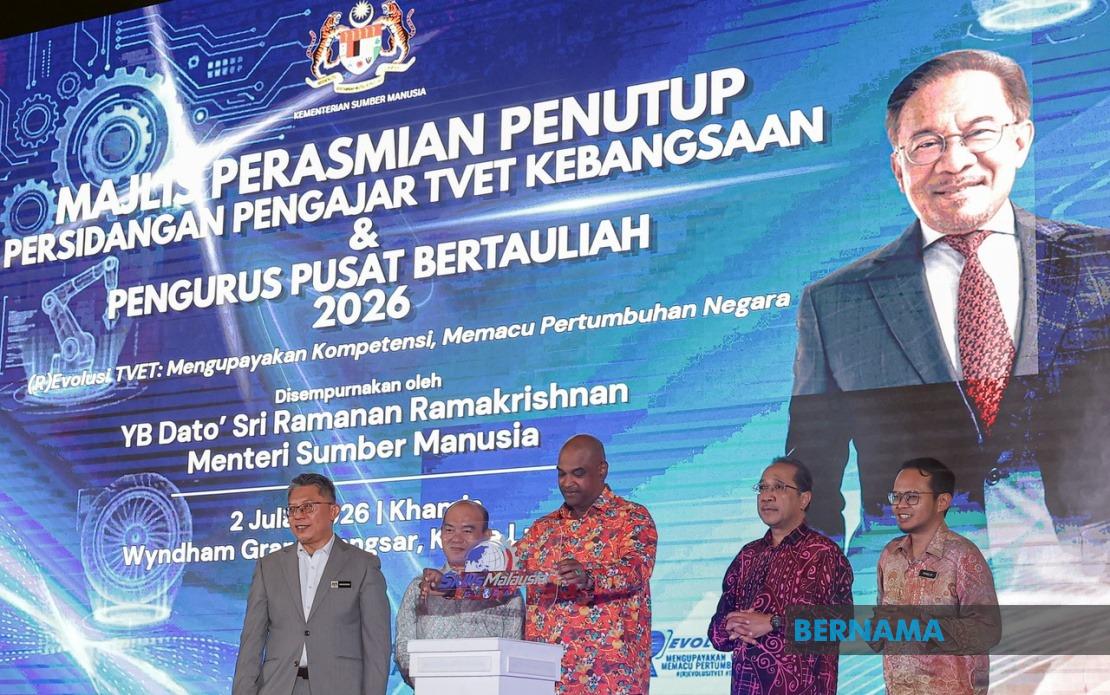
The Ministry of Human Resources has launched a significant proposal that could reshape financial support for vocational training in Malaysia. Datuk Seri R. Ramanan, the ministry's chief, announced plans to petition the Cabinet to convert the RM100 million Skills Development Fund Corporation (PTPK) financing structure from loans into outright grants, a move that reflects growing recognition of the economic pressures faced by vocational students across the country.
The rationale underlying this proposal reflects a pragmatic understanding of the challenges confronting individuals pursuing Technical and Vocational Education and Training (TVET) programmes. Ramanan explained that many PTPK borrowers abandon their employment to pursue full-time vocational qualifications, immediately placing them in precarious financial positions. When students simultaneously lose their regular income and face the obligation to repay educational loans, the cumulative pressure becomes counterproductive to their learning outcomes and personal wellbeing. By converting loans into grants, the government aims to remove this double financial burden and create a more supportive ecosystem for skills development.
This initiative arrives at a critical juncture for Malaysia's economic transformation agenda. The government has positioned TVET as a cornerstone of the Malaysia MADANI human capital development strategy, recognising that bridging the skills gap is essential for the country's competitiveness in the regional and global marketplace. TVET programmes directly address the persistent problem of skills mismatch, where employer demand for certain competencies remains unmet due to insufficient training pathways. By removing financial barriers to TVET participation, the government hopes to expand access and attract a broader demographic into vocational careers.
The economic implications of this policy direction extend beyond individual student relief. Malaysia's aspiration to achieve a Gross National Income per capita of approximately RM77,200 annually depends heavily on developing a highly skilled workforce capable of filling positions in advanced manufacturing, digital industries, and innovation sectors. TVET programmes, traditionally perceived as second-tier educational options, are increasingly recognised as essential pipeline institutions for preparing workers for high-value employment in these emerging sectors. By subsidising participation through grants rather than loans, the government removes a critical obstacle to workforce development.
Parallel to the grants conversion proposal, the Ministry of Human Resources has unveiled an ambitious internationalisation roadmap for vocational skills development spanning 2026 to 2030. This five-year plan represents a comprehensive strategy to elevate Malaysian TVET on the international stage through six strategic pillars targeting global recognition, institutional excellence, and cross-border collaboration. The plan emphasises upgrading the Centre for Instructor and Advanced Skill Training (CIAST) to world-class standards, a crucial step given that instructor quality directly determines training programme quality and student outcomes.
A particularly significant component of this internationalisation strategy involves aligning Malaysian vocational credentials with international standards. The proposal to map National Occupational Skills Standards (NOSS) against global benchmarks addresses a long-standing challenge for Malaysian vocational graduates seeking employment opportunities abroad. Securing Global Excellence status for the Malaysian Skills Certificate (SKM) through recognition by international professional bodies would substantially enhance graduate mobility and career prospects in Southeast Asia and beyond.
The governance framework embedded within this internationalisation plan reflects contemporary global expectations regarding organisational accountability and social responsibility. Integration of Sustainable Development Goals (SDG) principles, Environmental and Social Governance (ESG) standards, and Diversity, Equity and Inclusion (DEI) commitments signals that Malaysia intends positioning its TVET sector as aligned with responsible business and development practices. This matters considerably for attracting high-value foreign investment, as multinational corporations increasingly screen supply chains and partner organisations for adherence to these principles.
From a Southeast Asian perspective, Malaysia's renewed emphasis on TVET financing and internationalisation carries regional significance. Many neighbouring countries face similar skills shortages and struggle with vocational training accessibility. Malaysia's policy innovations could establish benchmarks or provide operational models for regional peers grappling with equivalent challenges. The commitment to making Malaysian vocational qualifications internationally recognisable could also facilitate labour mobility within ASEAN, a priority articulated in various ASEAN economic integration frameworks.
The conversion of PTPK loans into grants also represents a shift in how governments conceptualise vocational education investment. Rather than treating TVET financing as a recoupable cost that trainees must repay, the policy reframes vocational development as a public good meriting direct government subsidy similar to universal primary and secondary education. This philosophical reorientation acknowledges that skills shortages constitute a systemic economic challenge requiring collective rather than individual financial responsibility.
Implementation of this policy will require careful Cabinet deliberation regarding fiscal sustainability and prioritisation of beneficiaries. The government must determine whether the RM100 million conversion applies retroactively to existing PTPK loan holders or exclusively to future borrowers. Questions regarding programme eligibility, course selection, and performance requirements will shape the initiative's actual impact. These administrative details ultimately determine whether the policy achieves its objective of expanding TVET participation among economically disadvantaged populations or primarily benefits those already positioned to pursue vocational training.
The broader policy environment suggests Malaysian policymakers recognise that economic competitiveness increasingly depends on accessible, high-quality vocational pathways. As automation and technological change reshape labour markets, workers require opportunities to acquire new competencies throughout their careers. Removing financial barriers to initial TVET entry through grants conversion represents a foundational step, but complementary policies regarding continuous professional development and skills updating will prove equally important for sustainable economic growth and inclusive prosperity.

