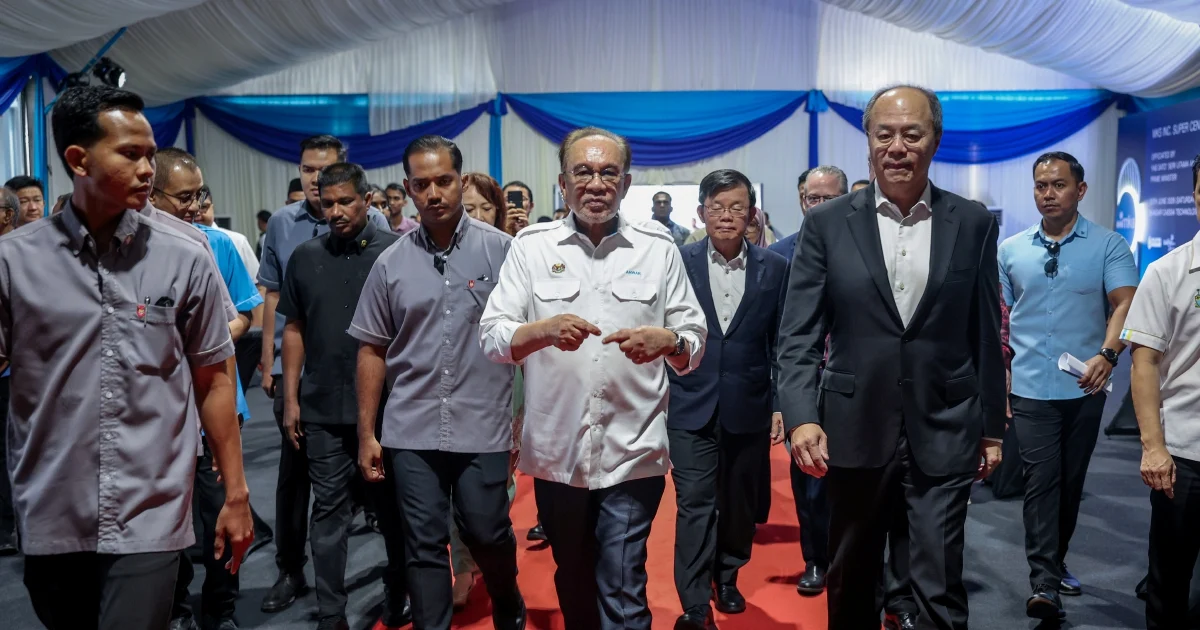
Malaysia's strategic positioning as an economically open yet politically independent nation is becoming a significant draw for international investment, Prime Minister Datuk Seri Anwar Ibrahim said during remarks in Batu Kawan. The country's refusal to align exclusively with any single power bloc while maintaining productive relationships across the geopolitical spectrum is cultivating what he characterised as strengthened confidence among both domestic and foreign investors. This diplomatic stance, according to the Prime Minister, translates directly into measurable economic gains and competitive advantages in an increasingly fragmented global landscape.
The principle of engagement without exclusivity has deep roots in Malaysian foreign policy, dating back to the Non-Aligned Movement of earlier decades. However, Anwar's framing reflects contemporary economic realities where multinational corporations increasingly evaluate political stability and diplomatic balance as critical factors in their location decisions. Companies seeking to maintain supply chains and market access across multiple regions find Malaysia's unaligned posture particularly attractive, as it reduces the risk of sudden policy reversals driven by geopolitical pressure or sanctions regimes that might isolate the country from key trading partners.
Investor sentiment in emerging markets like Malaysia has grown noticeably more sensitive to political predictability and international standing. Foreign direct investment flows respond not only to corporate tax rates and labour availability but also to assessments of whether a nation might face international isolation or economic coercion. By explicitly articulating its commitment to neutrality, Malaysia positions itself as a rational economic choice rather than a territory caught in contested spheres of influence. This messaging is particularly relevant for technology companies, financial services firms, and manufacturers evaluating regional headquarters locations in Southeast Asia.
The neutrality doctrine also extends Malaysia's appeal within the broader context of Asian economic integration. As countries across the region navigate deepening trade relationships with the United States, China, Japan, and India simultaneously, Malaysian policymakers have signalled that the nation will not force foreign investors into false binary choices. A semiconductor manufacturer, for instance, can maintain operations and market access in Malaysia while serving customers across competing economic blocs. This flexibility becomes increasingly valuable as global supply chains fragment and companies seek geographic hedging strategies.
Anwar's emphasis on economic growth linkages reflects the measurable impacts of confidence in a nation's political and diplomatic environment. When investors perceive Malaysia as stable, independent-minded, and unlikely to become a proxy battleground for great power competition, they commit capital at longer time horizons and with larger commitments. This contrasts sharply with volatile markets where geopolitical uncertainty creates premium risk assessments and shorter payback period requirements. The resulting investment patterns shape employment, infrastructure development, and technology transfer across the economy.
The timing of Anwar's remarks carries weight in the current regional context, where tensions between Washington and Beijing have intensified pressure on Southeast Asian nations to declare loyalty. Several regional governments have faced diplomatic pressure to choose sides on technology standards, military alliances, and trade arrangements. By publicly reiterating Malaysia's non-aligned commitment, Anwar sends reassurance to nervous corporate boards that the nation will not suddenly pivot toward policies that could disrupt business operations or market access. This steadfast communication is itself a form of economic policy that reduces uncertainty premiums.
Malaysia's investor base has historically reflected this openness to multiple partners. Japanese manufacturers operate alongside Chinese companies, American technology firms coexist with European financial institutions, and Middle Eastern sovereign wealth funds invest in Malaysian properties and enterprises. This diversification of capital sources insulates the economy from dependence on any single investor nation and provides stability when bilateral relationships experience turbulence elsewhere in the region. The distributed nature of Malaysia's investment inflows creates natural buffers against concentrated economic pressure.
However, navigating genuine neutrality amid intensifying great power competition presents ongoing challenges. Malaysia must balance public statements of non-alignment with the reality that some partners expect preferential treatment in return for investment. Infrastructure projects funded by Chinese companies may come with expectations regarding voting patterns in multilateral forums. Technology partnerships with American firms often include implicit understandings about participation in certain standards-setting bodies. Anwar's articulation of neutrality requires constant calibration and diplomatic skill to maintain credibility across these competing relationships without appearing duplicitous.
The economic growth angle that Anwar emphasised links investor confidence directly to employment, wage increases, and technological capability development. When companies commit substantially to Malaysian operations, they establish research centres, training programmes, and supply chain relationships that create ripple effects throughout the economy. By attributing these positive outcomes to the nation's diplomatic posture, Anwar frames foreign policy as a core economic development tool rather than a purely political consideration. This framing may resonate with business constituencies that increasingly evaluate governance through an economic lens.
For regional competitors like Singapore, Thailand, and Vietnam, Malaysia's messaging about attracting investors through political neutrality creates indirect pressure to articulate their own versions of balance and openness. As these nations also navigate the same geopolitical pressures and seek similar multinational investment, positioning statements about non-alignment become part of regional competitive dynamics. Malaysia's explicit emphasis on this approach may influence how neighbouring economies communicate their own diplomatic flexibility to investment promotion boards and corporate decision-makers.
Looking ahead, sustaining investor confidence through neutrality requires consistency across administrations and resilience when individual relationships strain. As regional tensions potentially escalate and pressure mounts for explicit alignment choices, Malaysian policymakers will need to demonstrate that the nation can genuinely maintain independent decision-making while remaining economically integrated with multiple powers. This balancing act represents perhaps the most significant challenge to validating Anwar's assertion that neutrality and engagement drive lasting economic benefits.