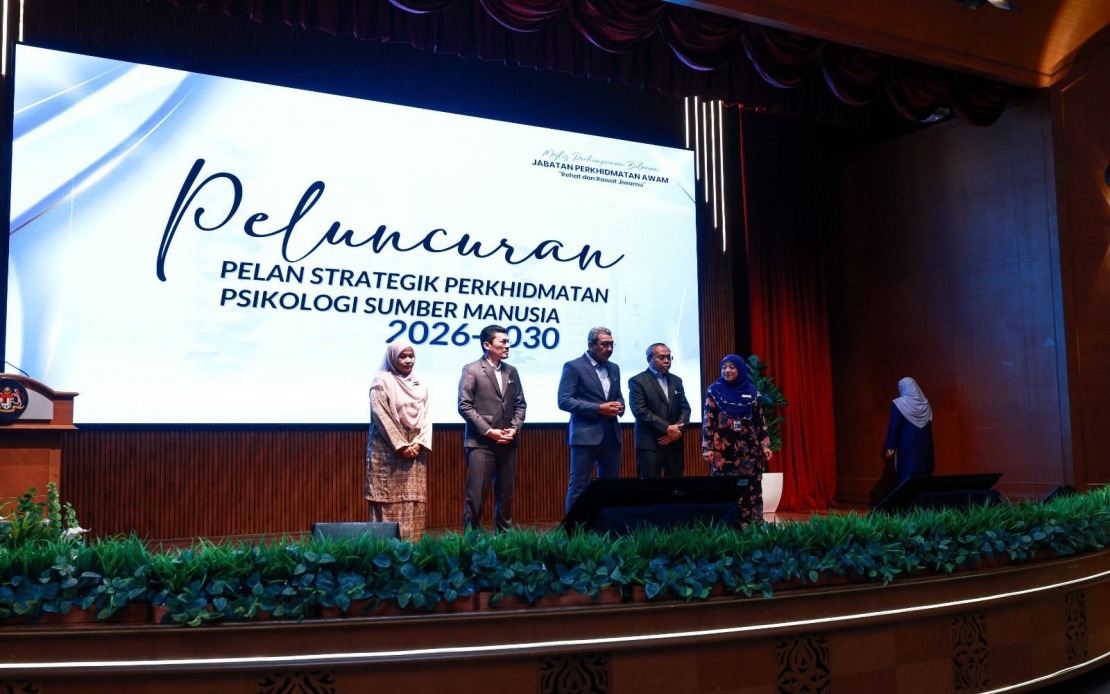
Malaysia's Public Service Department has rolled out an ambitious mental health initiative designed to reshape how the country's 1.6 million civil servants approach psychological well-being over the next five years. Launched at the PSD Monthly Assembly in Putrajaya on June 19, the Human Resources Psychology Services Strategic Plan 2026-2030 represents a significant institutional commitment to treating mental health as a core priority within government operations. The framework encompasses 12 distinct strategies, 22 targeted programmes, and 48 measurable performance indicators, all aimed at creating a more supportive and psychologically healthy civil service workforce.
Tan Sri Wan Ahmad Dahlan Abdul Aziz, the Director-General of Public Service, presided over the launch ceremony which carried the thematic message "R&R (Rest and Treat) Your Soul." This dual emphasis captures the plan's core philosophy: civil servants must both rest when fatigued and actively treat psychological concerns before conditions deteriorate. Wan Ahmad Dahlan underscored a particularly critical aspect of the initiative—the need for Malaysian civil servants to shed deeply ingrained cultural stigma surrounding mental health support. His messaging centred on encouraging proactive intervention, where employees would demonstrate courage in acknowledging psychological challenges and seeking professional assistance without fear of social or professional repercussions.
The concept of "Rawat," which translates roughly as "care" or "treatment" in Malay, forms the philosophical backbone of this initiative. Rather than positioning mental health as a reactive crisis response, PSD has framed it as a continuous, preventative process requiring deliberate action. Civil servants are being encouraged to voice their struggles openly, engage with psychological services voluntarily, and participate in wellness interventions before reaching critical stress points. This represents a notable departure from traditional approaches that often treated mental health matters as taboo subjects within hierarchical government structures. The plan seeks to normalise conversations around psychological distress and professional help-seeking behaviour, recognising that organisational performance fundamentally depends on the mental and emotional stability of individual workers.
The timing of this initiative carries particular significance for Malaysia's civil service ecosystem. Government agencies across Southeast Asia have increasingly grappled with burnout, anxiety disorders, and depression among staff members, particularly following pandemic-related disruptions to work patterns and public service demands. Malaysia's initiative acknowledges that the well-being of any organisation cannot be separated from the well-being of its people. By establishing measurable KPIs and structured programmes, PSD is signalling that mental health is no longer treated as a peripheral concern but as integral to institutional effectiveness and public service delivery quality.
This five-year framework integrates with PSD's broader governance transformation agenda, which includes the H.E.M.A.T work culture model. That initiative encompasses five foundational pillars: governance structures, public empathy, progressive mindset development, innovation appreciation, and transparent administration. Mental health support aligns naturally with the empathy and progressive mindset components, acknowledging that public servants cannot meaningfully serve citizens while struggling with unaddressed psychological challenges. The convergence of these reform streams suggests PSD recognises the interconnectedness of workplace culture, employee welfare, and service quality.
The launch of such a comprehensive mental health strategy reflects growing regional awareness of psychological service necessity. Across Malaysia and neighbouring Southeast Asian nations, government sectors have increasingly recognised that traditional approaches to staff management ignore mounting evidence linking mental health to productivity, retention, and public service quality. By establishing 22 distinct programmes within this framework, PSD creates multiple entry points for civil servants to access support, whether through peer support networks, professional counselling services, stress management training, or workplace accommodation adjustments.
The 48 performance indicators attached to this plan suggest PSD intends to measure success rigorously rather than relying on anecdotal improvements. These metrics likely encompass measures of programme participation rates, mental health status improvements, help-seeking behaviour changes, and perhaps most tellingly, shifts in workplace stigma levels. The specificity of these indicators reflects a maturation in how government organisations approach soft infrastructure development, moving beyond aspirational statements toward data-driven accountability.
For Malaysian civil servants, the initiative presents both opportunity and transition. Those experiencing psychological distress now have official institutional encouragement to seek help, backed by structured support systems. However, success depends largely on whether the cultural messaging around mental health—that seeking professional support represents strength rather than weakness—takes root across the diverse layers of Malaysia's bureaucracy. Implementation challenges likely include ensuring equitable access across rural and urban areas, training sufficient psychological service providers, and overcoming residual stigma that decades of cultural conditioning have embedded.
The plan's emphasis on proactive intervention rather than crisis management suggests PSD understands that preventative approaches ultimately prove more cost-effective and humane. Early identification and support for civil servants experiencing stress, anxiety, or depression prevents deterioration that might otherwise lead to sick leave, performance decline, or permanent disability. This economic rationale complements the ethical argument for prioritising mental health, creating a compelling business case that extends beyond goodwill considerations.
Regional observers may view this initiative as a template for broader public sector mental health transformation across Southeast Asia. Malaysia's structured approach, with specific timelines, measurable outcomes, and integration with existing governance reforms, demonstrates how developing nations can institutionalise mental health support without requiring massive external funding or expertise. The five-year horizon allows for iterative refinement based on initial results.
The success of the Human Resources Psychology Services Strategic Plan 2026-2030 will ultimately depend on sustained implementation commitment from PSD leadership, adequate resource allocation, and whether the cultural messaging about mental health genuinely resonates across Malaysia's diverse civil service population. If successful, it could fundamentally transform how psychological well-being is understood and prioritised within government operations, establishing a model that values employees as whole human beings requiring care alongside professional development.