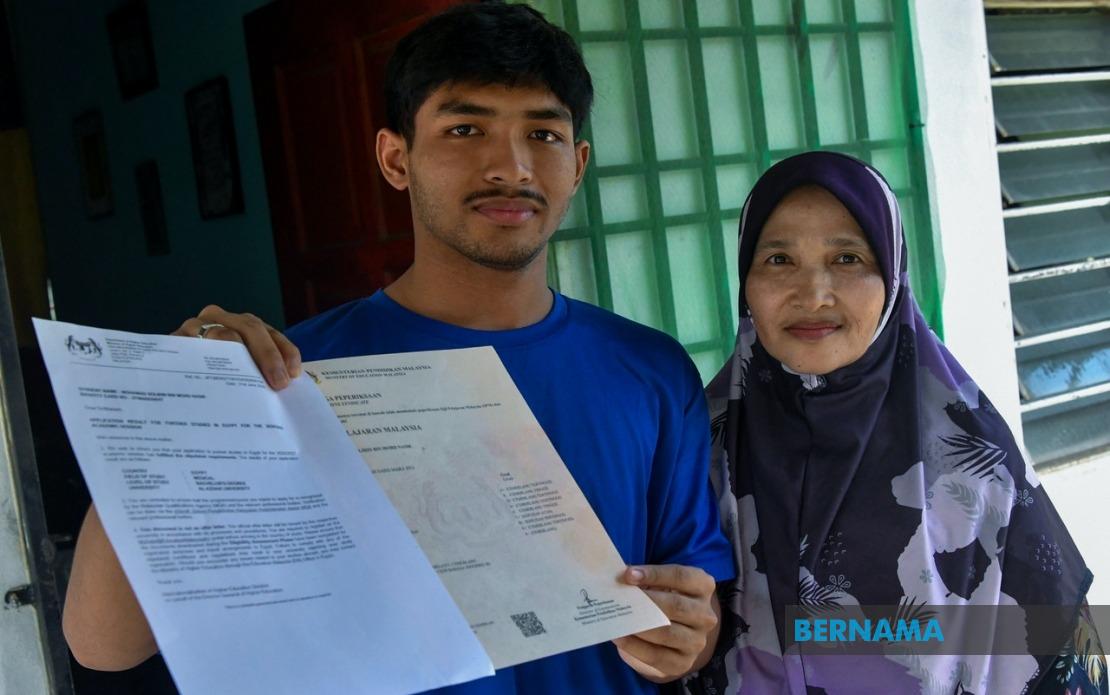
A teenager on the brink of abandoning his acceptance to study medicine at Egypt's Al-Azhar University has received a lifeline from Malaysia's Majlis Amanah Rakyat (MARA), which has committed to exploring funding options that could unlock his medical career ambitions. Mohamad Solihin Mohd Nasir, 19, from Kelantan, faced an impossible choice when the RM100,000 price tag for five years of tuition and accommodation proved beyond his family's means, forcing him to seriously contemplate rejection despite the once-in-a-lifetime opportunity.
The story gained traction when MARA chairman Datuk Dr Asyraf Wajdi Dusuki made a personal video call to Mohamad Solihin's home in Kampung Kubang Keranji to offer direct support. During the interaction, the MARA leadership outlined two distinct pathways: full sponsorship for medical training at Universiti Sains Malaysia Health Campus (USMKK), or alternatively, comprehensive backing to pursue his studies in Egypt, including financial assistance for an intensive Arabic language programme to meet Al-Azhar's entry prerequisites. This intervention exemplifies how discretionary support from government-linked bodies can pivot the trajectories of promising but economically vulnerable students.
Mohamad Solihin's circumstances exemplify the profile MARA explicitly targets in its scholarship allocation strategy. His father, Mohd Nasir Abdul Rahman, succumbed to a heart attack in 2014 when the boy was merely in primary school, fundamentally reshaping the family's financial landscape and denying him paternal guidance during critical developmental years. His mother, Faridah Mohamad, now aged 60 and battling thyroid complications, depends entirely on financial contributions from her other children to manage basic household expenses. As the youngest of five siblings, Mohamad Solihin's prospects would ordinarily rest on already-stretched family resources, making external assistance not merely beneficial but genuinely transformative.
The young medical aspirant demonstrated exceptional academic credentials that warrant institutional backing. Completing his matriculation studies at Kelantan Matriculation College with an impressive cumulative grade point average of 3.96, Mohamad Solihin earned his Al-Azhar acceptance on merit during June, positioning him among Malaysia's most academically accomplished cohort. Yet this stellar academic performance proved insufficient to overcome the structural economic barriers preventing access to premium overseas education, a paradox that underscores broader equity issues within Malaysia's educational ecosystem where talent and poverty frequently collide.
Mohamad Solihin's motivation to pursue medicine, specifically aspiring toward cardiothoracic surgery, carries profound personal resonance. His father's premature death from cardiac disease planted the seeds for a lifelong commitment to tackling the very conditions that claimed his parent, transforming personal tragedy into professional purpose. This connection between lived experience and career direction demonstrates the kind of intrinsic motivation that typically predicts genuine success in demanding professional fields, making the investment in his education particularly compelling from a human development perspective.
The community mobilisation surrounding this case reveals how institutional limitations necessitate grassroots support mechanisms. Teachers at Mohamad Solihin's former secondary school, MARA Junior Science College (MRSM) Jeli, independently initiated fundraising campaigns recognising the student's exceptional promise and precarious circumstances. Simultaneously, applications for financial assistance were submitted to multiple agencies—the Kelantan Islamic Religious and Malay Customs Council, Kelantan Islamic Foundation, and Kelantan Darulnaim Foundation—illustrating the fragmented landscape of educational financing where talented students must navigate multiple institutional channels simultaneously to assemble adequate resources.
Mohamad Solihin's mother articulated the family's desperation with candour, expressing simultaneous pride in her son's international recognition and anguish at the impossibility of financing such ambitions independently. Her statement reflects the lived reality for countless Malaysian families where tertiary education, particularly at prestigious international institutions, remains financially inaccessible regardless of children's academic merit or familial aspiration. The psychological burden of possessing exceptional opportunity yet lacking economic access creates particular anguish, and Faridah's willingness to publicly acknowledge this predicament contributed significantly to galvanising institutional intervention.
DATA Asyraf Wajdi's commitment to sponsoring Mohamad Solihin operationalises MARA's stated policy prioritising high-achieving students from economically disadvantaged backgrounds, with particular emphasis on those who have experienced parental loss. This targeting framework acknowledges that poverty intersects with family disruption to create compounded barriers to educational access, and that interventions addressing such combinations represent efficient allocation of development resources. By concentrating support on academically exceptional students whose only impediment is financial capacity, MARA potentially maximises the return on scholarship investment while directly addressing educational equity concerns.
The timeline for Mohamad Solihin's potential departure—scheduled between August 21 and 29 if funding materialises—creates urgency for rapid institutional decision-making and fund disbursement. This compressed window reflects the administrative realities of international university admissions, where enrolment deadlines tolerate minimal flexibility and delays cascade into forfeited places. The MARA intervention must therefore translate commitment into tangible financial transfer within weeks, demonstrating institutional capacity to respond nimbly to time-sensitive educational opportunities rather than following protracted bureaucratic protocols that frequently extinguish time-sensitive possibilities.
For Malaysian policymakers and educational administrators, this case illuminates persistent structural challenges within the nation's educational financing architecture. Despite Malaysia's significant investment in public education and various scholarship schemes, talented students from economically marginalised backgrounds continue encountering barriers to accessing premium educational opportunities, whether domestically or internationally. The reliance on ad hoc institutional intervention and grassroots fundraising to solve what constitutes a systemic challenge suggests that more comprehensive, proactive mechanisms for identifying and supporting gifted students from underprivileged backgrounds would improve overall human capital development and reduce the wastage of latent talent constrained by poverty.
The two options presented by MARA—Egypt-based study or domestic placement at USMKK—reflect pragmatic recognition that multiple pathways to medical qualification exist, yet fundamentally divergent experiences and career trajectories flow from these choices. Al-Azhar University offers internationally recognised credentials and exposure to diverse medical practices across the Arab region, enriching clinical perspective and international professional networks. Conversely, USMKK provides local anchoring, Malaysian healthcare system integration, and familiarity with regional disease epidemiology, potentially positioning Mohamad Solihin more effectively for eventual practice within his home nation's healthcare infrastructure.
Mohamad Solihin's expressed preference for pursuing studies in Egypt, contingent upon language preparation support, suggests a young man ambitious to broaden horizons beyond parochial domestic constraints. This aspiration aligns with increasingly globalised professional healthcare, where international exposure builds competitive advantage and cosmopolitan clinical capability. MARA's willingness to fund Arabic language preparation as a prerequisite demonstrates sophisticated understanding that financial barriers frequently operate not simply at tuition level but across ancillary costs that inexplicably obstruct otherwise capable students, with language coaching representing one such critical gateway expense.
Ultimately, Mohamad Solihin's trajectory will either exemplify how strategic institutional intervention successfully mobilises latent talent from economically marginalised communities, or demonstrate how bureaucratic delays and insufficient funding commitments squander exceptional promise. His story resonates beyond individual biography, capturing in microcosm the persistent tension between Malaysia's meritocratic educational aspirations and the economic realities constraining access for talented youth from underprivileged backgrounds, particularly those navigating additional vulnerabilities stemming from parental loss and family financial instability.

