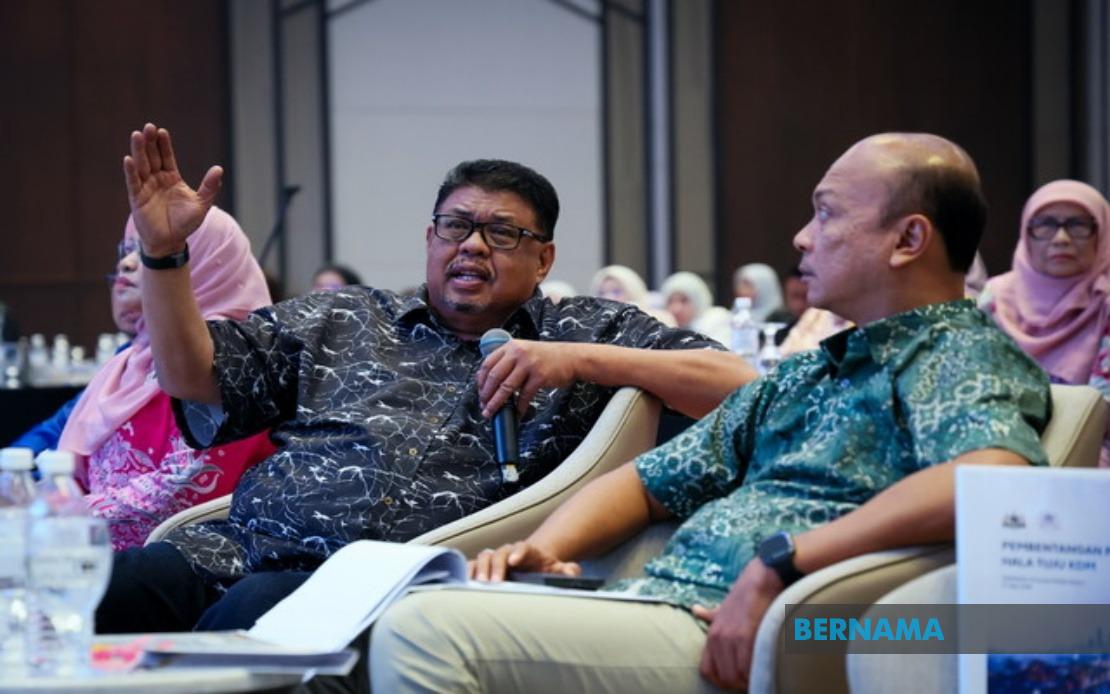
Melaka's Barisan Nasional (BN) coalition has made explicit its commitment to defending all 21 State Legislative Assembly seats it currently holds, framing this position as non-negotiable in discussions with potential political partners for the upcoming state election. Datuk Seri Ab Rauf Yusoh, who chairs the Melaka BN machinery and also serves as Chief Minister, articulated this stance during an engagement at the Melaka Digital Kampung Directional Alignment Workshop, underscoring that any party wishing to participate in electoral cooperation with BN must first accept this foundational principle.
The Chief Minister's declaration reflects the coalition's determination to maintain its territorial footprint in the state assembly following its commanding performance in the 15th Melaka state election. In that contest, BN secured 21 of the legislature's 28 seats, establishing comfortable governing authority. Pakatan Harapan (PH) captured five seats while Perikatan Nasional (PN) secured two, creating a fragmented opposition landscape that has persisted through the intervening period.
Ab Rauf emphasized that this boundary regarding seat allocation was fundamental and could not be waived or altered during coalition negotiations. His language deliberately signalled inflexibility on the matter, suggesting that BN views defence of its current parliamentary strength as prerequisite to any accommodation of other political parties within a governing arrangement. This positioning effectively sets the terms of engagement before detailed discussions commence, potentially streamlining negotiations by establishing clarity on non-negotiable parameters from the outset.
The BN chairman indicated receptiveness to dialogue with other political entities, particularly responding to reports that senior leaders from Parti Islam Se-Malaysia (PAS) were expected to initiate discussions with him during the week of his statement. However, he qualified this openness by emphasizing that any such conversations would need to be grounded in rational reasoning and would ultimately require validation from BN's Supreme Council before any substantive commitments could be made. This procedural safeguard ensures that individual parties cannot unilaterally commit BN to arrangements without institutional approval, maintaining collective decision-making authority within the coalition framework.
The timing of BN's declarative stance relates to uncertainty surrounding when the Melaka State Legislative Assembly will be dissolved to trigger an election. The current state government's mandate expires on December 31, meaning an election must occur before this date. However, Ab Rauf suggested that dissolution could materialize at any point, declining to provide specificity about the precise timing while hinting that dramatic effect might accompany the eventual announcement.
The political context for this manoeuvre involves navigating relationships across Malaysia's complex coalition landscape. PAS, which previously operated as part of the now-dissolved Perikatan Nasional pact with UMNO at the federal level, has been exploring various electoral combinations at state level. The prospect of PAS discussions with Melaka BN suggests both parties may be evaluating potential cooperation, though BN's firm positioning on seat allocation establishes that any such arrangement would need to accommodate BN's existing territorial holdings rather than requiring redistribution of contested constituencies.
Melaka's electoral mathematics underscore BN's negotiating strength. With 21 seats already secured and only seven seats distributed among opposition parties, BN maintains a substantial buffer against losing state government. This numerical advantage likely reinforces its confidence in setting firm conditions rather than offering compromise positions. For potential coalition partners, the calculus involves determining whether participation under BN's stated parameters represents an acceptable outcome given their alternatives.
The state-level dynamics in Melaka reflect broader patterns in Malaysian electoral politics where grand coalitions have become increasingly common at both federal and state levels. The success of BN in the 15th state election, combined with its dominant position at the federal level following the 12th general election, positions the coalition as the preferred governing vehicle for numerous political actors. However, this also requires careful management of coalition mathematics to ensure member parties feel adequately represented and that electoral arrangements do not provoke internal friction.
From a Southeast Asian perspective, Melaka's electoral trajectory demonstrates how Malaysia's federal system permits substantial variation in coalition arrangements across different state administrations. While federal-level configurations may differ markedly from state-level combinations, the overarching imperative for political stability and effective governance creates pressure toward similar partnership frameworks. For regional observers, Malaysia's coalition politics illustrate both the flexibility and constraints inherent in managing multi-party democracies where no single party commands overwhelming majority support.
Ab Rauf's framing of the 21-seat defence as fundamental principle rather than opening negotiating position signals BN's intention to approach forthcoming coalition discussions from a position of strength and clarity. By establishing this boundary explicitly before detailed talks commence, BN aims to focus dialogue on how other parties might contribute to strengthening the coalition's position rather than debating its core territorial holdings. This approach potentially accelerates coalition formation by narrowing the range of contested issues that require resolution before electoral arrangements can be finalized and campaigning can commence.

