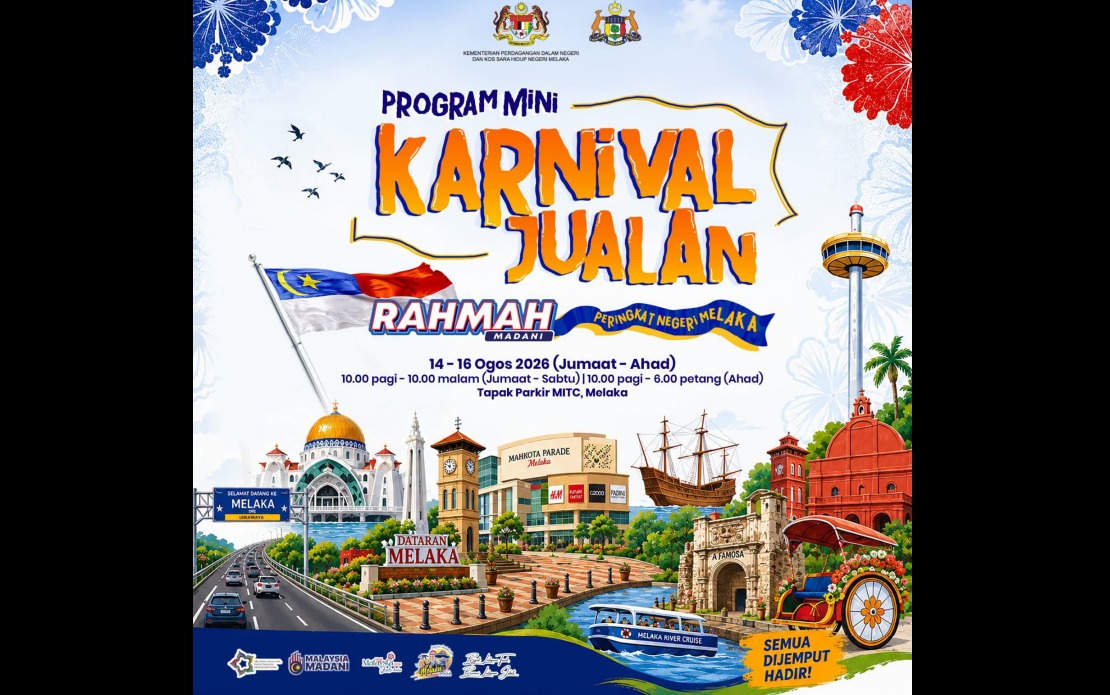
The Melaka Domestic Trade and Cost of Living Ministry (KPDN) is launching an ambitious public engagement effort this weekend with a three-day carnival at the Melaka International Trade Centre (MITC), aiming to attract more than 10,000 community members to an event designed to bring government services and consumer assistance programmes within direct reach of ordinary households.
KPDN Deputy Minister Senator Datuk Dr. Fuziah Salleh framed the carnival as a deliberate strategy to reshape how the ministry communicates with citizens, moving away from traditional government-citizen interactions towards a more approachable, interactive environment where people can explore policies and programmes in a relaxed setting. This shift in approach reflects broader governmental recognition that awareness campaigns and service delivery require venues where residents feel welcome to explore offerings without the formality typical of government offices.
The centrepiece of the carnival is the MADANI Rahmah Sales Programme (PJRM), which functions as a targeted price intervention mechanism allowing households to purchase everyday essentials at substantially discounted rates. For Malaysian families already stretched by inflationary pressures on groceries, utilities, and household goods, such direct access to subsidised products represents meaningful relief—and the carnival structure allows the ministry to demonstrate real impact rather than simply announcing policy outcomes through media releases.
Beyond the sales component, the event incorporates educational dimensions. Multiple exhibition booths will provide information about KPDN's consumer protection mandate, its price-monitoring functions, and enforcement activities designed to prevent market manipulation and unfair trading practices. For many residents, understanding what government agencies actually do remains limited; a carnival setting permits KPDN officials to explain their roles in protecting purchasing power and ensuring market transparency without lecturing attendees.
Business matching sessions represent another strategic element, potentially connecting small and medium enterprises with suppliers or expanding their market reach. This reflects recognition that cost-of-living challenges extend beyond retail consumers to encompass traders and vendors who operate on thin margins and struggle with supply chain efficiency.
Entertainment and family-oriented programming ensures the carnival functions as a genuine community gathering rather than a transactional service point. An esports tournament conducted with Todak, live performances by artists, a children's colouring competition, and exhibitions featuring antique vehicles and classic motorcycles create a festival atmosphere that encourages multi-generational participation. Menu Rahmah food trucks offering subsidised meals align with the broader affordability theme while supporting food vendors.
The timing and location carry particular significance for Melaka. As one of Malaysia's significant urban centres with considerable tourist infrastructure—reflected in the MITC venue—the state provides a logical platform for showcasing government initiatives to both residents and visiting populations. This visibility extends the ministry's reach beyond administrative boundaries, potentially influencing perceptions of how the federal government addresses living cost pressures across the nation.
For Malaysian policymakers and analysts observing cost-of-living challenges that dominated recent political discourse, such carnival-format interventions represent attempts to translate policy commitments into visible community benefits. Rather than relying solely on statistical evidence of price controls or subsidy impacts, the ministry creates opportunities for citizens to directly experience programme outcomes and evaluate whether government claims match reality.
The event schedule—running until 10 pm on Friday and Saturday, with Sunday concluding at 6 pm—accommodates working families and weekend leisure patterns, removing barriers to participation. This attention to accessibility reflects learned lessons about citizen engagement; scheduling government activities during inconvenient hours significantly depresses turnout regardless of programme quality.
The carnival also functions strategically as a platform for the KPDN to enhance its institutional visibility within an increasingly crowded government communications landscape. As multiple agencies compete for media attention and public awareness, demonstrating tangible consumer benefits through direct engagement builds institutional credibility that abstracts statistics cannot match.
For Southeast Asian observers tracking how governments address post-pandemic cost-of-living pressures, Malaysia's strategy blends price intervention mechanisms with sophisticated public engagement methodologies. Rather than operating subsidies invisibly through administrative channels, the ministry orchestrates visibility and direct citizen experience, potentially yielding higher perceived legitimacy for interventions that might otherwise seem like government overreach or market distortion.
The invitation to Melaka's local community represents implicit acknowledgment that cost-of-living solutions require sustained dialogue with residents who experience affordability challenges daily. A carnival format permits such conversations to occur in settings where people feel respected as community members rather than supplicants dependent on government charity, subtly reshaping the psychological dynamics of state assistance.
As Malaysian households continue navigating economic pressures from multiple directions—from global commodity price volatility to localised wage stagnation—initiatives translating macro-policy commitments into micro-level consumer experiences merit examination for their genuine impact on household economics and for their potential to either build or erode public confidence in government capability to manage living standards.

