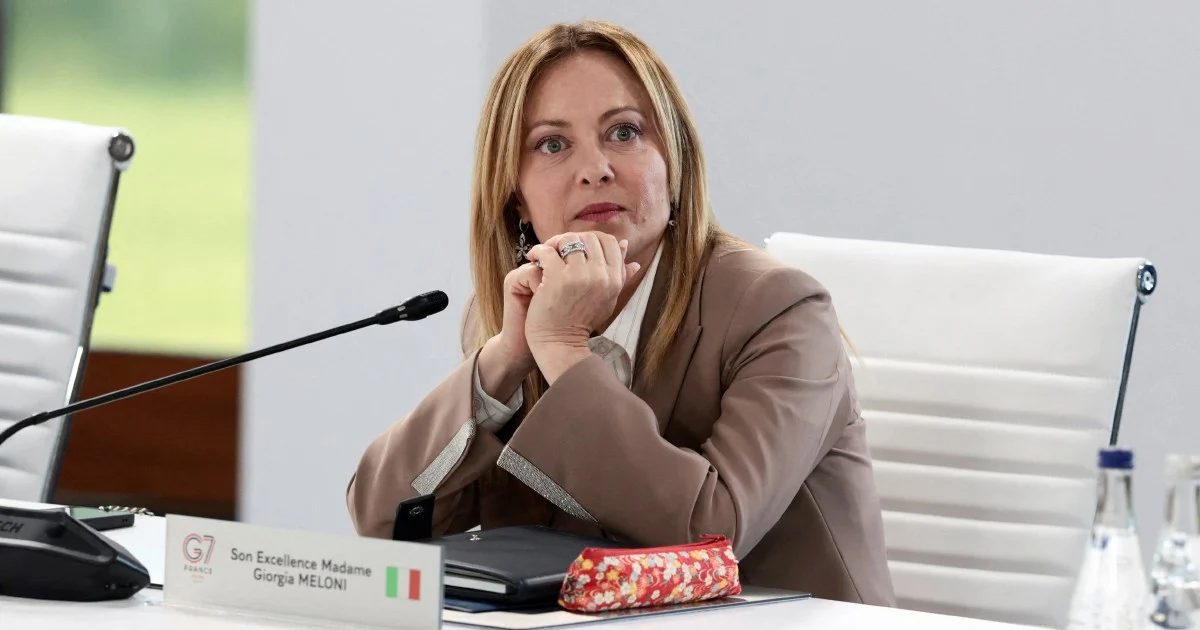
When Donald Trump took the oath of office for his second presidential term in January 2025, Italian Prime Minister Giorgia Meloni stood out as the sole European leader granted an invitation to Washington's inaugural festivities. That ceremonial gesture suggested the beginning of an unprecedented period of warmth between the Italian government and the Trump administration, potentially reshaping Europe's relationship with an increasingly unpredictable American presidency.
Meloni's position as Trump's preferred European interlocutor reflected a broader strategy by the Italian premier to cultivate privileged access to the White House. Her right-wing nationalist credentials and ideological alignment with Trump's populist agenda had created natural common ground, distinguishing Rome from the more cautious approaches taken by other Western European capitals. The optics of that solitary attendance at Trump's inauguration conveyed to both American and European audiences that Italy was positioning itself as a vital bridge between Washington and the European Union.
Yet the political landscape has shifted with striking speed and intensity. Meloni has since emerged as a vocal critic of Trump's policies and pronouncements, abandoning the diplomatic circumspection that typically characterises relations between allied nations. This reversal is not merely a tactical disagreement over a specific issue but rather reflects fundamental concerns about the direction of American foreign policy and its implications for European security architecture.
The transformation illuminates the precarious position in which European leaders find themselves navigating the current geopolitical environment. Trump's unpredictability, his questioning of NATO's relevance, and his transactional approach to alliances have forced even initially sympathetic European figures to reconsider their calculations. For Meloni, what appeared to be a promising avenue for Italian influence has increasingly come to resemble a liability, particularly as Trump pursues policies that conflict with core European interests.
Italy's shift in posture reflects deeper anxieties within the European establishment regarding Trump's foreign policy agenda. The administration's signals regarding potential trade wars, its ambivalent stance toward NATO commitments, and its apparent willingness to reshape the international order have rattled capitals across the continent. Meloni's early alignment with Trump had suggested Italy might chart an independent course, but such positioning becomes untenable when that course diverges significantly from broader European security and economic interests.
The political costs of maintaining excessive proximity to Trump have become increasingly apparent. Other European leaders, from France to Germany, have demonstrated the perils of appearing too cosy with an American administration pursuing policies antithetical to European consensus. By repositioning herself as a Trump critic rather than confidante, Meloni signals to her EU partners that Italy remains committed to collective European interests, despite her previous flirtation with Washington.
Meloni's recalibration also reflects domestic political considerations within Italy itself. Right-wing populism in Europe, while anti-establishment in orientation, remains fundamentally protective of national sovereignty and traditional geopolitical partnerships. Appearing to subordinate Italian interests to American whims risks undermining the nationalist credentials upon which her political movement rests. By challenging Trump publicly, she reasserts control over her own political narrative and demonstrates that Italy will not be taken for granted.
The timing of Meloni's shift carries significance for broader European strategic autonomy discussions. As the continent grapples with questions about how to reduce dependency on American security guarantees while maintaining credible deterrence against Russia, having European leaders who maintain critical distance from Washington becomes valuable. Meloni's movement away from Trump positioning aligns her more closely with emerging conversations about European defence capabilities and independent European foreign policy frameworks.
For Southeast Asian observers, the Meloni case study offers instructive lessons about managing relationships with unpredictable major powers. The region has long contended with the challenge of balancing great power relationships while maintaining strategic autonomy. Meloni's experience demonstrates how initial alignment with a major power figure can quickly become disadvantageous when that figure's policies diverge from broader allied interests. Regional leaders watching transatlantic dynamics may draw parallels to their own diplomatic balancing acts with China and the United States.
The broader implications for European unity also warrant consideration. Meloni's initial Trump alignment had threatened to fracture already-strained European consensus on how to approach Washington. Her pivot toward greater criticism, while partly self-interested, contributes to reconsolidating a more unified European position. This matters significantly for how Europe collectively engages with Trump policies affecting trade, defence spending, and international institutions where European interests converge.
Meloni's trajectory from Trump whisperer to Trump basher ultimately reflects the instability inherent in transactional diplomacy. By initially positioning Italy as Trump's premier European partner, she gambled on sustained alignment with administration policies. As those policies revealed themselves to be contrary to Italian and broader European interests, the political arithmetic shifted. The prime minister's course correction, while perhaps opportunistic, underscores that even ideologically sympathetic leaders cannot indefinitely subordinate national interests to personal relationships with American presidents.