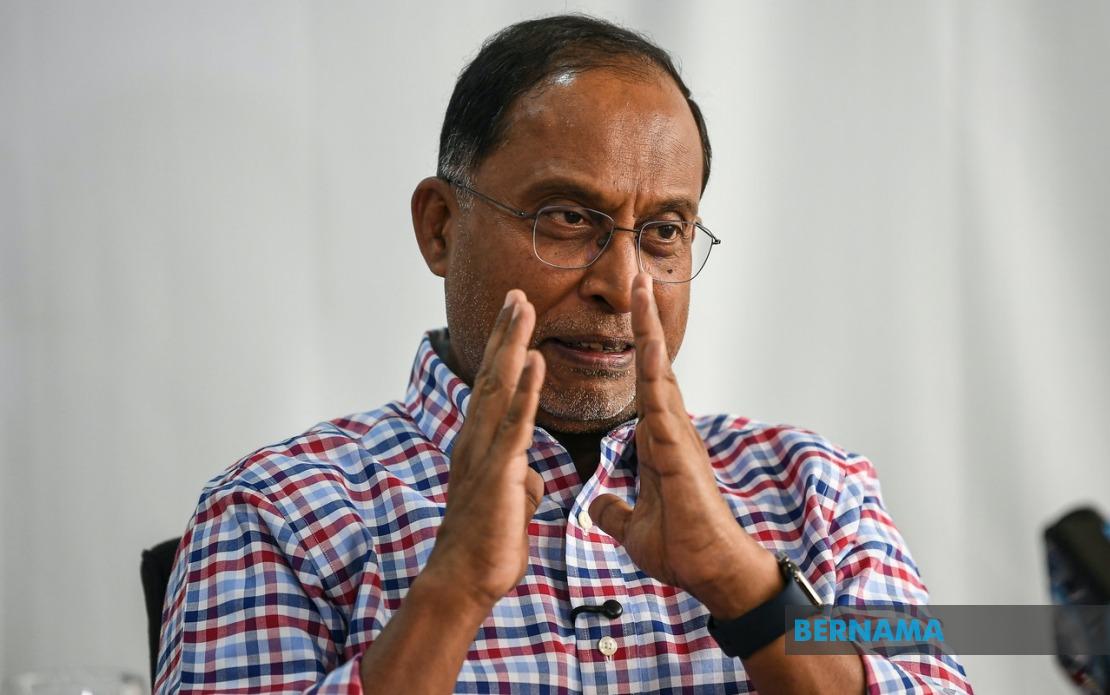
The Ministry of Higher Education has committed to building Jelai Community College in the Batu Yon district of Lipis, signalling renewed investment in vocational pathways for communities beyond urban centres. At a groundbreaking ceremony held at Dataran Santuari Eco Gahai, Higher Education Minister Datuk Seri Dr Zambry Abd Kadir unveiled plans for what will become Pahang's eleventh community college, a facility designed to unlock educational and economic opportunities in one of the state's agricultural strongholds.
The RM55 million project represents a strategic response to regional workforce demands and the persistent gap in technical education provision across rural Malaysia. Rather than concentrate TVET infrastructure in established urban hubs, the ministry has tasked the Department of Polytechnic and Community College Education with developing a campus that draws directly from Jelai's economic fabric. The college will emphasise agrotechnology and sustainable agricultural technology—fields that align with the district's established identity as an agricultural centre and its growing profile within Pahang's agri-food industry.
Accommodating a minimum of 240 students, the institution will operate at modest capacity compared to larger urban polytechnics, but this scaling reflects realistic intake projections for a rural location while maintaining teaching quality. The enrolment structure will prioritise programmes directly applicable to local farming operations and value-added agri-business enterprises, creating clear pathways for graduates to remain economically engaged in their home regions rather than being forced toward urban migration. This model addresses a persistent challenge in Malaysian rural development: ensuring that educational advancement does not automatically trigger outflow of young talent to cities.
Minister Zambry indicated the construction and establishment phase should conclude within twelve to eighteen months, a timeline that, if achieved, would demonstrate reasonably efficient project execution compared to some previous community college developments. This momentum matters for rural communities that have waited for educational infrastructure upgrades. The minister's confidence in the timetable suggests preliminary site acquisition and planning have already progressed beyond the announcement stage, reducing the risk of extended delays that have plagued other higher education expansion projects.
Pahang Menteri Besar Datuk Seri Wan Rosdy Wan Ismail expressed appreciation for the ministry's approval, noting that the state government had actively campaigned for the facility. This collaborative positioning between federal and state authorities—evident in the joint groundbreaking ceremony—underscores how TVET expansion now operates as a shared priority across administrative tiers. The Menteri Besar's public acknowledgement reflects both genuine satisfaction and strategic value in claiming credit for infrastructure that will serve constituents for decades. For investors and employers in Pahang's agricultural sector, the college signals official recognition that their industry requires ongoing talent development and technological adoption.
The curriculum framework centring on modern agriculture and related technologies responds to documented labour shortages in Malaysia's farming sector, where mechanisation and precision agriculture techniques have outpaced worker capabilities. By embedding technical training within a broader sustainability lens, the college positions graduates to meet emerging standards around environmental stewardship and resource efficiency—requirements increasingly demanded by export markets and regulatory frameworks. This approach acknowledges that contemporary agribusiness success depends on more than traditional farming knowledge; it demands digital literacy, equipment operation, data analysis, and understanding of supply chain management.
The establishment of this college carries implications extending beyond Lipis itself. Community colleges have emerged as Malaysia's primary mechanism for providing accessible, job-focused education pathways to lower-income and geographically isolated populations. By distributing these facilities across Pahang and other states, the ministry signals commitment to reducing educational inequality between regions. For potential students who cannot afford relocation or boarding costs associated with attending distant polytechnics, a local college dramatically lowers barriers to TVET qualification. This is particularly significant in Pahang, where economic opportunities outside agriculture remain limited in many districts.
The emphasis on sustainability and modern agricultural technology also positions the college within Malaysia's broader transition toward green economy skills development. Employers increasingly require workers versed in sustainable practices, organic certification processes, climate-resilient farming techniques, and renewable energy applications within agricultural operations. By establishing curriculum around these competencies now, rather than retrofitting them later, the college will graduate cohorts immediately prepared for evolving industry demands. This forward-looking approach contrasts with vocational programmes that sometimes lag behind actual workplace requirements.
Deputy Speaker of the Dewan Rakyat and Cameron Highlands Member of Parliament Datuk Dr Ramli Mohd Nor's attendance further underscores the political salience of TVET expansion in rural constituencies. Cameron Highlands, like Jelai, represents an agricultural district where educational opportunity directly influences youth prospects and community stability. The presence of parliamentary leadership alongside ministerial and state figures suggests bipartisan recognition that vocational education serves as essential infrastructure for rural development, transcending typical partisan divisions around educational policy.
The college's establishment must also be contextualised within Southeast Asia's competitive positioning for TVET excellence. Thailand, Vietnam, and Indonesia have invested substantially in community-based vocational institutions that respond to regional economic specialisations. Malaysia's parallel expansion, while somewhat late in some regions, demonstrates determination to ensure no population segment remains locked out of skills training systems. For employers in Jelai and surrounding areas, local TVET provision reduces hiring friction and enables workforce development aligned to specific operational needs.
Implementation success will depend on securing qualified instructors familiar with contemporary agricultural practices and teaching methodologies suited to community college environments. Unlike universities, community colleges must bridge theoretical knowledge with immediate practical application, requiring faculty who maintain active engagement with industry partners. The college's credibility will ultimately rest on employer confidence that graduates possess genuine operational competencies, not merely certificates. The ministry's commitment to modern infrastructure and curriculum design, evident in this announcement, suggests serious investment in getting this dimension right.
Beyond the immediate district, Jelai Community College's establishment signals the ministry's confidence in community college expansion as sustainable TVET policy. Policymakers have increasingly recognised that not every student thrives in traditional secondary-to-university pathways; substantial populations benefit more from hands-on, shorter-duration programmes leading directly to employment. The college will serve as a testing ground for how agricultural TVET can succeed in Malaysian rural settings, generating lessons applicable to similar institutions planned or operating elsewhere in Pahang and neighbouring states.

