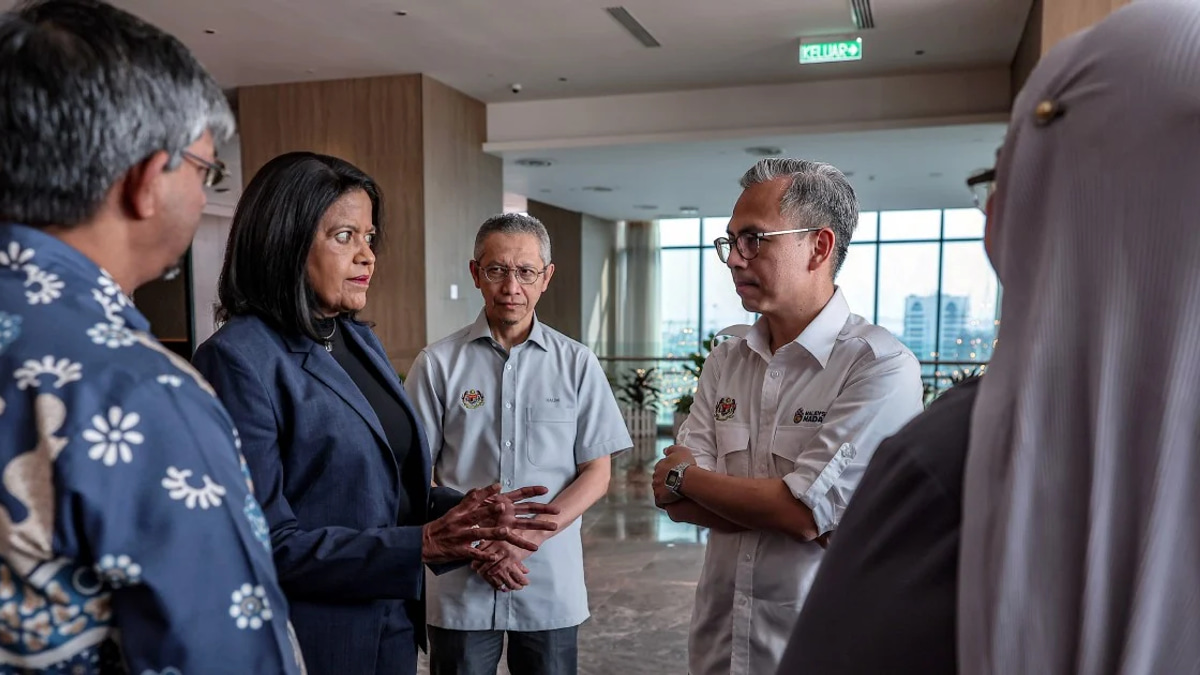
The Malaysian government has formally appointed chairmen for the National Information Dissemination Centre (NADI) Advisory Panels serving Kedah and Perlis, marking a significant step in the digital empowerment agenda for Malaysia's northern states. The appointment ceremony, held in Alor Setar on June 20, signals renewed commitment to transforming NADI from a basic internet access facility into a comprehensive community development platform. Abdullah Izhar Mohamed Yusof, Political Secretary to the Communications Minister, presided over the presentation of appointment letters to panel heads representing 15 parliamentary constituencies in Kedah and three in Perlis.
The expansion of NADI's leadership structure reflects a fundamental shift in how Malaysia approaches digital inclusion at the grassroots level. Rather than remaining confined to providing connectivity, the centres have evolved to encompass digital skills training, entrepreneurship support, government service integration, and lifelong learning opportunities. This broader mandate aligns with Malaysia MADANI aspirations, which emphasise ensuring technological benefits reach all communities regardless of socioeconomic status or geographic location. Abdullah Izhar emphasised that the advisory panel framework strengthens governance structures by embedding local leadership within NADI operations, creating accountability channels between management and the communities they serve.
The scale of NADI's footprint in the northern region underscores the significance of this institutional development. Kedah operates 81 NADI centres, while Perlis manages 17 facilities, collectively serving as grassroots hubs for the Smart Services Programme. These centres deliver programming across multiple domains including entrepreneurship development, continuous education, personal wellbeing initiatives, public awareness campaigns, and implementation of various government schemes. The appointment of dedicated advisory chairs for each parliamentary constituency ensures that centre operations remain responsive to localised needs and challenges, rather than operating as distant extensions of federal policy.
International recognition has validated Malaysia's NADI approach, lending credibility to the model and suggesting its potential for replication elsewhere. In 2023, NADI won the World Summit on the Information Society (WSIS) Prizes within the Capacity Building category, competing at the Geneva forum against similar initiatives globally. This year brought further validation when the International Telecommunication Union (ITU) designated NADI as the world's 16th Digital Transformation Centre, acknowledging its sophisticated integration of technology, community engagement, and sustainable development outcomes. Such endorsements carry weight in regional and international development circles, positioning Malaysia as a thought leader in bridging digital divides.
The practical impact of NADI initiatives becomes visible through success stories emerging from participating communities. Nurul Atika Razib, proprietor of Bahtera Emas Legacy in Kedah, exemplifies how NADI support catalyses traditional businesses into digital commerce. Her traditional health products venture expanded substantially by leveraging digital platforms including Shopee and TikTok Shop, reaching customers far beyond her original geographic market. Similarly, Hamizah Hassan's Embun Warisan Kayu venture in Perlis demonstrates NADI's capacity to amplify heritage-based products through e-commerce channels and digital marketing exposure. These entrepreneurs represent the aspirational outcomes that advisory panels seek to encourage and replicate across their constituencies.
Educational dimensions of the NADI ecosystem extend digital benefits beyond entrepreneurship into lifelong learning pathways. Programmes such as Tuisyen Rakyat provide subsidised academic tutoring, addressing Malaysia's persistent educational inequality concerns by channelling resources to underserved communities. The AI@NADI initiative specifically targets digital skills gaps by offering artificial intelligence education to students and adults, preparing participants for emerging technology-driven employment sectors. By situating such educational offerings within community-based centres rather than centralised institutions, NADI reduces barriers related to transportation, scheduling, and social intimidation that often prevent rural and low-income populations from accessing skill development.
The advisory panel structure reflects sophisticated governance thinking about scaling community-responsive programmes. Rather than concentrating decision-making authority at the national level, the panel system distributes leadership responsibilities to individuals embedded within their constituencies, who understand local cultural contexts, existing social networks, and community-specific challenges. These chairs serve as conduits for bidirectional information flow, communicating resident feedback, suggestions, and grievances upward to management while ensuring government information and programme details reach communities through trusted local voices. This architecture potentially mitigates the trust deficits that sometimes characterise top-down government initiatives in peripheral regions.
The appointment comes amid Malaysia's broader digital infrastructure expansion, where northern states like Kedah and Perlis have historically lagged behind more urbanised regions in broadband penetration and digital service adoption. While national connectivity statistics have improved significantly, persistent urban-rural divides mean that infrastructure availability does not automatically translate into capability or confident usage. NADI's evolution addresses this capability gap by recognising that merely providing internet access fails to generate meaningful digital participation without accompanying training, mentorship, and support services. The advisory panel appointments institutionalise this understanding within governance structures.
The Malaysian Communications and Multimedia Commission (MCMC), working alongside communications ministry leadership, has positioned NADI as a cornerstone programme for achieving inclusive digital transformation. The emphasis on panel appointment ceremonies and formal recognition suggests that policymakers view grassroots digital empowerment as strategically important rather than merely administrative. This framing carries implications for resource allocation, suggesting that NADI budget submissions and expansion proposals may receive favourable consideration within interagency funding discussions. For states like Kedah and Perlis, where economic diversification increasingly depends on digital participation, NADI represents essential infrastructure for broader development ambitions.
Looking forward, the advisory panel system establishes mechanisms for continuous programme refinement based on ground-level experience. As chairs encounter barriers to participant engagement, identify emerging skill gaps, or observe market opportunities that government support could address, their structural positions enable rapid feedback loops. This contrasts with more rigid, centralised systems where local insights may never reach decision-makers or require months to propagate upward through bureaucratic channels. The appointment of dedicated leadership thus potentially accelerates NADI's ability to innovate and adapt programming in response to evolving community needs.
The formalisation of advisory panel leadership also signals commitment to professionalising community-level digital governance in Malaysia's regional context. Rather than treating NADI chairmanships as ceremonial or honorific positions, the appointment framework suggests that these individuals will receive formal responsibilities, training, and performance expectations. This approach builds human capital within northern communities while creating local employment opportunities for individuals with demonstrated leadership capacity and community trust. For regions experiencing brain drain and youth emigration, such mechanisms that create meaningful, locally-based roles carry significance beyond their immediate programmatic function.