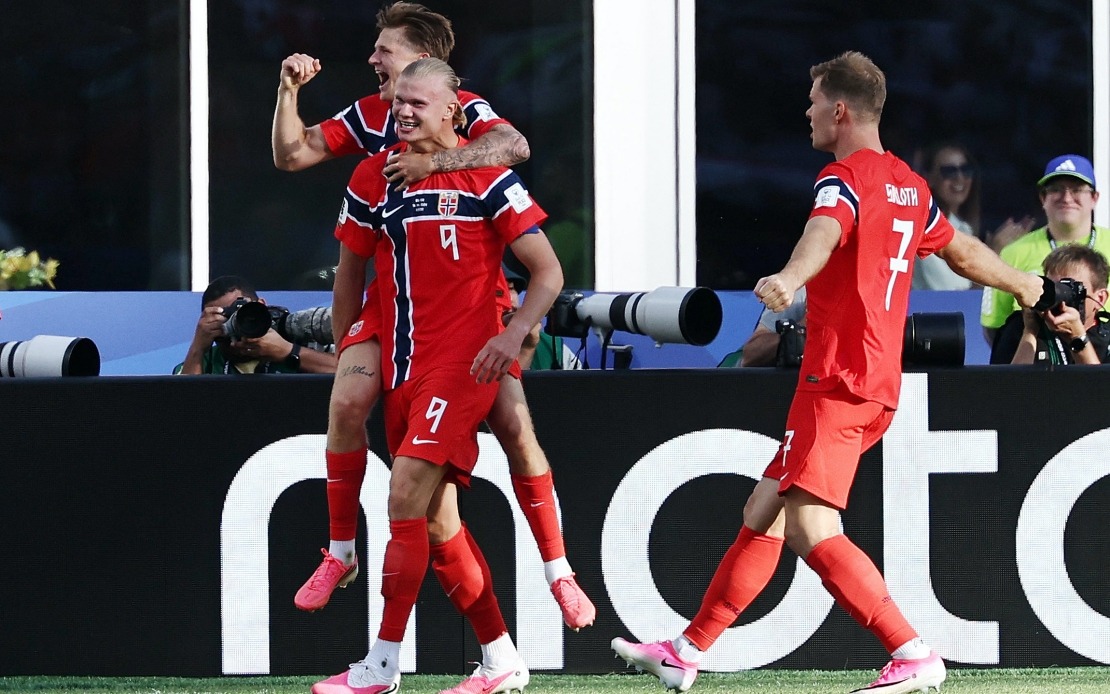
Norway arrives at the World Cup carrying the weight of family history, with three key players driven by a generational desire to complete what their fathers could not. Erling Haaland, Alexander Sørloth, and Kristian Thorstvedt represent a distinctive narrative within the tournament—sons of former Norwegian internationals from the 1994 World Cup in the United States, when the Scandinavian nation was eliminated at the group stage. This current cohort enters the competition intent on progressing further than their predecessors, adding an emotional dimension to their pursuit of international football glory.
The younger Haaland, who plays for Manchester City, epitomises the talent and potential of this Norwegian generation. When recently shown photographs of his father Alf-Inge "Alfie" Haaland from three decades ago, the Manchester City forward expressed amusement at his father's appearance. "He looks so young. I have never seen him with such long hair," Haaland remarked, highlighting the contrast between the man he knows and the athlete captured in those archival images. Yet beyond the nostalgic humour lies genuine respect for the path his father walked and the opportunity now available to build upon that legacy.
Norway's opening performance has injected considerable optimism into the campaign. The team's commanding 4-1 victory over Iraq provided immediate evidence of their attacking prowess and competitive credentials. This strong foundation means the players carrying generational expectations enter their subsequent matches with momentum, rather than the pressure of early disappointment. The result demonstrated that this Norwegian side possesses the quality to compete against established footballing nations and aspiring continental powers.
The upcoming match against Senegal on Monday represents a critical juncture in Norway's tournament trajectory. A victory would significantly increase the likelihood of progressing to the knockout stages, fulfilling an objective that proved beyond their fathers' reach in 1994. For Sørloth, Thorstvedt, and Haaland, such progression would constitute tangible progress toward transcending their parents' World Cup experience. The psychological weight of this moment—playing not only for personal glory but for familial redemption—adds layers of complexity to an already demanding competition.
Alexander Sørloth, now plying his trade at Atletico Madrid, has spoken openly about the emotional resonance of following in his father Gøran's footsteps. The Madrid-based attacker described the experience as "simply great," acknowledging that his father has fundamentally shaped his understanding and approach to football. "He has taught me everything I know about football," Sørloth reflected, indicating that the technical and philosophical foundations of his career rest upon paternal instruction. This transparency about familial influence resonates particularly in Norwegian culture, where such acknowledgments of inherited knowledge carry genuine weight.
Thorstvedt's own connection to the 1994 World Cup carries a different personal dimension. His first memory of the tournament stems from the 2002 edition held in Japan and South Korea, experienced during a family holiday in Denmark alongside his father Erik Thorstvedt. Watching the competition unfold with parental guidance created an indelible impression—"how excited I was to watch the World Cup with my father"—that transformed from childhood nostalgia into adolescent aspiration and now adult reality. The tournament represents far more than footballing competition; it embodies continuity across generations within his family structure.
The broader Norwegian society has mobilised to support this cohort's World Cup endeavour. During their Monday fixture against Senegal in New Jersey, hereditary Princess Ingrid Alexandra and Prince Sverre Magnus, children of Crown Prince Haakon and Crown Princess Mette-Marit, are anticipated to attend. This royal endorsement reflects how thoroughly the tournament has penetrated Norwegian consciousness and how deeply the nation has invested emotionally in this particular squad's performance. The presence of the hereditary princess and prince underscores the tournament's significance beyond sport.
Norwegian parliamentary culture has likewise embraced the team's participation. Members of parliament representing all political parties participated collectively in a Viking-inspired show of support on Thursday, drawing upon the historical imagery and cultural symbolism long associated with Nordic identity. This spontaneous cross-party enthusiasm for national sporting achievement transcends typical political divisions, suggesting the team functions as a unifying force across Norwegian society. The visibility of such endorsements—parliament members adopting Viking-associated ceremonial practices—demonstrates how international competition activates deep cultural currents within the national consciousness.
The Viking imagery and traditions referenced by Norwegian supporters carry resonance extending beyond theatrical appeal. These symbols connect contemporary Norwegian identity to historical prestige and martial prowess, transforming sporting competition into a vehicle for expressing deeper cultural continuity and national pride. When parliamentary members engage in such practices, they implicitly validate the connection between sporting excellence and national character—a relationship particularly potent when set against generational narratives like those embodied by Haaland, Sørloth, and Thorstvedt.
France awaits Norway in their final group-stage encounter on Friday, presenting a formidable examination of their credentials. The French team, regarded among the tournament's elite contenders, will provide a definitive assessment of whether this Norwegian generation possesses the quality to advance beyond the group stage. A positive result against France would substantially reinforce Norway's knockout-stage ambitions while providing these three players with tangible evidence that they have indeed surpassed their fathers' achievement—regardless of eventual tournament outcomes.
The psychological dimensions of carrying familial history into international competition cannot be underestimated. For Haaland, Sørloth, and Thorstvedt, every match represents an opportunity to honour the sacrifices and experiences of previous generations while establishing their own tournament legacy. The narrative arc—from the collective disappointment of 1994 through to contemporary aspiration—provides compelling context for understanding the individual and collective motivations driving Norwegian football at this World Cup. These three players embody the universal human desire to build upon ancestral achievement, transformed into a footballing drama unfolding across the tournament's group stage.