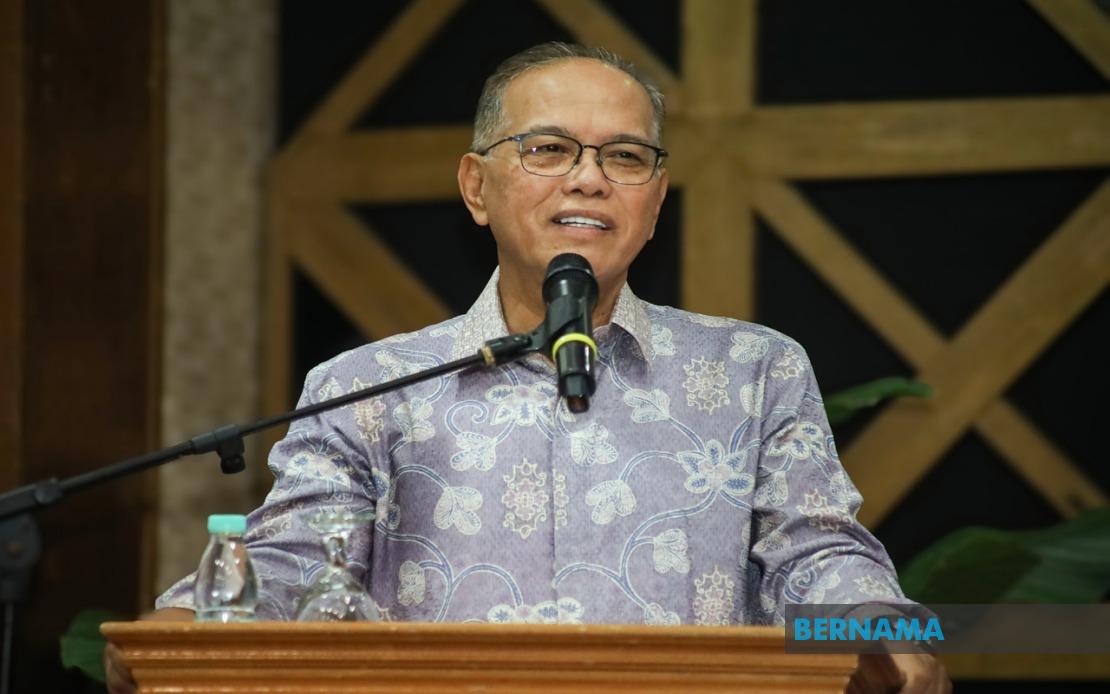
The Pahang state government is taking a proactive stance on workforce development, channelling more than RM5 million this year into its technical and vocational education and training sector. Menteri Besar Datuk Seri Wan Rosdy Wan Ismail unveiled the investment during celebrations marking the golden jubilee of Politeknik Sultan Haji Ahmad Shah (POLISAS) in Kuantan on August 13, signalling the state's determination to build human capital before major industrial opportunities materialise.
This substantial commitment reflects a deliberate strategy that prioritises talent cultivation over reactive hiring practices. Rather than scrambling to find skilled workers when new industries arrive, Pahang intends to have its youth already equipped with relevant qualifications and competencies. The Menteri Besar framed this as a forward-thinking approach: develop the talent first, then welcome the investments and jobs with a ready workforce capable of meeting employer demands from day one. Such anticipatory planning represents a shift from traditional approaches where regions often find themselves unable to fill positions despite high unemployment.
The RM5 million allocation supports multiple pillars of the TVET ecosystem. Resources are directed towards upgrading infrastructure and training facilities for Pahang Skills, the TVET Pahang Talent Development programme, and notably, the nascent Pahang Rail Academy. This diversification across different specialisation areas suggests the state is not betting on a single industry but rather building versatility that can serve various sectors including transportation, manufacturing, services, and technology-driven enterprises. The rail academy specifically indicates Pahang's interest in capturing opportunities within Malaysia's broader rail infrastructure expansion plans.
POLISAS itself serves as a cornerstone institution in this ecosystem. Since its establishment in 1976, the polytechnic has graduated 60,000 students, many of whom form the backbone of Pahang's skilled workforce. By positioning POLISAS as a strategic partner in state development, Wan Rosdy emphasised the institution's continuing relevance and the government's commitment to expanding its capacity and reach. The 50-year milestone reflects nearly half a century of consistency in technical education provision, though modernisation and curriculum adaptation remain essential as industrial demands evolve rapidly.
A critical dimension of this strategy involves strengthening industry-academia partnerships. Wan Rosdy stressed that classroom learning must translate into practical workplace application, a perennial challenge in vocational education systems across Southeast Asia. Too often, graduates possess theoretical knowledge disconnected from real-world operational requirements. By deepening ties between TVET providers and employers, Pahang aims to ensure curriculum remains current and that students gain exposure to actual working conditions, technologies, and professional expectations before entering employment. This alignment reduces the adjustment period new workers require and enhances their productivity and retention.
The state's TVET ambitions cannot be viewed in isolation from broader economic aspirations. Pahang, as Malaysia's largest state by land area, possesses significant development potential across diverse regions. However, this geographic expanse also presents infrastructure challenges and requires substantial investment to unlock economic opportunities. Wan Rosdy's call for special consideration in Budget 2027 emphasises these realities. He advocated that federal allocations to Pahang should account for the state's size and developmental needs, extending beyond traditional infrastructure like roads and healthcare to encompass education and economic development programmes that directly enhance quality of life.
The Menteri Besar's Budget 2027 appeal reveals tensions in Malaysia's federal-state fiscal dynamics. While Pahang receives federal funding, the state government argues that allocations should proportionally reflect its scale and development gaps. Education featured prominently in his list of state budget priorities, alongside economic development, welfare, infrastructure, and Islamic promotion. This multi-dimensional approach suggests the state perceives TVET not as an isolated policy intervention but as part of comprehensive human and economic development strategy. Education funding decisions, therefore, carry implications for state competitiveness, employment levels, and social stability.
For Malaysian readers, Pahang's investment holds broader relevance to nationwide skills development debates. As Malaysia transitions toward higher-value industries and confronts demographic challenges including skilled labour shortages, state-level initiatives like Pahang's demonstrate proactive governance. The model—investing in talent before industries arrive—contrasts with reactive approaches common in under-developed regions. However, success depends on curriculum quality, instructor expertise, facilities maintenance, and sustained commitment beyond initial announcements. The proof will emerge in employment outcomes, graduate earnings, and employer satisfaction surveys tracking POLISAS and other TVET institution outputs.
Southeast Asian context adds further perspective to Pahang's strategy. Across the region, vocational education remains underfunded and stigmatised compared to university pathways, despite acute regional demand for skilled technicians and tradespeople. Countries like Thailand and Vietnam have achieved greater integration between TVET and industry, resulting in more seamless school-to-work transitions. Malaysia's efforts to elevate TVET prestige and investment, particularly at state level, align with regional competitiveness pressures. Pahang's RM5 million commitment, while significant locally, remains modest compared to strategic investments in manufacturing and technology hubs elsewhere in Malaysia, suggesting room for scaling up ambitions.
The timing of the POLISAS commemoration provides opportunity for reassessing TVET's role in Pahang's future. As the state diversifies economically and responds to national industrial policies, maintaining workforce relevance becomes paramount. Skills gaps in emerging sectors like semiconductors, renewable energy, advanced manufacturing, and digital services demand proactive institutional adaptation. Wan Rosdy's November state budget address will reveal whether the RM5 million commitment represents sustained momentum or represents a plateau in TVET investment. Ultimately, Pahang's workforce development trajectory will shape whether the state capitalises on incoming investments or finds itself repeating the cycle of opportunities meeting unprepared labour markets.

