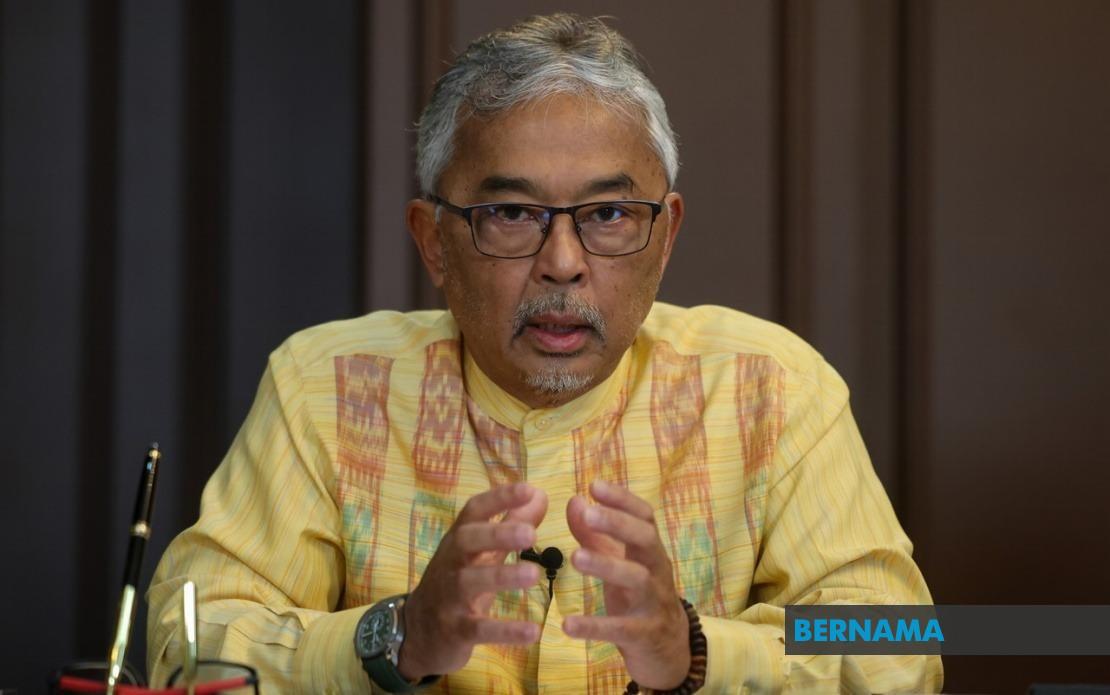
The Sultan of Pahang, Al-Sultan Abdullah Ri'ayatuddin Al-Mustafa Billah Shah, has issued a directive requiring all local authorities throughout the state to undertake comprehensive inspections and evaluations of mature and elderly trees, with particular emphasis on those that could endanger public safety. The royal instruction underscores growing concerns about tree-related incidents and represents a coordinated effort to mitigate risks across municipal jurisdictions.
The directive encompasses large and old trees situated in high-traffic public zones, including roadside areas, residential neighbourhoods, and other locations where citizens regularly congregate. By specifically targeting these environments, the Sultan's order acknowledges that tree failures in populated areas carry the greatest potential for causing casualties and injuries. The emphasis on comprehensive and regular assessment suggests that a one-time inspection will be insufficient; rather, ongoing monitoring protocols must become institutionalised within local government operations.
The Ruler stressed the critical importance of swift action once inspections identify problematic trees. Rather than permitting potentially hazardous specimens to remain standing while awaiting further review, local authorities must implement immediate remedial measures upon identifying risk factors. This proactive stance reflects a shift away from reactive crisis management toward preventive urban forestry practices, a distinction that carries significant implications for how Malaysian municipalities approach public safety planning.
Al-Sultan Abdullah articulated concern that local authorities should not delay intervention until accidents actually occur. This cautionary language directly references recent fatalities and injuries resulting from fallen trees, incidents that have evidently prompted reflection at the highest levels of state governance. The Sultan's implicit criticism of complacency suggests that some municipalities may have been slow to address obvious hazards, a pattern the royal directive aims to reverse through explicit instruction and presumably enhanced accountability.
The timing of this order reflects broader recognition within Malaysia of escalating tree-related accidents, particularly during monsoon seasons when wind and rainfall intensify structural stresses on ageing timber. Urban development in Pahang, like much of Peninsula Malaysia, has often proceeded without adequate planning for mature vegetation that preceded contemporary settlement patterns. Many trees now presenting hazards were established decades ago before modern street networks and residential concentrations developed, leaving them positioned dangerously close to human activity centres.
For Malaysian local authorities, implementing this directive will require substantial practical effort. Many municipalities lack dedicated arboriculture specialists or comprehensive tree inventory systems necessary to systematically assess structural integrity across hundreds or thousands of specimens. The absence of such infrastructure means that compliance will likely depend upon external expertise, whether through contracting private arboricultural consultants or borrowing technical capacity from state-level forestry departments. Budget constraints, already significant for cash-strapped local councils, may complicate rapid implementation.
The public safety dimension extends beyond obvious physical hazards. Fallen trees frequently disrupt power distribution networks and communications infrastructure, creating secondary emergencies that cascade across affected communities. In densely populated areas, tree failures can block critical transport corridors, impeding emergency response to concurrent incidents. By addressing forestry risks proactively, local authorities simultaneously protect multiple dimensions of public welfare and municipal service delivery.
The Sultan's emphasis on prevention carries implications for how Malaysian municipalities conceptualise their responsibility toward residents. This directive implicitly establishes that public safety constitutes a sufficiently high priority to justify dedicated resource allocation and procedural modification. In fiscal contexts where competing demands constantly pressure municipal budgets, such explicit royal endorsement of prevention protocols may prove instrumental in justifying resource reallocation toward tree management programmes.
Implementation across Pahang's various local authorities will likely prove uneven, dependent upon the capacity, commitment, and financial resources available within each jurisdiction. Wealthier municipal corporations serving urban centres may rapidly establish systematic assessment protocols, whilst smaller local councils serving rural areas may struggle to develop equivalent capacity. This variance could inadvertently create disparities in public safety protection across the state, with implications for equity and service delivery standards.
Beyond immediate operational challenges, the Sultan's directive invites reflection on broader urban forestry policy across Malaysia. Many states lack coordinated approaches to aging tree management, with responsibility fragmented across multiple authorities without consistent standards or protocols. Pahang's initiative, if successfully implemented, could serve as a model demonstrating effective integration of conservation principles with public safety imperatives, potentially influencing urban planning approaches throughout the country.
The directive also highlights tensions between development and environmental conservation that characterise contemporary Malaysian urban expansion. Mature trees provide substantial ecological benefits including air quality improvement, temperature moderation, and biodiversity support. Yet their structural deterioration in densely settled areas creates genuine safety hazards that cannot be ignored. Resolving this tension requires neither blanket preservation nor indiscriminate removal, but rather nuanced assessment and selective management based upon individual specimen evaluation.
Governance implications extend to how state-level authority translates into municipal action. The Sultan's order creates clear direction but depends upon local authorities developing the technical capacity and institutional commitment to comply effectively. This implementation challenge will test whether Malaysian local government possesses sufficient coordination mechanisms and resource-sharing arrangements to translate high-level directives into consistent ground-level outcomes.

