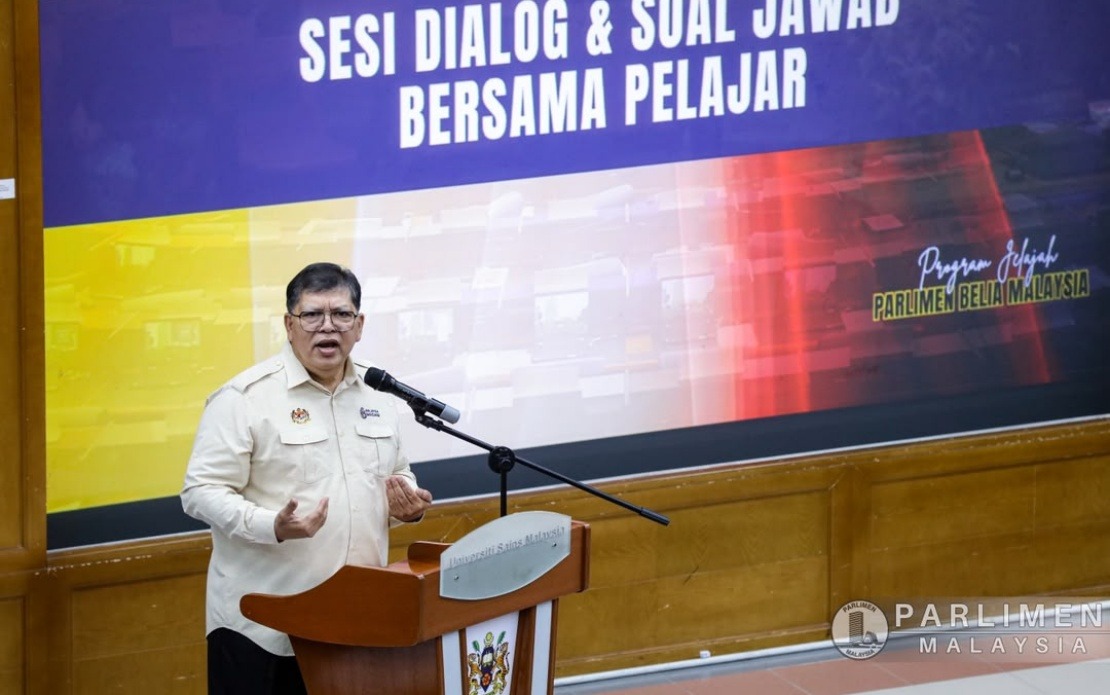
The Dewan Rakyat faces heightened responsibility to demonstrate the principles of effective democracy as Parliament Malaysia prepares to formally launch its Youth Parliament platform this September. Dewan Rakyat Speaker Tan Sri Johari Abdul has called on all Members of Parliament to be acutely conscious of their conduct and rhetoric, recognising that parliamentary proceedings are no longer confined to the chamber itself but broadcast live to the nation and scrutinised across social media platforms by millions of observers, particularly young voters.
Johari's emphasis on parliamentary exemplary conduct reflects a deeper concern about democratic culture in Malaysia at a time when youth engagement with formal institutions is being tested. The Speaker articulated that Parliament functions as more than simply a debating forum for legislators; it operates as the nation's supreme legislative body and, crucially, as a reference point against which society and younger generations measure democratic health. This framing positions parliamentary conduct as inherently educational, with every exchange between MPs carrying implications for how future leaders will understand and practise governance.
The Malaysian Youth Parliament programme, which commences its formal sitting on September 11, represents a significant institutional commitment to developing civic engagement among citizens aged 18 to 30. The platform mirrors the structure of the actual Parliament, comprising 222 seats that correspond to parliamentary constituencies across Malaysia. Rather than functioning as an extension of existing political parties, the youth assembly operates on a non-partisan basis, with participating members organising themselves into temporary political groupings formed from registered youth organisations. This design deliberately separates youth participation from partisan electoral competition, creating space for young people to learn parliamentary procedure and democratic negotiation without the pressures and incentives that shape adult party politics.
Parliament Malaysia has embarked on an ambitious nationwide recruitment drive targeting 300,000 young citizens to register for participation in the Youth Parliament election scheduled for August. The logistics of this exercise demonstrate institutional commitment to accessibility and inclusive participation. Nomination procedures commence on July 8, with official candidates announced on July 11. A 27-day campaign period from July 12 through August 7 allows candidates to build platforms and campaign among their peer constituencies. The voting mechanism, implemented through an online system called e-PBMy, operates on August 8 and 9, with 24-hour voting windows designed to accommodate the digital-native expectations of younger participants.
The constitutional structure for the Youth Parliament establishes three annual sittings, with each session running for two consecutive days, while elected members serve two-year terms. This schedule balances meaningful parliamentary work with the educational and practical constraints of young people who may be studying or establishing careers. The frequency of sitting ensures continuous engagement rather than episodic involvement, and the two-year term provides sufficient duration for participants to develop substantive expertise in policy areas and parliamentary procedure.
Particularly significant is the transition that occurred in October 2023, when responsibility for managing the Youth Parliament transferred from the Ministry of Youth and Sports to Parliament Malaysia itself. This shift institutionalises youth participation within parliamentary structures rather than treating it as an ancillary programme administered externally. The move reflects recognition that youth engagement with democratic institutions requires embedding within those institutions rather than maintaining separate parallel structures. By making Parliament Malaysia directly responsible for youth outreach and development, the framework ensures that young people interact with and observe the actual workings of the legislative chamber as part of their education in democratic participation.
Johari's plea to MPs emphasises the quality rather than the mere fact of debate. He has specifically called for parliamentary discourse to be factual, courteous, and solution-oriented rather than adversarial or rhetoric-driven. This standard-setting reflects understanding that young observers are developing their expectations about how democratic disagreement should function. If parliamentary proceedings model personal attacks, evasion of substantive points, or appeals to emotion rather than evidence, youth participants will internalise these practices as normal parliamentary behaviour. Conversely, if the Dewan Rakyat consistently demonstrates respectful engagement with opposing viewpoints while grounding arguments in factual analysis, the Youth Parliament cohort will carry those norms into their own deliberations and, potentially, into future political careers.
The timing of the Youth Parliament's expansion carries regional significance for Southeast Asia. Across the region, many democracies confront challenges of youth disengagement from formal political institutions, with younger cohorts expressing skepticism about whether established democratic processes serve their interests. Malaysia's deliberate investment in creating formal youth participation structures signals confidence in democratic institutions while simultaneously creating accountability mechanisms—if the Youth Parliament demonstrates that young people can be heard and their contributions matter, this bolsters faith in Malaysian democratic processes among a generation that might otherwise view politics as irrelevant to their lives.
The registration portal at https://pbmy.parlimen.gov.my/my/ represents the practical gateway for interested youth to participate. The deadline for registering among the target 300,000 participants requires acceleration in awareness-raising efforts through Parliament Malaysia's ongoing youth outreach campaigns. Ensuring that registration reaches across socioeconomic strata, geographic regions, and educational backgrounds will determine whether the Youth Parliament represents genuine youth voice or merely recruits the already-politically-engaged and well-resourced segments of the young population.
Speaker Johari's framing of MPs as exemplars for youth observation highlights an implicit recognition that institutional credibility requires consistent ethical conduct. In an era where parliamentary proceedings are recorded, broadcast, and analysed in real time, the traditional separation between what occurs in the chamber and public perception has collapsed. Every Member must assume their behaviour is being observed not only by fellow parliamentarians and constituents but by 300,000 young citizens forming their foundational understanding of what democracy looks like in practice. This transparency, while constraining for MPs accustomed to different parliamentary norms, creates opportunity for demonstrating that Malaysian parliamentary democracy can model the dignified, fact-based discourse that the Speaker advocates.
Looking forward, the success of this Youth Parliament iteration will be measured not merely by participation numbers but by whether young graduates of the programme continue engaging with democratic institutions and carry forward the norms they observe. If the Dewan Rakyat rises to the challenge of the leadership standard Johari has articulated, the Youth Parliament could become a significant mechanism for strengthening democratic culture among Malaysia's younger generation. Conversely, if parliamentary conduct continues patterns of partisan acrimony and disregard for factual accuracy, the Youth Parliament risks becoming an exercise in teaching young citizens that official democratic institutions do not embody the values they proclaim.
%22%2F%3E%3C%2Fpattern%3E%3C%2Fdefs%3E%3Crect%20width%3D%22100%25%22%20height%3D%22100%25%22%20fill%3D%22url(%23ph5kreng)%22%2F%3E%3Crect%20width%3D%22100%25%22%20height%3D%22100%25%22%20fill%3D%22url(%23ph5krenp)%22%2F%3E%3Ctext%20x%3D%2250%25%22%20y%3D%2250%25%22%20text-anchor%3D%22middle%22%20dominant-baseline%3D%22central%22%20fill%3D%22rgba(255%2C255%2C255%2C0.95)%22%20font-family%3D%22Georgia%2C%20'Times%20New%20Roman'%2C%20serif%22%20font-weight%3D%22700%22%20font-size%3D%22226%22%20letter-spacing%3D%22-0.02em%22%3EHAWANA%3C%2Ftext%3E%3C%2Fsvg%3E)
%22%2F%3E%3C%2Fpattern%3E%3C%2Fdefs%3E%3Crect%20width%3D%22100%25%22%20height%3D%22100%25%22%20fill%3D%22url(%23ph1q69ng)%22%2F%3E%3Crect%20width%3D%22100%25%22%20height%3D%22100%25%22%20fill%3D%22url(%23ph1q69np)%22%2F%3E%3Ctext%20x%3D%2250%25%22%20y%3D%2250%25%22%20text-anchor%3D%22middle%22%20dominant-baseline%3D%22central%22%20fill%3D%22rgba(255%2C255%2C255%2C0.95)%22%20font-family%3D%22Georgia%2C%20'Times%20New%20Roman'%2C%20serif%22%20font-weight%3D%22700%22%20font-size%3D%22320%22%20letter-spacing%3D%22-0.02em%22%3ETV3%3C%2Ftext%3E%3C%2Fsvg%3E)