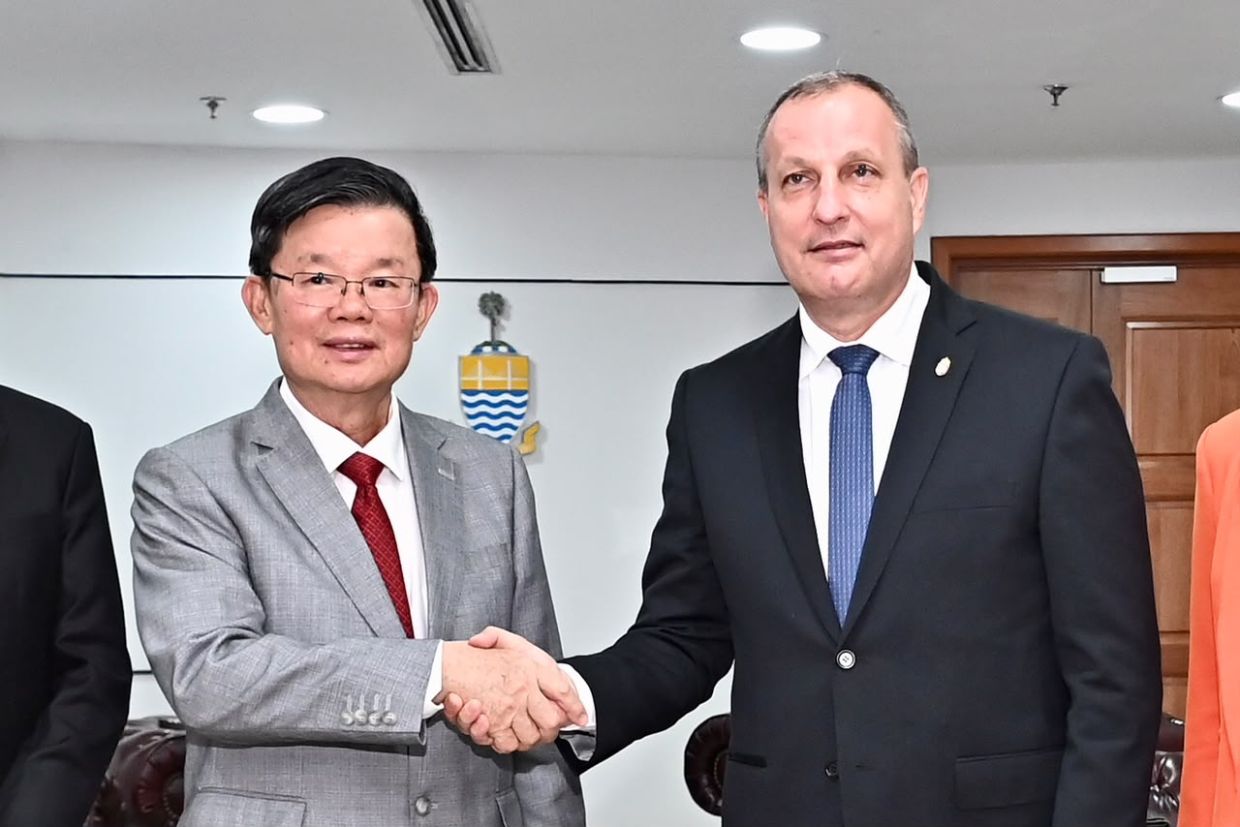
Penang is charting a strategic course to strengthen its partnership with Hungary, targeting collaborative opportunities spanning higher education, technological advancement, water management and green energy initiatives. The momentum behind this bilateral engagement emerged from recent discussions between Penang Chief Minister Chow Kon Yeow and Hungarian Ambassador to Malaysia Dr Sándor Sipos, signalling the state's growing interest in tapping European expertise for economic diversification and sustainable development goals.
Chow emphasized Hungary's standing as a significant European nation with deep technical and research capabilities that align with Penang's own developmental priorities. The meetings between state government officials and the Hungarian delegation encompassed an expansive agenda covering heritage preservation, tertiary education, trade pathways, water resource management, environmental technologies, visitor economy development and people-to-people exchanges. Beyond formal discussions, participants explored concrete mechanisms for strengthening institutional linkages among universities, commercial enterprises and public sector bodies that could translate strategic intent into actionable outcomes.
The state chief minister underscored a fundamental convergence of values between the two jurisdictions, noting that both Penang and Hungary are committed to balancing economic growth with preservation of their respective cultural and historical legacies. Chow expressed particular enthusiasm regarding prospects for enhanced cooperation in research initiatives, water security frameworks, renewable energy deployment and workforce capability building. His remarks reflected recognition that addressing shared development challenges—from resource efficiency to talent cultivation—can become a foundation for mutually beneficial engagement.
Educational exchange programmes emerged as a cornerstone of the proposed partnership framework. Chow acknowledged the measurable benefits already generated by Hungary's existing scholarship scheme for Malaysian students, which has created pathways for young Malaysians to access quality higher education and research opportunities. He framed educational mobility as a critical diplomatic tool, arguing that student and academic exchanges foster long-term understanding and create lasting networks that extend far beyond individual tenure periods at foreign institutions.
The Hungarian government currently allocates 40 fully-funded scholarship positions annually for Malaysian recipients, representing a substantive commitment to human capital development within the region. Ambassador Sipos actively encouraged Malaysian applicants to engage with this programme, explicitly welcoming qualified candidates from Penang and across the country. His invitation suggested Hungary's openness to expanding these educational channels, potentially creating additional opportunities for the state's high-achieving students to pursue advanced studies in Central Europe.
Penang's strategic positioning within Malaysia's economic structure makes the state a logical partner for international collaborations in innovation and technology transfer. The state has long positioned itself as a hub for semiconductor manufacturing, electronics assembly and emerging technology sectors, suggesting natural complementarities with Hungary's own industrial strengths and research capabilities. Discussions indicating interest in water management expertise carry particular resonance given Southeast Asia's growing vulnerability to water stress and the necessity for efficient resource governance frameworks.
During parallel meetings with state executive councillors Goh Choon Aik and Gooi Zi Sen, the Hungarian delegation broadened discussions into complementary domains including trade facilitation, community-level engagement, youth development pathways and sports cooperation mechanisms. Gooi signalled Penang's receptiveness to international sports collaboration by committing to have the state sports council conduct detailed feasibility studies on sports disciplines suited to bilateral exchange and training partnerships with Hungary. This strand of cooperation, while less prominent than education and technology dimensions, reflects understanding that soft power channels including athletics can build diplomatic goodwill and expose local talent to international training methodologies.
The state government's emphasis on welcoming international collaborations that elevate domestic sporting standards and develop emerging athlete talent reveals a holistic approach to partnership building. Rather than limiting engagement to traditional economic or academic domains, Penang officials are exploring opportunities across multiple sectors to maximize mutual benefit and create diverse touchpoints for sustained interaction. This multi-track approach mirrors best practices in regional diplomacy where bilateral relationships are strengthened through simultaneous progress across complementary domains.
For Malaysia more broadly, Penang's proactive engagement with Hungary exemplifies the state's strategic positioning within the nation's external relations architecture. As a state with established international business networks and academic institutions of regional standing, Penang frequently catalyzes relationships that subsequently expand to national significance. Hungary's geographic position within the European Union and its technical expertise in water management, renewable energy and advanced manufacturing make it a valuable partner for Malaysia's own sustainability and innovation agendas.
The timing of these discussions reflects broader regional trends toward deepening Asia-Europe connectivity beyond traditional trade frameworks. Southeast Asian economies increasingly recognize the value of accessing European technical standards, research capabilities and sustainability methodologies. For Penang specifically, partnerships spanning education and environmental technology offer pathways to address local challenges while positioning the state as an attractive destination for talent and investment.
Chow's optimism regarding the conversion of collaborative discussions into substantive projects underscores the earnestness with which both parties approach this engagement. Subsequent phases will likely involve detailed project scoping among relevant ministries, academic institutions and industry partners. The ambassador's reciprocal commitment to deepening ties across education, research, innovation and talent development suggests Hungarian institutional interest in sustained engagement rather than isolated diplomatic gestures.
Successful implementation of this partnership framework would generate tangible benefits extending across multiple constituencies. Penang students gain expanded access to quality overseas education; local industries access technological expertise and international best practices; government agencies acquire knowledge in sustainable resource management; and cultural institutions benefit from heritage conservation collaboration. For Hungary, the relationship opens pathways into Southeast Asian markets while enabling its academic and research communities to engage with a dynamic, technologically advanced Malaysian state that serves as a gateway to ASEAN.
%22%2F%3E%3C%2Fpattern%3E%3C%2Fdefs%3E%3Crect%20width%3D%22100%25%22%20height%3D%22100%25%22%20fill%3D%22url(%23ph5kreng)%22%2F%3E%3Crect%20width%3D%22100%25%22%20height%3D%22100%25%22%20fill%3D%22url(%23ph5krenp)%22%2F%3E%3Ctext%20x%3D%2250%25%22%20y%3D%2250%25%22%20text-anchor%3D%22middle%22%20dominant-baseline%3D%22central%22%20fill%3D%22rgba(255%2C255%2C255%2C0.95)%22%20font-family%3D%22Georgia%2C%20'Times%20New%20Roman'%2C%20serif%22%20font-weight%3D%22700%22%20font-size%3D%22226%22%20letter-spacing%3D%22-0.02em%22%3EHAWANA%3C%2Ftext%3E%3C%2Fsvg%3E)
%22%2F%3E%3C%2Fpattern%3E%3C%2Fdefs%3E%3Crect%20width%3D%22100%25%22%20height%3D%22100%25%22%20fill%3D%22url(%23ph1q69ng)%22%2F%3E%3Crect%20width%3D%22100%25%22%20height%3D%22100%25%22%20fill%3D%22url(%23ph1q69np)%22%2F%3E%3Ctext%20x%3D%2250%25%22%20y%3D%2250%25%22%20text-anchor%3D%22middle%22%20dominant-baseline%3D%22central%22%20fill%3D%22rgba(255%2C255%2C255%2C0.95)%22%20font-family%3D%22Georgia%2C%20'Times%20New%20Roman'%2C%20serif%22%20font-weight%3D%22700%22%20font-size%3D%22320%22%20letter-spacing%3D%22-0.02em%22%3ETV3%3C%2Ftext%3E%3C%2Fsvg%3E)