The Royal Malaysia Police have implemented strict access controls across five designated zones in Bercham following the severe storm that struck the area on Friday, with authorities working to balance security concerns against residents' needs to salvage and repair their damaged homes. Ipoh district police chief ACP Muhammad Najib Hamzah outlined the security measures at a briefing held at Bercham police station, explaining that the sealed-off areas represent a precautionary response to prevent opportunistic crimes that commonly occur in the aftermath of natural disasters when communities are vulnerable and displaced.
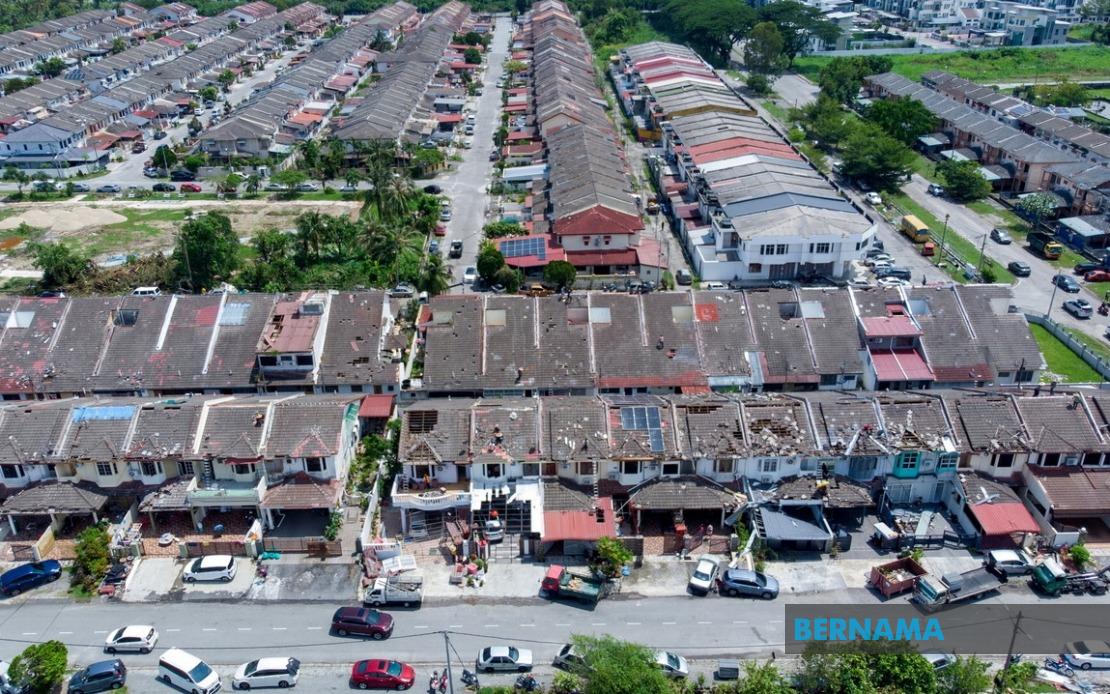
The storm, now attributed to a rare landspout phenomenon, devastated multiple residential neighbourhoods across Bercham, affecting over 200 properties and leaving significant portions of the community without basic services. Among the hardest-hit locations are Anjung Bercham Utara, Taman Mujur, Kampung Bercham, Kampung Tersusun Tasek, Taman Pusat Bercham and Taman Indah Sakti, creating a patchwork of disaster zones where residents face lengthy recovery periods. The unprecedented nature of the incident has drawn attention from senior government figures, with Ipoh Barat Member of Parliament M. Kulasegaran, who also serves as Deputy Minister in the Prime Minister's Department (Law and Institutional Reform), characterizing the event as extraordinary and highlighting the unusual meteorological conditions that produced the damage.
While the police implementation of movement restrictions aims to protect properties and prevent looting, authorities have acknowledged the practical challenges facing residents attempting to salvage belongings and undertake emergency repairs. ACP Muhammad Najib Hamzah stated that the police will exercise reasonable discretion for residents who need to enter affected areas during daylight hours for legitimate cleanup and restoration work, recognizing that many families cannot afford to delay recovery efforts. However, the police stance becomes notably firmer regarding nighttime activities, particularly given that extensive areas including Anjung Bercham remain without electrical power, creating conditions where criminal elements could operate with greater concealment.
The nighttime restrictions reflect a deliberate security strategy based on law enforcement experience with disaster zones. Officers have been instructed to verify ownership of properties when residents request after-dark access, implementing a verification protocol designed to distinguish between legitimate property owners conducting salvage operations and individuals potentially posing as residents to facilitate break-ins or theft of undamaged valuables from neighbouring properties. This graduated approach to movement restrictions seeks to prevent the common pattern of organized looting that emerges during recovery phases, when abandoned and damaged homes present attractive targets for criminal networks operating across wider regions.
As of the morning briefing, the police had logged 492 storm-related incident reports through their Op Bencana emergency reporting system, a figure that reflects the scale of damage and displacement across the community. Significantly, authorities have indicated that no deadline currently exists for victims to file formal reports, extending flexibility to residents who may still be in shock or dealing with immediate survival priorities such as securing temporary shelter or arranging medical care for injured family members. This open-ended reporting window acknowledges the psychological and logistical challenges that disaster survivors face in the immediate aftermath of traumatic events.
Determining the full financial impact of the storm remains an ongoing process, with ACP Muhammad Najib Hamzah noting that total loss assessments have not yet been finalized. The delay in quantifying damages reflects the complexity of evaluating losses across multiple categories including structural damage to homes, destruction of personal possessions, infrastructure damage, and indirect economic impacts from displacement and business interruption. Insurance assessors and disaster management officials will need to conduct detailed surveys of each affected property before providing comprehensive loss estimates that could inform government relief packages and recovery assistance programmes.
The Bercham incident highlights the particular vulnerability of Malaysian urban and semi-urban communities to severe weather phenomena, with the landspout classification adding to growing awareness of meteorological hazards beyond conventional monsoon flooding and landslide risks. The concentration of damage in a defined geographic area, combined with the sudden and violent nature of the storm, underscores how rapidly weather events can overwhelm local emergency response capacities and create cascading disruptions across essential services including electricity supply and water distribution. For residents in Perak and other states in northern Peninsular Malaysia, the incident serves as a reminder of the importance of emergency preparedness and rapid response coordination.
The police cordon strategy, while necessary from a security standpoint, also raises broader questions about disaster management coordination between multiple agencies including civil defence, local councils, and utility providers. Effective recovery requires not only preventing crime but also facilitating swift restoration of essential services, clearing of debris, and deployment of temporary accommodation and medical facilities. The presence of police checkpoints must be coordinated with humanitarian access to ensure that aid workers, rescue personnel, and emergency repair contractors can reach affected areas without unnecessary delays that could compound suffering among displaced residents.
Looking forward, the Bercham storm response will likely inform disaster management protocols for other Malaysian states, particularly those prone to severe weather events or sitting in areas with complex topography that can generate unusual meteorological conditions. The documentation of police security measures, community cooperation levels, and challenges encountered during the access control phase could provide valuable operational insights for future disaster response operations. Additionally, the incident underscores the importance of pre-disaster community education regarding appropriate emergency responses and cooperation with authorities during security lockdowns, helping residents understand the rationale behind movement restrictions rather than perceiving them as arbitrary impositions during an already stressful period.