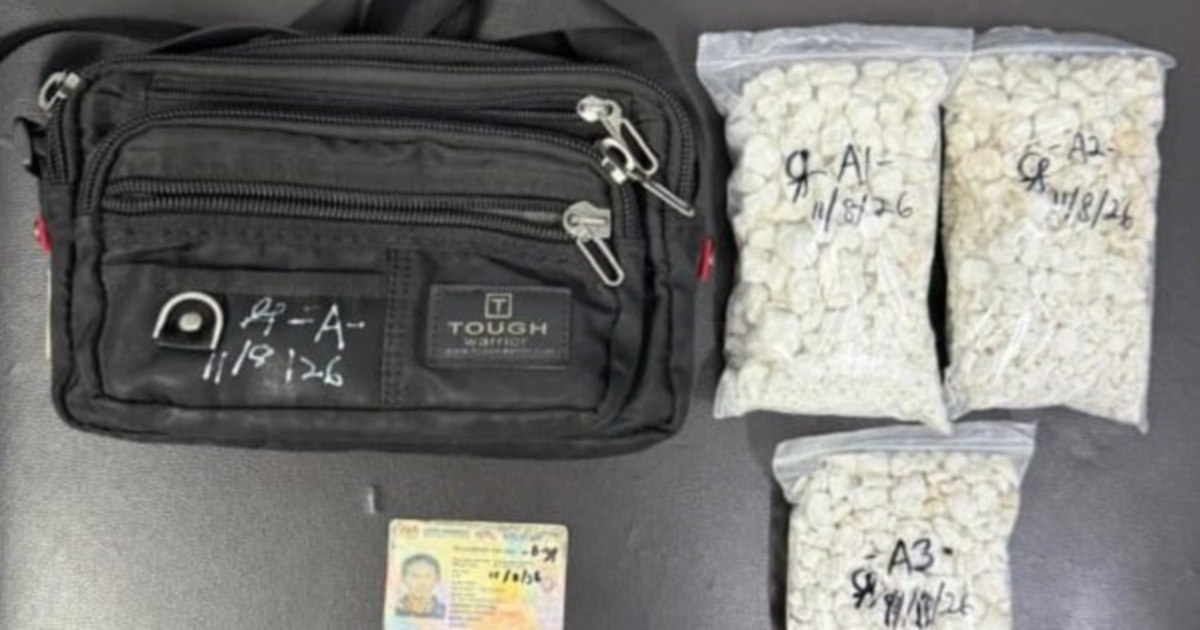
Law enforcement officers in the Kluang district carried out a targeted narcotics operation during early morning hours at Simpang Renggam, resulting in the seizure of 1.055kg of heroin and the arrest of a 42-year-old male suspect. The contraband, intercepted during the swift enforcement action, carries an estimated street value of RM10,128, underscoring the significant monetary stakes involved in Malaysia's ongoing battle against drug trafficking networks.
The raid represents part of a sustained police campaign across the southern region to disrupt the supply chain of hard drugs that continue to plague Malaysian communities. Simpang Renggam, a locality within the Kluang administrative area of Johor, has become an increasingly active location for law enforcement operations targeting narcotics distribution rings. The seizure quantity suggests the suspect may have been involved in mid-level trafficking rather than mere personal consumption, which typically involves far smaller quantities.
Heroin remains one of the most problematic narcotics in Malaysia's drug landscape, driving significant criminal activity and contributing substantially to the country's overall addiction epidemic. The purity and potency of illicit heroin available on Malaysian streets has risen in recent years, partly due to processing methods and mixing agents used by trafficking syndicates. At the estimated valuation of RM10,128, this particular seizure would represent a loss of considerable revenue to whatever distribution network the suspect was connected to.
The apprehension of the 42-year-old individual provides investigators with an opportunity to trace upstream suppliers and downstream distribution networks. Police interrogation protocols typically focus on extracting information about sources of supply, customer bases, and financial transactions that might illuminate the broader organizational structure behind the trafficking operation. Such intelligence gathering proves crucial in dismantling larger criminal enterprises rather than merely addressing individual street-level dealers.
From a geographical perspective, the Simpang Renggam location holds strategic significance within Johor's transportation network. The area's proximity to major highways facilitates drug movement across state borders and regionally, making it an attractive operational hub for trafficking groups seeking to establish distribution nodes. Law enforcement agencies have therefore escalated monitoring and enforcement activities in such strategically positioned localities to intercept shipments before they reach street markets.
This seizure aligns with national drug enforcement priorities established under Malaysia's comprehensive anti-narcotics framework. The Royal Malaysian Police's Narcotics Crime Investigation Division continues to allocate substantial resources toward high-impact operations targeting significant drug quantities, recognizing that interdicting larger stashes disrupts supply chains more effectively than cumulative small busts. The timing of early-morning raids reflects tactical advantages, as suspects typically maintain reduced vigilance during such hours.
The valuation methodology applied to seized heroin—typically calculated using reference prices from comparable market transactions and accounting for purity levels—provides important data for understanding pricing dynamics within Malaysia's illicit drug economy. Such pricing information helps authorities estimate market size, distribution costs, and profit margins, contributing to strategic understanding of how criminal organizations operate and sustain themselves financially.
For regional context, heroin trafficking represents a transnational challenge affecting Southeast Asia broadly. Supply routes originating from the Golden Triangle and Golden Crescent regions funnel drugs through Malaysia en route to markets in Singapore, Thailand, and beyond. Malaysia's role as both a transit point and consumption market means that domestic enforcement operations have implications extending across the region's security architecture. Cooperation among ASEAN nations on intelligence sharing and coordinated enforcement has become increasingly important.
The arrest will now proceed through Malaysia's legal system under the Dangerous Drugs Act 1952, which provides severe penalties for trafficking offences. Conviction on trafficking charges involving quantities exceeding a prescribed threshold can result in lengthy imprisonment sentences. The Malaysian judicial system takes narcotics offences extremely seriously, reflecting both the societal harm caused by drug addiction and the destabilizing impact of trafficking networks on community safety and public health infrastructure.
Beyond the immediate enforcement action, this operation underscores persistent challenges facing Malaysian authorities in combating an entrenched drug problem. While seizures and arrests continue regularly, the underlying demand for heroin and other opioids among Malaysian consumers remains substantial, suggesting that supply reduction strategies must be complemented by robust demand reduction initiatives including treatment programs, community education, and rehabilitation services. The sustainability of anti-drug efforts depends on addressing both sides of this supply-demand equation comprehensively.

