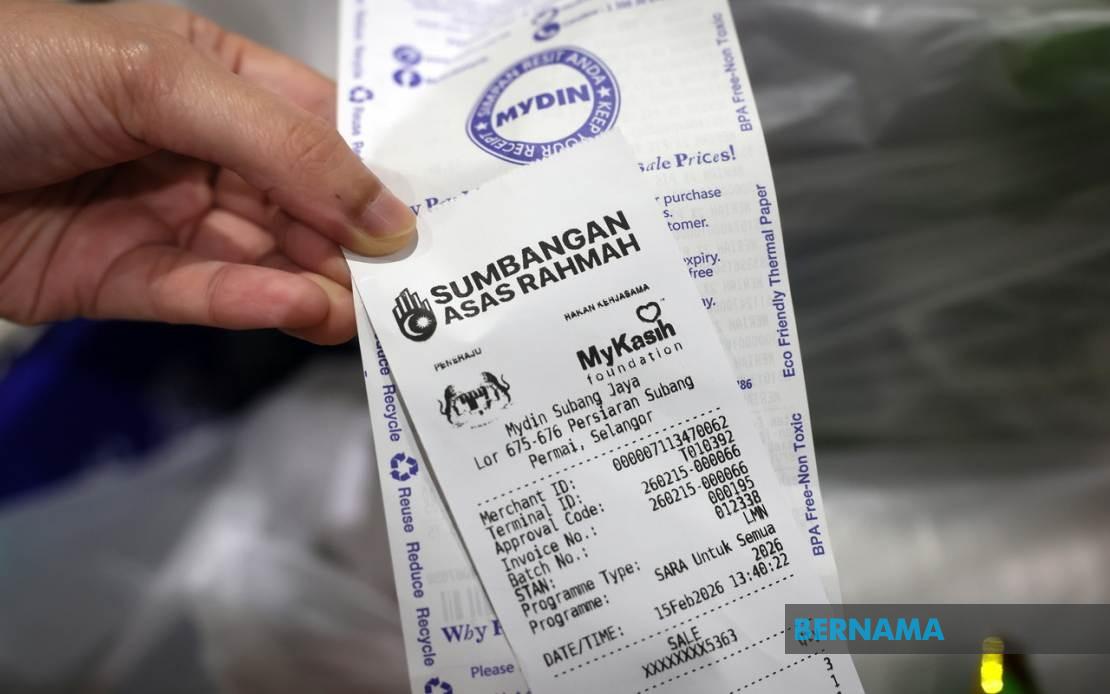
Malaysia's Sumbangan Asas Rahmah (SARA) programme has demonstrated remarkable penetration among its target beneficiaries, with official figures showing that nearly nine million monthly recipients of Sumbangan Tunai Rahmah (STR) cash assistance have spent RM3.45 billion through the scheme so far this year. The Ministry of Finance reported an impressive 99 per cent utilisation rate, suggesting that the digital delivery mechanism has successfully overcome adoption barriers and enabled widespread participation among low- and middle-income households facing mounting cost-of-living pressures.
The extended SARA Untuk Semua initiative has achieved even broader reach, with approximately 22 million people—representing 87 per cent of all programme recipients—having participated in local market transactions valued at over RM1.77 billion. These figures were disclosed in a parliamentary response to Datuk Aminolhuda Hassan from Pakatan Harapan's Sri Gading constituency, who sought clarification on government performance indicators for both the core STR programme and its wider variant. The data provides empirical evidence that the government's shift toward targeted, traceable assistance mechanisms is resonating with intended beneficiaries.
The programme's architecture relies on a cashless delivery system built into MyKad digital credits, fundamentally distinguishing it from traditional cash handouts. Recipients redeem these credits at registered SARA Rakan Niaga merchant partners for purchases across 15 essential categories, encompassing basic foodstuffs, personal hygiene items, household cleaning supplies, and medicines. This structure serves a dual policy objective: it ensures resources flow toward genuine necessities rather than discretionary spending while simultaneously enabling government agencies to maintain granular visibility over programme disbursement and usage patterns. The Ministry of Finance emphasised that this transparency mechanism allows policymakers to verify that assistance reaches its intended demographic and fulfils its stated anti-poverty mandate.
The transaction velocity recorded through SARA reflects broader economic considerations beyond poverty alleviation. By directing spending through registered retail partners, the programme channels government transfer payments directly into local merchant networks, generating downstream multiplier effects throughout the Malaysian economy. When nine million households make regular essential purchases through SARA channels, they sustain demand for locally distributed goods, support small and medium retailers, and maintain income flows for supply-chain participants. The Ministry implicitly recognised this stimulus dimension, noting that recipient spending performance validates how effectively the combined STR-SARA architecture addresses cost-of-living challenges whilst simultaneously injecting demand into localised economic ecosystems.
The government's budgetary commitment to these programmes has expanded substantially, with allocations climbing to RM15 billion in 2026 from RM10 billion in 2024. This 50 per cent increase over two years underscores the administration's prioritisation of targeted social protection amid persistent inflation concerns and growing household vulnerability. The upward trajectory suggests confidence in the SARA delivery model's effectiveness and indicates that policymakers view escalating safety-net expenditure as necessary alongside broader fiscal management. For Malaysian households already navigating elevated prices for food, transport, and utilities, this budgetary trajectory represents tangible recognition of their economic circumstances.
The 99 per cent utilisation rate merits particular analytical attention, as such penetration levels are uncommon for assistance programmes across comparable economies. High take-up typically requires successful resolution of multiple practical barriers: beneficiaries must understand eligibility criteria and application procedures, possess identification documents compatible with the delivery system, locate participating merchants, and retain sufficient trust in digital mechanisms to engage regularly. Malaysia's achievement suggests that initial implementation challenges—common with new welfare delivery platforms—have largely been overcome. The MyKad integration likely proved decisive, leveraging existing citizen identification infrastructure rather than requiring parallel enrolment mechanisms.
Merchant participation patterns also warrant examination, as the programme's success ultimately depends on sufficient retail availability. The designation of SARA Rakan Niaga outlets must span urban and rural geographies to ensure equitable access, particularly in less densely populated areas where retail density is naturally lower. The Ministry's emphasis on monitoring and adjusting the merchant network implies ongoing attention to geographic equity, though published data does not break down outlet distribution patterns by region. This remains a potential vulnerability for programme inclusivity, especially among recipients in peripheral districts where registered merchant presence may be sparse.
From a Southeast Asian perspective, Malaysia's SARA design offers a replicable model for other regional economies grappling with food security and cost-of-living pressures. The integration of digital identity systems with welfare delivery, the focus on essential commodities, and the emphasis on trackability represent sophisticated policy innovation. Indonesia, Thailand, and the Philippines face comparable pressures on household budgets and carry substantial informal populations, yet Malaysia's documented success rate suggests that well-designed, digitally-enabled assistance can achieve high participation even among economically vulnerable demographics. Regional observers will likely scrutinise the scheme's longer-term sustainability and whether high utilisation translates into measurable improvements in household nutrition, savings rates, or economic mobility.
The Ministry of Finance's commitment to continuous programme monitoring reflects awareness that high utilisation rates, whilst encouraging, do not automatically guarantee welfare outcomes. Recipients spending money through SARA channels certainly experience immediate relief from purchasing constraints, but whether the programme reduces poverty, improves food security, or creates foundations for longer-term economic advancement requires different measurement frameworks. Subsequent evaluation should track metrics including dietary diversity among participating households, changes in children's nutritional status, and whether assistance releases household resources for health or education investments. Such depth of analysis would clarify whether SARA functions primarily as a consumption stabiliser or whether it can catalyse more transformative household outcomes.
Looking forward, the programme's apparent success creates both opportunities and management challenges for the Ministry of Finance. The proven demand, evidenced by 99 per cent utilisation, likely justifies continued expansion and refinement. However, sustaining such high participation rates whilst controlling programme costs requires that both eligibility targeting and merchant compliance mechanisms remain robust. As budgets increase from RM10 billion to RM15 billion, ensuring that expanded resources reach genuinely vulnerable populations rather than becoming diluted through administrative leakage becomes increasingly critical. The Ministry's stated commitment to targeted, traceable distribution suggests this risk is acknowledged, yet implementation fidelity across thousands of retail partners nationwide remains an ongoing operational consideration that warrants periodic public transparency.
Ultimately, SARA's 99 per cent utilisation rate and RM3.45 billion in annual spending represent a substantial policy achievement, validating the government's shift toward digitally-enabled, commodity-specific assistance targeting. The programme demonstrates that low- and middle-income Malaysians will readily engage with convenient, well-designed welfare mechanisms that respect dignity whilst providing measurable support. As cost-of-living pressures persist across Southeast Asia and households face continued economic uncertainty, Malaysia's documented experience with SARA provides timely evidence that technology-enabled, carefully targeted social protection can function at meaningful scale whilst generating broader economic circulation effects.

