Port Klang's third terminal project has reached a critical juncture as the Selangor State Government and the Transport Ministry coordinate efforts to untangle the land ownership complexities that have delayed progress on this strategically significant infrastructure initiative. Transport Minister Anthony Loke disclosed that officials are working with both the state administration and private sector partners to navigate a concession-based framework that will eventually enable construction to commence, ideally within the current year. The resolution of these foundational property issues represents the immediate priority before machinery can roll onto the site at Carey Island, where the new terminal facility is planned.
The development framework being examined centres on a Build-Operate-Transfer arrangement, a model that has become increasingly common for major Malaysian infrastructure projects seeking to balance public oversight with private sector efficiency and investment capacity. Loke emphasised that whilst the government maintains an ambitious timeline for breaking ground this year, the institutional groundwork—particularly the settlement of land claims and boundaries—cannot be rushed without risking costly disputes during the construction phase itself. This measured approach reflects hard-won lessons from previous port and transport infrastructure projects that encountered protracted delays due to inadequately resolved land tenure matters at the outset.
The Port Klang Third Terminal project carries substantial strategic weight within Malaysia's broader economic architecture. Government officials, including Prime Minister Datuk Seri Anwar Ibrahim, have consistently framed the terminal as essential infrastructure for maintaining the country's competitive position within regional shipping lanes and global logistics networks. As trade patterns continue to shift and container volumes grow, Port Klang's capacity constraints have become increasingly apparent, particularly given competition from neighbouring ports in Thailand and Singapore that have made significant recent investments in terminal modernisation and expansion.
Selangor Menteri Besar Datuk Seri Amirudin Shari previously identified the precise land parcels designated for development, totalling approximately 1,699.68 hectares across Pulau Carey within the Kuala Langat district. The property portfolio comprises two distinct ownership categories: roughly 1,011.71 hectares of seabed land managed by the Selangor State Development Corporation (PKNS), and approximately 687.96 hectares of coastal land held by Yayasan Selangor. Coordinating agreements between these state entities, along with managing any third-party interests or legacy claims, constitutes the substantive challenge now consuming official attention and negotiating efforts.
For Malaysian readers and regional observers, the third terminal's realisation holds profound implications for supply chain dynamics throughout Southeast Asia. Port Klang already functions as the nation's primary container handling facility and ranks among the region's busier maritime hubs. Expanding capacity would theoretically reduce berthing delays, lower vessel turnaround times, and enhance the port's appeal to international shipping lines evaluating where to consolidate or reroute cargo operations. These efficiency gains could ultimately lower logistics costs for Malaysian exporters and importers, indirectly benefiting manufacturers, retailers, and consumers across multiple sectors.
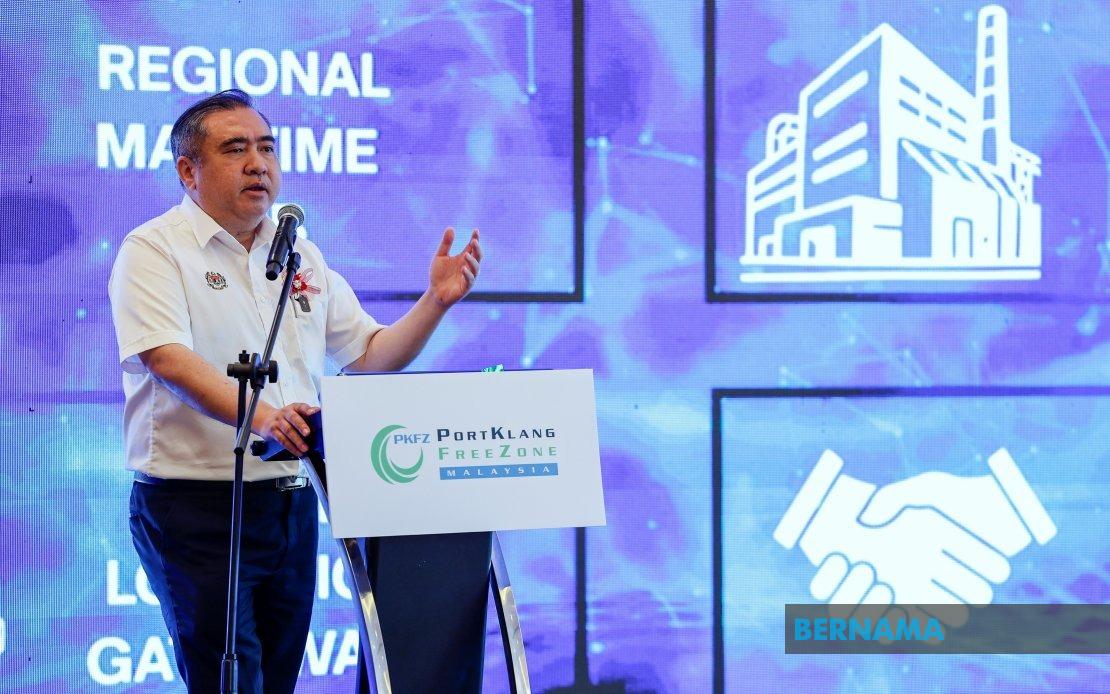
The announcement of the terminal project coincided with Loke's inspection of several complementary developments within the Port Klang Free Zone, including new labour accommodation facilities, manufacturing expansions, and an advanced industrial intelligence platform. These investments, worth a combined RM566 million, illustrate the broader ecosystem of port-adjacent economic activity that benefits from improved maritime infrastructure. The labour quarters initiative particularly signals recognition that port expansion requires corresponding expansion of workforce capacity and accommodation, a holistic approach to infrastructure planning that was sometimes neglected in earlier Malaysian development schemes.
Parallel to the terminal initiative, the Transport Ministry has been addressing a distinct but related challenge: the shortage of skilled heavy vehicle operators within Malaysia's haulage and logistics sectors. To address this gap, Loke revealed that Port Klang Free Zone officials recently signed a memorandum of understanding with the Armed Forces Ex-Servicemen's Affairs Corporation (Perhebat), aimed at creating employment pathways for military retirees and veterans. The initiative includes special programme provisions enabling former service personnel to obtain class E heavy vehicle licences, thereby channeling experienced, disciplined manpower into roles where shortages have become acute and costly.
This employment initiative represents shrewd workforce planning that simultaneously addresses two policy objectives: veteran welfare and industrial labour supply. Malaysia's military discharge pipeline annually releases substantial numbers of trained individuals accustomed to equipment operation, logistical coordination, and structured work environments. Rather than allowing this talent reservoir to dissipate into informal sectors, formalising pathways into licensed commercial driving roles aligns individual welfare with sectoral needs. The memorandum, witnessed by Transport Minister Loke and Deputy Prime Minister Datuk Seri Dr Ahmad Zahid Hamidi, signals high-level government commitment to integrating this employment stream into broader logistics sector development planning.
The convergence of these initiatives—the third terminal land resolution efforts, the adjacent industrial zone investments, and the veteran employment programme—reflects a more integrated approach to port infrastructure policy than Malaysia has historically demonstrated. Rather than treating these elements as discrete projects, officials appear to be recognising their interdependencies and synergistic potential. A functioning third terminal requires not only property settlement and construction capital but also adequate operational workforce, reliable ground transportation networks, and surrounding industrial facilities that generate cargo volumes.
For regional context, Port Klang's expansion plans arrive at a moment when several Southeast Asian ports are simultaneously investing heavily in capacity and capability. Singapore's Port Authority continues upgrading Tuas Terminal, whilst Thailand's Laem Chabang facility is expanding container handling capacity. This competitive environment underscores why Malaysia cannot afford protracted delays in its third terminal development. Each year of postponement risks marginal trade diversion to competing ports, as shipping lines optimise their regional hub selections based on available capacity, reliability, and cost-effectiveness.
The resolution of the Carey Island land issues will likely establish important precedents for future Malaysian infrastructure projects requiring coordination between state-level property administration, federal transport authorities, and private concessionaires. Should the current negotiating framework succeed in efficiently settling ownership complications and establishing operational agreements within a reasonable timeframe, it could provide a replicable model for other stalled Malaysian infrastructure initiatives similarly constrained by complex multi-stakeholder property arrangements.
Moving forward, observers should monitor both the pace at which the land settlement progresses and the specific terms of the concession agreement ultimately negotiated. These details will determine whether the ambitious timeline for construction commencement can realistically be achieved, and whether the final terminal design and operational specifications adequately reflect Port Klang's long-term capacity requirements and Malaysia's evolving position within regional trade corridors.