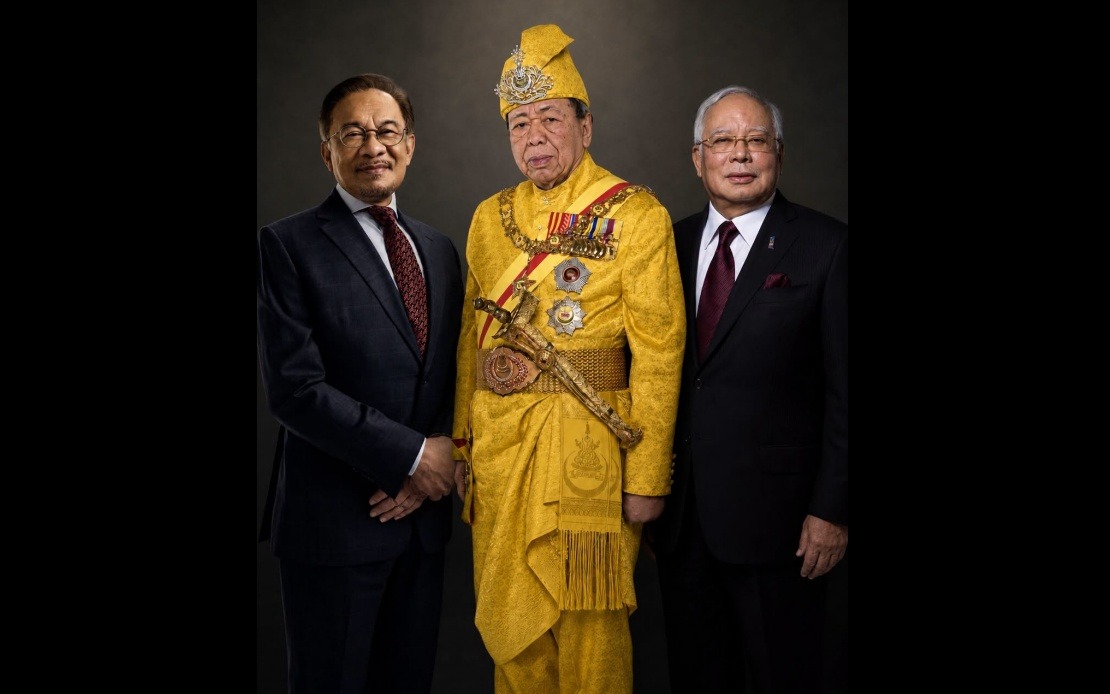
The Sultan of Selangor, Sultan Sharafuddin Idris Shah, has publicly recognised Prime Minister Datuk Seri Anwar Ibrahim's role in bringing the Shah Alam Line LRT3 to completion, with the rail service commencing operations this week. The Sultan's acknowledgment carries significant weight in Malaysian political circles, underscoring the broader consensus that the project represents a meaningful infrastructure achievement for the country's most economically dynamic state.
Central to the Sultan's commendation is Anwar's decision to restore five stations that had previously been scrapped from the project's design. When the Prime Minister took office in 2022, having also assumed the Finance portfolio, he made the reinstatement of these stations a priority alongside a separate initiative to develop affordable housing in close proximity to LRT3 stations. This combination of decisions, the Sultan emphasised, reflects a commitment to practical, people-centred infrastructure planning that balances connectivity with residential accessibility.
The genesis of the LRT3 project reveals how royal input and public grievance can shape major infrastructure decisions. Sultan Sharafuddin noted that the original impetus came from widespread complaints, particularly from housewives whose husbands struggled with severe traffic congestion returning home during peak hours. This grassroots concern eventually caught the attention of former Prime Minister Datuk Seri Najib Tun Razak, whose administration approved the Klang-Shah Alam-Kuala Lumpur rail link. At that juncture, Klang's infrastructure was severely constrained by only two bridges crossing the Klang River, creating bottlenecks during rush periods.
The project's journey to completion has been marked by considerable delays and design compromises. Following the 2018 change of government, implementation ground to a halt for more than 18 months. The subsequent COVID-19 pandemic imposed a further 19-month disruption that persisted until 2021. During these extended interruptions, the original design underwent significant downsizing: station footprints were reduced, the train fleet was trimmed, and crucially, five planned stations were dropped entirely from the alignment. These modifications, while reducing project scope and cost, had threatened to undermine the infrastructure's utility for the communities it was designed to serve.
The Sultan's framing of LRT3 explicitly rejects the notion of large-scale infrastructure as a vehicle for political prestige or grand narrative-building. Instead, he positioned the line as a fundamentally utilitarian project oriented toward resolving tangible public problems—congestion, commute times, and quality of life for ordinary residents of Klang Valley municipalities. This characterisation holds particular significance given Malaysia's history of infrastructure projects that have sometimes prioritised symbolic impact over practical benefit.
As the rail service enters operation, its potential to reshape transportation patterns across the Klang Valley remains substantial. The line connects Klang, Shah Alam, and Kuala Lumpur—three municipalities that collectively form one of Southeast Asia's most important economic and commercial zones. By providing a faster, safer, and more comfortable alternative to road transport, the LRT3 addresses not merely commuter convenience but broader economic productivity, as reduced congestion translates to measurable gains in worker efficiency and commercial activity.
The Sultan also directed attention to Prasarana Malaysia Bhd, the state-owned operator responsible for the line's ongoing maintenance and service delivery. His expectation that Prasarana will maintain high standards of upkeep reflects awareness that infrastructure projects ultimately succeed or fail based on sustained operational competence. In Malaysian context, where several public transport initiatives have struggled with maintenance standards and service consistency, this royal emphasis on continuity and quality signals the weight placed on execution excellence.
A particularly notable element of the Sultan's statement is his explicit caution against attributing the project's success to any single individual or political party. This deliberate depoliticisation acknowledges that the LRT3 represents genuine continuity across multiple administrations spanning different electoral cycles and governance configurations. The project originated under Najib's government, endured disruption under subsequent administrations, and reached fruition under Anwar—a trajectory that underscores how infrastructure of genuine public utility transcends partisan frameworks.
The economic implications extend beyond commute facilitation. The Sultan articulated hope that the LRT3 would catalyse broader economic development across the Klang Valley, strengthen interconnectivity between major commercial centres, and enhance quality of life metrics for residents. For Malaysia's policymakers and the business community, such infrastructure developments represent not merely transport solutions but foundational elements supporting economic competitiveness and investment attraction in regions facing increasing population density and congestion pressures.
The LRT3's operational commencement arrives at a moment when Malaysian transport infrastructure is receiving renewed policy attention. The project's completion, despite multiple setbacks and modifications, provides valuable lessons regarding project management resilience, the importance of restoring cancelled infrastructure components, and the practical benefits of bundling transport connectivity with affordable housing development—an integrated approach increasingly recognised as essential for sustainable urban development.
For the broader Southeast Asian context, Malaysia's experience with the LRT3 offers instructive precedent regarding how rail infrastructure projects navigate political transitions, pandemic disruptions, and resource constraints while maintaining commitment to public benefit. As regional governments consider similar mass transit initiatives, the LRT3's journey from conception through multiple obstacles to operational reality provides both cautionary lessons regarding project delays and positive evidence that well-conceived infrastructure can overcome substantial impediments.
The Sultan's measured yet firm commendation reflects royal prerogative to acknowledge significant public works while maintaining studied neutrality across political divisions. His emphasis on continuity, cross-administration cooperation, and people-centred planning establishes a framework for evaluating infrastructure success that prioritises tangible community benefit over political attribution—an increasingly important standard as Malaysian governance navigates competing partisan claims and developmental pressures.

