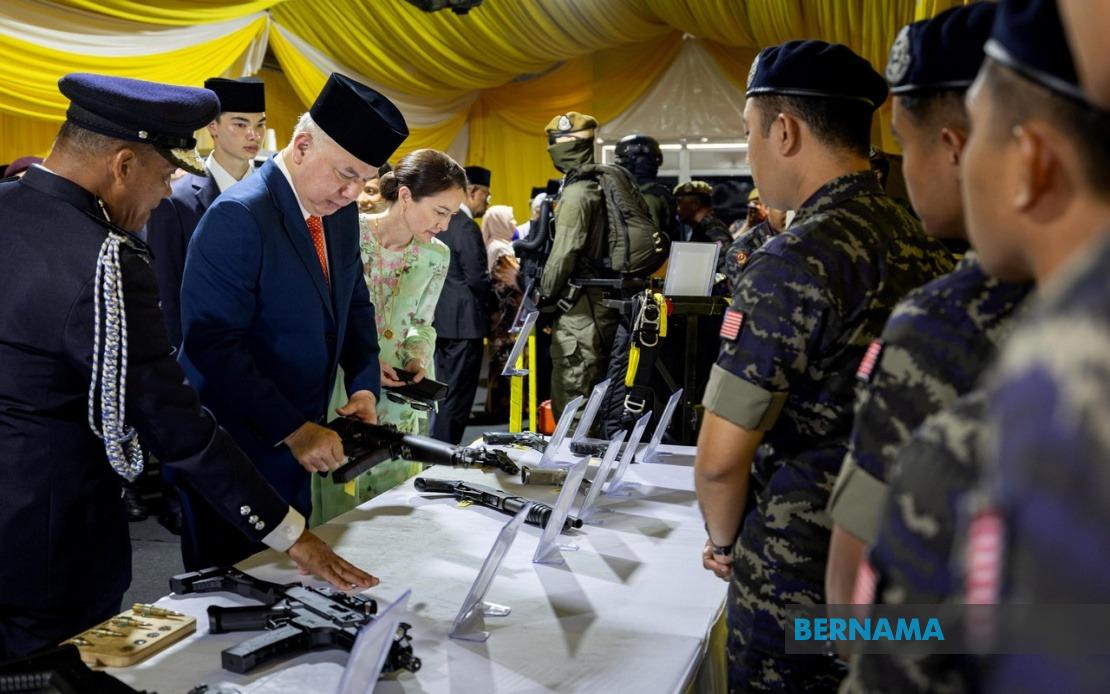
Sultan Nazrin Shah formally opened the Sultan Nazrin Shah 69 Commando Camp in Ulu Kinta, Perak on Monday, marking a significant milestone in Malaysia's security infrastructure. The ceremonial occasion brought together senior members of the royal family, including the Raja Permaisuri of Perak, Tuanku Zara Salim, the Raja Muda of Perak, Raja Jaafar Raja Muda Musa, and the Raja DiHilir of Perak, Raja Iskandar Dzurkarnain Sultan Idris Shah. The gathering also featured prominent government officials, including Menteri Besar Datuk Seri Saarani Mohamad, Home Minister Datuk Seri Saifuddin Nasution Ismail, and Inspector-General of Police Tan Sri Mohd Khalid Ismail, underscoring the national importance attached to the new installation.
The development of this facility represents far more than simply upgrading physical infrastructure. Rather, it embodies the broader policy direction of the MADANI Government toward bolstering the nation's defence and security apparatus in response to an increasingly complex threat environment. Home Minister Saifuddin Nasution articulated this vision during the opening ceremony, emphasizing that the camp symbolizes governmental determination to enhance the operational readiness and professional standards of Malaysia's security personnel. The comprehensive nature of the undertaking—constructed at a cost exceeding RM206 million across a sprawling 338-hectare site—reflects the seriousness with which authorities approach contemporary security challenges, from transnational terrorism to sophisticated criminal networks that extend beyond Malaysia's borders.
Malaysia's standing in global security metrics has become a point of national pride, particularly given the competitive nature of the ranking systems that international institutions employ. The country's achievement of 12th place out of 163 nations in the latest Global Peace Index reflects not merely statistical success but validates the strategic investments made in personnel training, operational capabilities, and institutional infrastructure. This positioning carries significant implications for investor confidence, regional stability perception, and Malaysia's diplomatic standing within Southeast Asia. The new commando camp serves as tangible evidence of the government's willingness to allocate substantial resources toward maintaining this hard-won security reputation in the face of emerging threats.
The 69 Commando unit itself boasts a distinguished operational history spanning more than five decades since its establishment in 1969. Throughout this extended period, the unit has demonstrated exceptional capability and resolve across multiple security crises that tested the nation's resilience. The communist insurgency campaign of the 1970s and 1980s established the unit's foundational expertise in counter-insurgency operations, while subsequent decades brought evolving challenges requiring continuous adaptation. The Al-Maunah incident in 2000, which exposed vulnerabilities in domestic security arrangements, underscored the necessity for specialized rapid-response capabilities that this elite unit provided. More recently, Operations Daulat in Lahad Datu, Sabah during 2013 demonstrated the commando force's essential role in defending territorial sovereignty against armed intrusions, while the unit's involvement in the international response to the MH17 tragedy in 2014 illustrated how Malaysian security forces contribute to regional and global crisis management.
The contemporary security environment facing Malaysia presents challenges markedly different from previous decades, requiring commando units to maintain proficiency across an expanded operational spectrum. Counter-terrorism operations have become increasingly sophisticated, with transnational networks utilizing advanced technology and distributed organizational structures that demand innovative response strategies. Hostage rescue missions now frequently involve scenarios far more complex than historical precedents, potentially spanning multiple jurisdictions and requiring close coordination with international partners. The catchall category of high-risk security threats encompasses everything from maritime piracy and weapons trafficking to cyber-enabled attacks on critical infrastructure. The 69 Commando's sustained capability to address this diverse threat matrix depends fundamentally on maintaining access to world-class training facilities, modern equipment, and an institutional framework that encourages continuous professional development and tactical innovation.
The decision to situate this facility in Ulu Kinta reflects thoughtful consideration of operational logistics and regional security governance. Perak's central location within Peninsular Malaysia positions the base advantageously for rapid deployment to multiple potential operational theaters. The substantial land area allocated—338 hectares—provides adequate space for comprehensive training facilities, administrative complexes, and accommodation for personnel that earlier installations lacked. The meticulous planning process that preceded construction ensured that the facility met exacting operational requirements rather than simply replicating existing base designs. This level of care in design and implementation distinguishes the Sultan Nazrin Shah Camp from purely routine infrastructure upgrades, elevating it to the status of a strategic national asset designed to serve the commando unit's operational needs throughout the coming decades.
The transfer of the facility to Royal Malaysia Police administration in 2024 carries organizational significance beyond simple administrative convenience. Positioning the 69 Commando within the police structure rather than military hierarchies reflects Malaysia's broader approach to internal security, which emphasizes police primacy in homeland protection while reserving the armed forces primarily for external defense. This framework distinguishes Malaysia's security architecture from some regional neighbors and reflects historical institutional choices made during the nation's post-independence development. The provision of comprehensive operations, training, and administrative facilities under unified police command enhances coordination across the security sector while reducing potential operational friction that can arise from competing bureaucratic priorities between military and police establishments.
The symbolic dimensions of naming the facility after Sultan Nazrin Shah carry particular weight within Malaysian political culture and governance traditions. The reigning monarch's personal connection to a major security installation reinforces the constitutional role of the ruler as guardian of national sovereignty and security interests. This naming convention extends beyond ceremonial recognition, instead encoding within institutional identity the principle that security force operations ultimately serve the Crown and, through it, the rakyat. For commando personnel operating under this institutional banner, the daily reminder of their service to the Sultan potentially reinforces professional commitment and ethical accountability. The gesture simultaneously recognizes the Sultan's personal interest in security affairs and elevates the installation's status within the broader security establishment.
The completion of this infrastructure project arrives at a moment when regional security dynamics face considerable flux. Southeast Asia continues grappling with maritime territorial disputes, the unfolding consequences of instability in Myanmar, and the persistent threat posed by transnational terrorist networks that exploit porous border regions and utilize advanced recruitment and financing techniques. Malaysia's strategic position as a major maritime hub and economically significant nation means that any security degradation would carry ripple effects throughout the region's commercial and strategic networks. The strengthened commando capability that the new facility enables thus serves not merely Malaysia's narrow security interests but contributes to the broader regional stability upon which Malaysia's prosperity depends. The investment in modern infrastructure communicates to both potential adversaries and regional partners Malaysia's commitment to maintaining security standards consistent with its economic importance and strategic location.
Institutional development of this scale requires sustained political will and resource allocation across electoral cycles and administrative transitions. The decision to invest RM206 million in a single security facility reflects confident governmental calculation that the benefits will justify the costs throughout the facility's operational lifespan, potentially extending decades. This long-term perspective stands in contrast to shorter-term budgetary pressures that often constrain security sector modernization in developing economies. The successful execution of this project may signal to other government agencies that substantial infrastructure investments in professional development and operational capability remain possible within Malaysia's fiscal framework, potentially stimulating similar initiatives within the defense establishment and other security-related institutions.
Looking forward, the Sultan Nazrin Shah Camp will likely function as a model for subsequent security infrastructure development, establishing benchmarks for facility design, training protocols, and personnel management that influence force development across the security sector. The facility's success in enhancing 69 Commando operational capability will become a case study within Malaysian defense circles and potentially attract attention from regional partners seeking to upgrade their own commando forces. The training methodologies developed and refined within the new facility's comprehensive infrastructure may eventually be adapted for other specialized units, creating positive externalities throughout the security establishment. As Malaysia navigates an increasingly complex security environment while maintaining its position as a regional economic and diplomatic hub, the human and institutional capabilities nurtured within this new installation will prove essential to sustaining the national peace and stability upon which continued development depends.

