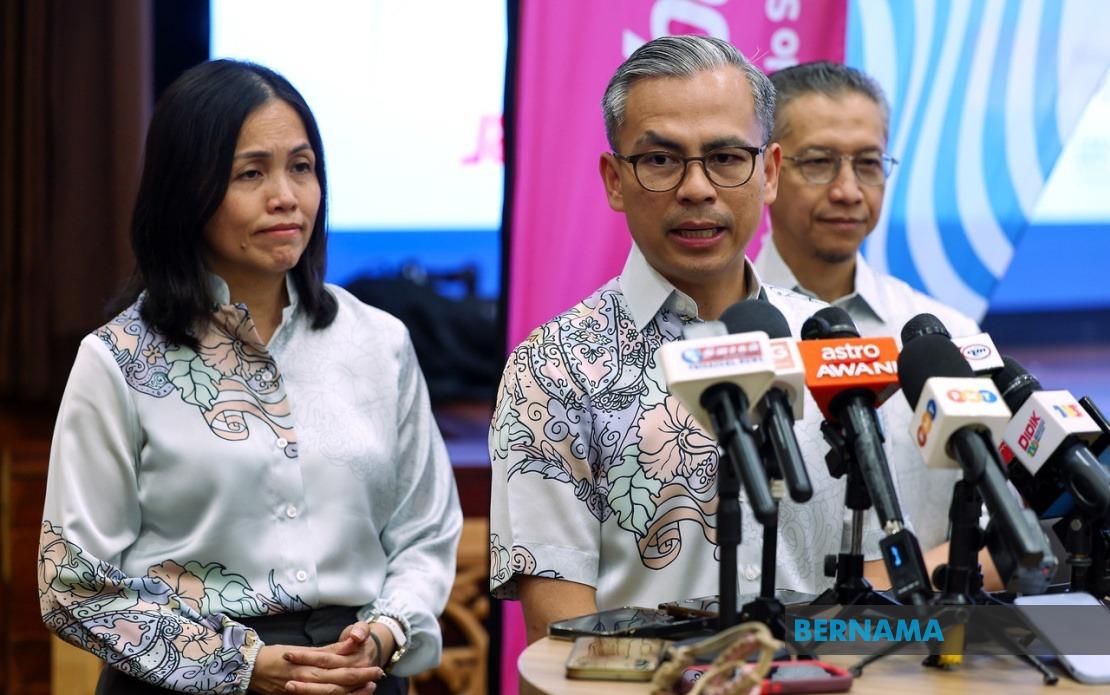
The Royal Commission of Inquiry report on Lembaga Tabung Haji is now in the hands of law enforcement and financial regulators, Communications Minister Datuk Seri Fahmi Fadzil confirmed on August 12, with multiple agencies tasked to investigate the findings and determine whether criminal charges should be pursued. The comprehensive handover signals the transition from a fact-finding inquiry into what could become active criminal investigations, potentially affecting senior officials who oversaw the fund during the period under scrutiny.
The report, released publicly on July 29, will be distributed to the Royal Malaysia Police, Malaysian Anti-Corruption Commission, authorities responsible for enforcing anti-money laundering legislation, Bank Negara Malaysia, and the Inland Revenue Board. This multi-agency approach reflects the complexity and breadth of the alleged violations uncovered during the inquiry, which examined Tabung Haji's operations between 2014 and 2020. Each organization brings distinct investigative powers and regulatory authority, suggesting that potential charges could range from corruption and misappropriation of funds to breaches of financial regulations and money laundering statutes.
Fahmi emphasized that the government would proceed methodically with investigations based on every finding documented in the RCI report, as well as supplementary information presented during a special parliamentary sitting on the matter. Finance Minister II Datuk Seri Amir Hamzah Azizan and Minister in the Prime Minister's Department (Religious Affairs) Dr Zulkifli Hasan provided additional details during that debate, giving lawmakers and the public their first opportunity to question the administration's response to the revelations. This layered information handover ensures that investigators possess not only the formal RCI findings but also the government's initial assessment of how severely each weakness affected the fund and its members' financial security.
The RCI investigation identified a catalogue of management and operational shortcomings spanning seven years. By the time the report was released, Tabung Haji had already begun implementing corrective measures, with approximately 75 percent of the inquiry's 25 recommendations addressed or underway as of late July. However, the fact that these improvements occurred only after the RCI completed its work and that major problems persisted for years raises questions about the fund's governance structures and the effectiveness of oversight mechanisms that should have caught such issues during regular audits and regulatory reviews.
Parliamentary discourse on the RCI report revealed deep political fractures. Thirty-nine MPs participated in the debate, but the session was marred when opposition parliamentarians from the Perikatan Nasional coalition staged a walkout, objecting to Speaker Tan Sri Johari Abdul's decision to proceed without Prime Minister Datuk Seri Anwar Ibrahim present. The boycott denied lawmakers opposed to the government an opportunity to scrutinize findings that could have implications for how religious funds and financial institutions under government oversight are managed. For Malaysian investors and Tabung Haji contributors, particularly those from lower-income groups relying on the fund for retirement savings and hajj financing, the debate represented a crucial moment to demand accountability.
Fahmi defended Bersatu MPs for attending the debate despite their coalition's reservations, characterizing their participation as prudent. He contrasted this with other Perikatan Nasional parties, particularly PAS, which largely absented themselves from the discussion. His remarks highlighted an awkward political reality: the RCI itself had been established in 2021 when PAS held ministerial positions and its ally Hamzah Zainudin served as Leader of the Opposition. The irony suggests that some opposition figures who may have been aware of governance issues during their time in government chose not to engage with the formal accountability process when it concluded. This political positioning complicates the narrative around institutional oversight and raises broader questions about whether Malaysia's political culture prioritizes party loyalty over public accountability.
Separately, calls from both Barisan Nasional and Pakatan Harapan lawmakers for a second RCI covering the 2021 to 2025 period remain under consideration. Fahmi noted that establishing another commission would require approval from both the Cabinet and the Yang di-Pertuan Agong, as Royal Commissions are formal instruments requiring royal sanction. The prospect of a follow-up inquiry suggests that lawmakers fear additional governance lapses may have occurred after the first RCI's investigation period concluded. Such concerns are not unfounded given that institutional problems typically do not resolve spontaneously without sustained pressure and oversight. However, initiating successive RCIs could create a perception of endless investigations without corresponding prosecutions or institutional reform.
For Southeast Asian observers, Malaysia's handling of the Tabung Haji scandal carries broader implications for how the region approaches financial governance in Islamic institutions. Tabung Haji, as one of the world's largest hajj financing schemes, operates across a predominantly Muslim region where faith-based financial institutions often enjoy elevated public trust. The documented failures at Tabung Haji underscore that size and cultural significance do not guarantee competent administration. Regulators throughout Southeast Asia may need to reassess oversight mechanisms for similarly positioned institutions to prevent comparable governance crises that could undermine public confidence in religious finance more broadly.
The investigation phase that now begins will determine whether the identified weaknesses at Tabung Haji resulted from incompetence, negligence, or deliberate criminal conduct. Successfully prosecuting cases will require investigators to establish individual criminal intent and demonstrate how specific decisions harmed the fund and its members. This evidentiary burden explains why multiple agencies are involved, as different charges require different investigative approaches. The MACC will focus on potential corruption and abuse of power, police will examine possible fraud and embezzlement, and financial regulators will evaluate whether licensed institutions and actors violated their legal obligations.
The timeline for these investigations remains unclear. The RCI report, despite its detailed findings, represents a starting point for agencies that must independently verify facts, interview witnesses, and determine whether criminal thresholds have been crossed. Malaysian authorities have not announced deadlines, meaning the investigation could extend for months or years. During this period, questions about individual accountability and the pace of justice will likely dominate discussions about how Malaysia manages its institutional failures. The resolution of this matter will significantly influence whether similar governance lapses at other public institutions face serious consequences or whether Malaysia's track record of incomplete accountability prevails once more.

