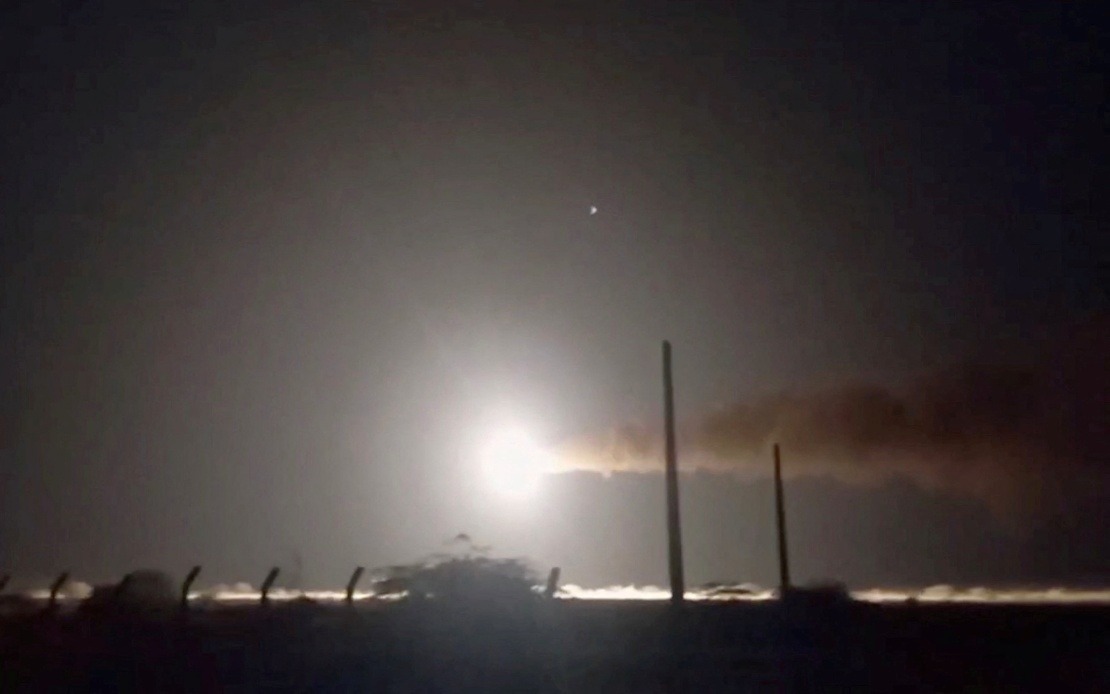
The United States Central Command confirmed on Saturday that two American military personnel lost their lives during coordinated Iranian missile and drone strikes against a US installation in Jordan on July 17. The attack, which also left one service member unaccounted for, marks an escalation in regional tensions and underscores the vulnerability of American forces stationed across the Middle East. CENTCOM stated that the fatalities occurred as US and allied forces actively defended against the incoming Iranian weapons, indicating fierce engagement during the assault.
The Iranian attack employed both ballistic missiles and unmanned aerial vehicles, demonstrating Tehran's multi-layered approach to striking US military targets in the region. This combined assault methodology represents a significant tactical evolution from previous Iranian operations and reflects the sophistication of their weapons systems. The use of multiple attack vectors simultaneously complicated defensive responses, highlighting the operational challenges faced by American air defence systems in protecting forward-deployed personnel across the vast Jordanian theatre.
Beyond the fatal casualties, CENTCOM indicated that four additional service members required medical evacuation to Jordanian hospitals for treatment of injuries sustained during the bombardment. However, the command provided encouraging news regarding their recovery, noting that these personnel have since been discharged and returned to operational status. The relatively swift medical interventions prevented what could have been additional fatalities, reflecting the importance of rapid casualty evacuation protocols and access to adequate medical facilities in the region.
Other military personnel treated for lesser injuries have resumed their regular duties, indicating that the overall health situation among affected forces has stabilised despite the severity of the initial strike. The command's emphasis on medical outcomes suggests that improved defensive measures and shelter protocols may have mitigated what could have been far more devastating consequences. Nevertheless, the incident underscores the persistent threat environment facing American military deployments across Iraq, Syria, and Jordan.
CENTCOM withheld the identities of the deceased personnel pending formal notification of their families, respecting a longstanding military tradition regarding casualty announcements. The command stated that additional information would be released only after next-of-kin notifications were completed and a 24-hour period had elapsed. This measured approach to casualty communication reflects institutional protocols designed to ensure families receive notification through official channels before public disclosure, a consideration particularly important given the emotional weight of such announcements.
The timing of this incident carries significant geopolitical implications for Southeast Asia and the broader Indo-Pacific region. As regional powers increasingly align with either US-led security architectures or alternative strategic partnerships, attacks on American military personnel abroad serve as critical indicators of escalating US-Iran tensions. Malaysia and other ASEAN nations, which maintain balanced diplomatic relations with both Washington and Tehran, closely monitor such developments as they assess their own strategic positioning and defence partnerships.
The attack represents a direct response to ongoing US military operations in the Middle East and reflects Iran's willingness to accept significant diplomatic and military consequences in pursuit of its regional objectives. The incident occurred against a backdrop of heightened tensions stemming from Israeli-Palestinian conflict dynamics and broader Persian Gulf security concerns. For Malaysia's foreign policy establishment, such escalations in the Middle East create pressure to clarify positions on international security norms while maintaining pragmatic engagement with all parties.
The location of the attack in Jordan carries particular significance, as the kingdom hosts a substantial US military presence supporting operations across the region. Jordan's strategic position as a buffer state between Israel and Iraq makes it simultaneously valuable to American strategic interests and vulnerable to Iranian retaliation. The attack demonstrates Iran's capacity to strike US targets across the Levantine theatre, extending beyond Iraq and Syria where American forces have previously faced Iranian-backed militant assaults.
This incident will likely prompt reassessment of force protection measures at US installations throughout the Middle East, potentially including enhanced air defence systems, dispersed basing arrangements, and adjusted operational patterns. Such adaptations could have ripple effects across allied militaries in the region, including those of Arab partners and Israel. For countries like Malaysia that maintain defence relationships with various powers, observing how the US adjusts its regional posture provides insights into evolving security dynamics that may eventually affect Southeast Asian strategic calculations.
The missing service member situation adds uncertainty to the casualty assessment, as recovery operations may extend the incident's immediate aftermath. Search and rescue efforts in the aftermath of such strikes typically involve considerable complexity, particularly if debris or rubble complicates location efforts. The presence of a missing person keeps the incident in active crisis management mode rather than allowing transition to damage assessment and recovery phases.
Regionally, the attack carries implications for coalition operations against ISIS remnants in Iraq and Syria, where US personnel operate in coordination with local forces. The Iranian strike may embolden anti-US militant groups in those theatres while simultaneously encouraging some partners to reassess their alignment with American-led efforts. The security environment across the broader Middle East, already volatile, becomes increasingly unpredictable when major powers engage in direct military exchanges.
For Malaysian observers, the incident reinforces the reality that despite geographic distance, Middle Eastern instability can affect Asian security architecture through its impact on great power relationships and global strategic competition. As the United States contends with Iranian assertiveness in its traditional sphere of influence, its capacity to maintain security commitments across the Indo-Pacific may face competing demands. Understanding these distant Middle Eastern dynamics thus becomes relevant to Southeast Asian strategic planning and alliance management.

