Vietnamese police in Hanoi have levelled smuggling charges against two executives in connection with a sprawling operation that illicitly imported and distributed over 10,000 metric tonnes of frozen chicken feet across the country between 2023 and 2026. The scheme, valued at more than US$13 million, involved importing poultry products from countries with active disease outbreaks while circumventing customs regulations and domestic food safety protocols.
Authorities identified the accused as Nguyen Thi To Loan, 47, who operated ABF Food Import-Export JSC in Ninh Binh Province, and Trang Tuyet Ngoc, 45, who held a senior position at An Binh Group overseeing distribution networks. Both individuals have admitted to all charges, according to police statements released on Friday, June 19. The confessions represent a significant development in an investigation that revealed systematic circumvention of Vietnam's strict regulations governing the importation of poultry and related products.
Under Vietnamese law, frozen poultry products sourced from countries experiencing active avian influenza outbreaks or other endemic poultry diseases face stringent import restrictions. Such products may enter Vietnamese territory exclusively for industrial processing and subsequent re-export to third countries, with strict prohibitions against domestic sales or consumption. These regulations exist to protect public health and prevent the introduction of disease vectors into the domestic food supply chain. The scheme uncovered by authorities violated these safeguards entirely, creating potential exposure for Vietnamese consumers and food businesses.
The scale of the operation became apparent through customs records scrutiny. Between 2023 and 2026, ABF Food Import-Export formally declared 339 shipping containers of frozen chicken feet on customs documentation, all ostensibly destined for processing and re-export as permitted under law. However, rather than fulfilling these legal obligations, Loan directed Ngoc to distribute the entire shipment throughout the domestic market across multiple provinces including Hanoi, Cao Bang, Ninh Binh, Quang Ninh and numerous other regions. This deliberate diversion represented a systemic breach of import compliance and customs transparency.
The total declared value of the smuggled merchandise exceeded VNĐ347 billion, equivalent to approximately US$13 million. Notably, the operators evaded all applicable import duties on this substantial cargo, compounding the criminal liability by adding tax evasion to their charges. The unreported financial benefit generated through domestic sales without proper customs declarations and regulatory compliance demonstrates the commercial sophistication of the operation.
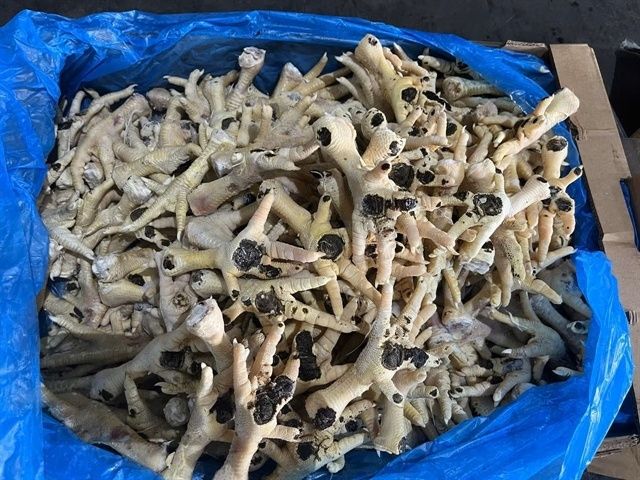
Police raids on cold-storage facilities yielded alarming discoveries regarding the condition of the seized inventory. Officers uncovered more than 2,000 metric tonnes of frozen chicken feet held across multiple warehouse locations. The An Viet 2 freezer facility situated in Hanoi's Quang Minh Industrial Zone contained over 1,000 metric tonnes, including approximately 260 metric tonnes that had passed expiration dates and displayed visible deterioration including mold growth and putrefaction. Most concerning, investigators observed that these degraded shipments appeared staged for continued distribution despite their contaminated condition, suggesting deliberate intent to sell spoiled products to unsuspecting customers.
A subsequent raid at the THL cold-storage warehouse facility in Lang Son Province in northern Vietnam recovered an additional 1,030 metric tonnes, further illustrating the geographic scope and logistical complexity of the distribution network. The discovery of such vast quantities across multiple storage locations indicates sophisticated supply chain infrastructure designed to facilitate widespread distribution while evading detection. The preservation of separate stockpiles suggests compartmentalisation intended to obscure the operation's full extent.
The charges filed against both suspects invoke Article 188 of Vietnam's 2015 Penal Code, which addresses smuggling activities. This statutory framework provides penalties for individuals engaged in importing or exporting goods in violation of state regulations, particularly when such activities involve circumvention of customs procedures and duties. The explicit confessions by both defendants substantially strengthen the prosecution's case and indicate the strength of evidence gathered during the investigation.
For readers across Southeast Asia, this case highlights broader vulnerabilities within regional food supply chains and customs enforcement mechanisms. Vietnam remains a crucial agricultural hub within ASEAN, with significant frozen poultry exports to neighbouring countries including Malaysia, Thailand, and Cambodia. The discovery of systematic regulatory violations by major import companies raises questions about verification procedures at regional borders and the potential exposure of other markets to compromised products. Food safety authorities across ASEAN may need to reassess import verification protocols for Vietnamese poultry and processed poultry products.
The investigation remains ongoing, with Hanoi police actively working to identify additional individuals and organisations involved in the larger distribution and supply network. Authorities are examining whether complicit participants existed within food-service businesses across the provinces where the chicken feet were sold, as well as investigating potential involvement of cold-storage facility operators who housed the products. The investigation's continuation suggests that police believe the scheme extended beyond the two primary defendants, likely involving multiple layers of logistical support and customer relationships that facilitated the large-scale distribution.
This case underscores persistent challenges within Vietnam's food import and safety regulatory frameworks, particularly concerning oversight of products from disease-risk countries. The systematic nature of the violations suggests that ABF Food Import-Export exploited existing gaps in verification procedures, possibly through falsified documentation or corrupted officials within the customs system. Whether accompanied by any regulatory or enforcement reforms, the prosecution of these high-profile cases demonstrates renewed commitment to food safety compliance, yet observers question whether existing penalties adequately deter similar future violations given the substantial profits available through such schemes.