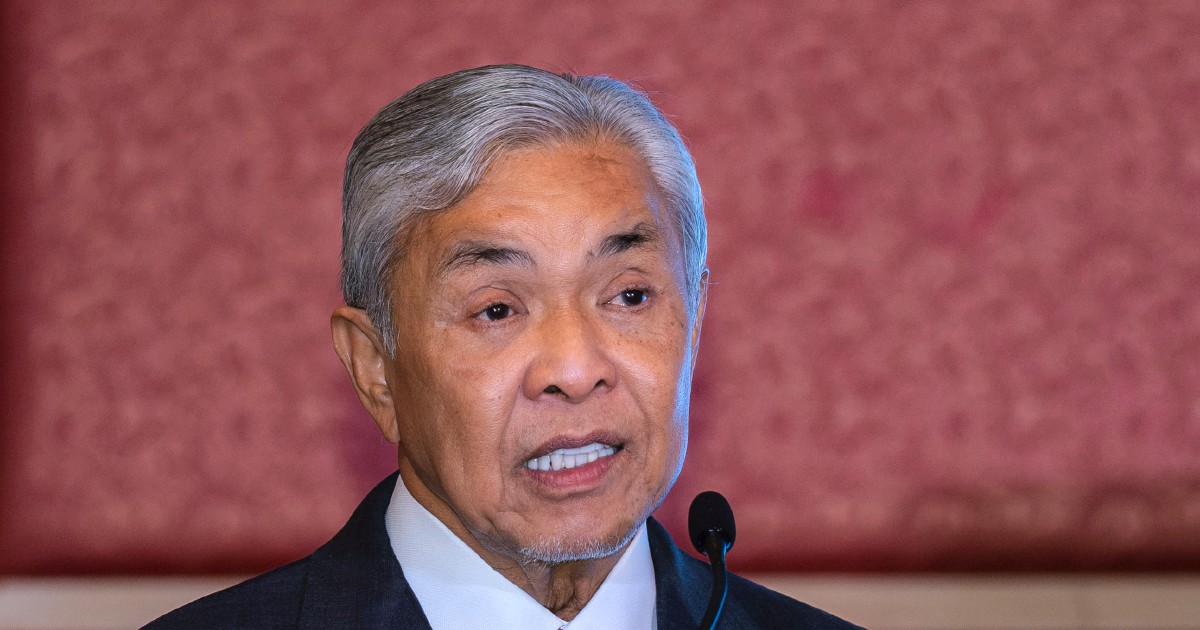
Deputy Prime Minister Datuk Seri Dr Ahmad Zahid Hamidi has signalled a fundamental shift in how Malaysia's Immigration Department will operate, positioning the agency as far more than a custodian of border security. Speaking in Cyberjaya, Zahid articulated a vision that expands the department's remit to encompass economic development, strategic national interests, and technological advancement—a repositioning that reflects broader government thinking about how traditional institutions can contribute to higher-order policy objectives.
The call for the Immigration Department to evolve its mandate represents a recognition that modern nation-states cannot compartmentalise their functions. Historically, immigration agencies worldwide have focused narrowly on border enforcement, visa processing, and migrant documentation. Zahid's intervention suggests Malaysia intends to harness immigration policy and the department's institutional capacity as active levers for competitiveness and strategic positioning in an increasingly complex regional and global environment.
The economic growth mandate places the Immigration Department at the intersection of labour policy, business facilitation, and demographic strategy. This includes streamlining visa procedures for skilled foreign workers, facilitating talent acquisition in sectors where Malaysia faces shortages, and ensuring the immigration system supports rather than impedes business expansion. For Malaysia's manufacturing heartland and services sectors, simplified entry procedures for managerial and technical staff can reduce friction costs. Similarly, attracting high-value entrepreneurs and investors depends partly on immigration efficiency and predictability—factors where neighbouring Singapore has historically outperformed Malaysia.
National security considerations form the second pillar of Zahid's vision, though this mandate requires careful calibration. Enhanced intelligence capabilities to identify security threats, coupled with advanced data-sharing protocols with regional and international partners, are increasingly necessary as migration patterns become more complex. The department must balance its role as a security screener with the economic and humanitarian imperatives that drive cross-border movement. This is particularly relevant for Malaysia given its geographic position as a regional hub for both legitimate movement and, occasionally, transit by individuals of security concern.
Digital transformation emerges as perhaps the most operationally urgent of the four mandates Zahid outlined. Malaysia's immigration systems have historically lagged technological peers, creating bottlenecks that frustrate both legitimate travellers and businesses. Modernising the departmental infrastructure—implementing biometric integration, real-time data systems, and automated processing—offers multiple dividends: faster service delivery, reduced corruption opportunities, better analytics, and enhanced security screening capacity. Digital platforms also enable the department to function as an enabler of Malaysia's broader digital economy narrative.
The fourth dimension of Zahid's framework addresses the department's structural and institutional capacity. Transforming mindsets within a large bureaucracy accustomed to regulatory gatekeeping is itself a significant challenge. Staff retraining, incentive restructuring, and cultural change are necessary preconditions for success. Departments historically evaluated on enforcement metrics may resist measures that prioritise facilitation and economic contribution. Yet without such internal repositioning, external mandates amount to rhetoric.
This repositioning carries particular resonance for Malaysia's ongoing efforts to boost competitiveness and attract foreign direct investment. Singapore and Thailand have leveraged immigration flexibility as a competitive advantage, smoothing entry for skilled migrants and high-net-worth individuals while maintaining security vigilance. Malaysia has occasionally been perceived as less welcoming, with bureaucratic frictions and inconsistent policies deterring some potential migrants and investors. A genuinely transformed Immigration Department could help narrow that gap.
Regional labour dynamics also motivate the change. Southeast Asia experiences ongoing talent circulation, with skilled workers moving across borders seeking better opportunities and compensation. Malaysia's ability to both retain local talent and attract external expertise depends partly on immigration systems that function smoothly and predictably. Competition from Singapore, Dubai, and increasingly Australia for Southeast Asian professionals is intense. Immigration policy that actively facilitates rather than merely regulates this movement becomes a soft power instrument.
The economic dimension intersects with Malaysia's demographic challenges. As birth rates stagnate and the population ages, strategically managed immigration becomes necessary to sustain labour force growth in key sectors and support tax bases that fund public services. This reframing—immigration as solution rather than problem—requires the department to adopt forward-looking analytics about sectoral labour demand and demographic trends rather than simply reacting to applicant flows.
Implementing Zahid's vision will ultimately depend on resource allocation, legislative changes, and sustained political commitment beyond the announcement phase. Creating truly integrated data systems requires substantial technology investment. Training staff to operate in a facilitation-oriented rather than restriction-oriented mindset requires time and cultural reinforcement. Building regional intelligence-sharing arrangements demands diplomatic coordination and trust-building. None of this happens through rhetoric alone.
The announcement also reflects confidence in Malaysia's institutional capacity and administrative sophistication. Positioning the Immigration Department as a strategic economic tool assumes the government can execute complex policy integration and avoid the common pitfall of transformational initiatives that remain mere aspiration. Success will be measured not in speeches but in concrete metrics: visa processing times, investor satisfaction, talent retention rates, and ultimately, whether the department contributes meaningfully to Malaysia's competitive positioning in the region.

