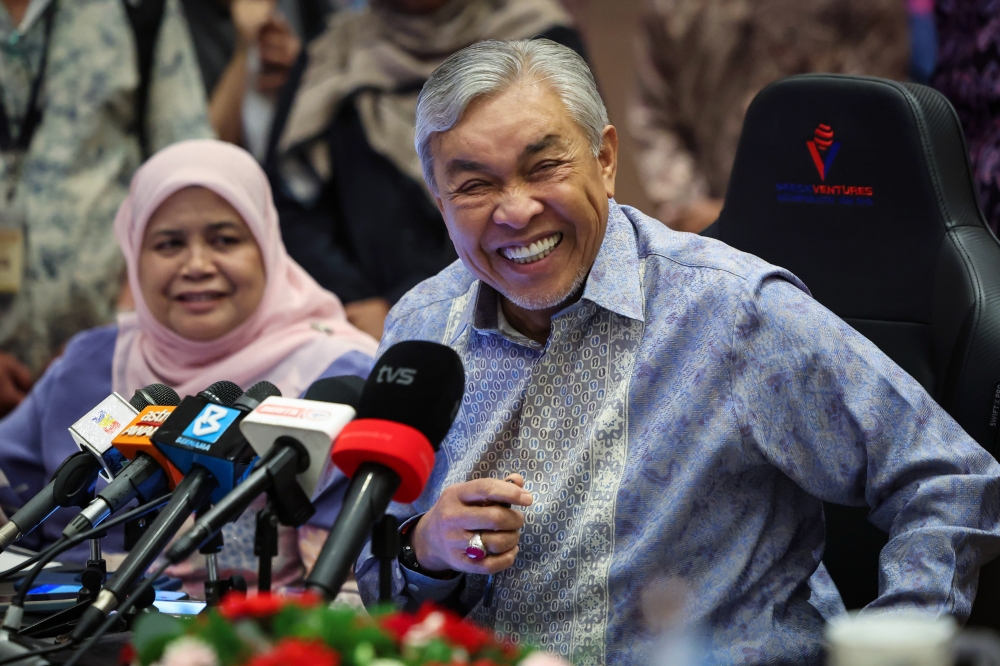
UMNO president Zahid Hamidi has moved to quell persistent speculation about political instability by reaffirming Barisan Nasional's unwavering commitment to the Unity Government framework, declaring that the coalition will remain steadfast until parliament concludes its current term. Speaking in George Town on July 23, Zahid made unambiguous statements rejecting any notion of sudden political shifts or controversial manoeuvres that might undermine the current administration's stability.
The assurance comes amid ongoing whispers within Malaysian political circles about potential coalition realignments, with observers occasionally invoking reference points from regional political upheavals. Zahid's language—explicitly rejecting any "Bangkok Move" or "Dubai Move"—appears designed to address these murmurs directly and comprehensively. His phrasing signals that Barisan Nasional categorically rules out any backstage negotiations or sudden procedural manoeuvres that might destabilise the government or reshape parliamentary mathematics in unexpected ways.
The Unity Government, formed following the 2022 general election, has brought together Barisan Nasional, Pakatan Harapan, and other coalition partners under Prime Minister Anwar Ibrahim's leadership. This arrangement fundamentally altered Malaysia's political landscape by bringing former opposing blocs into cooperative governance. For BN specifically, this framework has represented a significant shift from the party's traditional role as the dominant governing coalition that ruled Malaysia for nearly seven decades before the 2018 electoral shock.
Zahid's public reaffirmation serves multiple strategic purposes within the current political environment. First, it provides reassurance to coalition partners and international observers that Malaysia's political system has achieved sufficient stability to enable coherent policymaking and implementation. Second, it signals to BN's own grassroots membership that leadership prioritises institutional stability over short-term factional advantage, a message particularly important given UMNO's complex internal dynamics and the competing ambitions among senior figures.
The commitment also reflects the practical reality that the Unity Government structure, while sometimes described as unstable by critics, has proven sufficiently durable to govern for an extended period. Both BN and Pakatan Harapan have discovered that managing coalition politics, despite ideological differences, offers advantages over the uncertainty of early elections or protracted political instability. For BN especially, maintaining the current arrangement allows the party to remain part of government while rebuilding its organisational capacity and electoral appeal following its 2022 defeat.
From a Malaysian governance perspective, Zahid's statement carries particular weight because Barisan Nasional holds substantial parliamentary seats and represents geographically diverse constituencies. Any sudden withdrawal or destabilisation attempt by BN would indeed pose genuine risks to government continuity. The clarity of his language—rejecting not merely the possibility but even entertaining the notion—appears calibrated to forestall future speculation and rumour-mongering that might otherwise gain traction in media commentary or international reporting.
The reference to regional political incidents reflects how Malaysian political observers increasingly contextualise domestic developments within broader Southeast Asian patterns. The specificity of Zahid's dismissal suggests that such comparisons and speculation have reached sufficient prominence to warrant direct, public refutation. This also indicates how interconnected Southeast Asian politics have become, with observers drawing lessons from developments in Thailand, Bangladesh, and Gulf-based political networking across the region.
Looking forward, Zahid's commitment provides an important foundation for the government's policy agenda. The Unity Government framework, whatever its internal tensions, requires predictability regarding the fundamental coalition structure. Major policy initiatives—whether relating to the economy, constitutional matters, or long-term infrastructure projects—depend on reasonable confidence that parliamentary support will remain forthcoming. Zahid's statement essentially signals that BN will not weaponise its parliamentary strength to extract concessions or engineer political advantage through threat of withdrawal.
For Malaysian citizens and businesses, this reassurance about governmental continuity has practical implications. Policy consistency, investor confidence, and administrative effectiveness all benefit from political arrangements that, while perhaps lacking dramatic ideological cohesion, provide operational stability. The government can therefore proceed with medium-term planning without constantly managing the risk of sudden coalition collapse or disruptive internal realignments.
Yet the very necessity of Zahid making such explicit statements also reveals underlying fragilities within the Unity Government arrangement. That coalition stability requires periodic reaffirmation from senior leaders suggests ongoing internal doubts or external pressures that threaten the framework's permanence. The frequency and emphasis of such commitments may itself become an indicator of coalition health—excessive reassurances sometimes signal deeper problems rather than resolving them.

