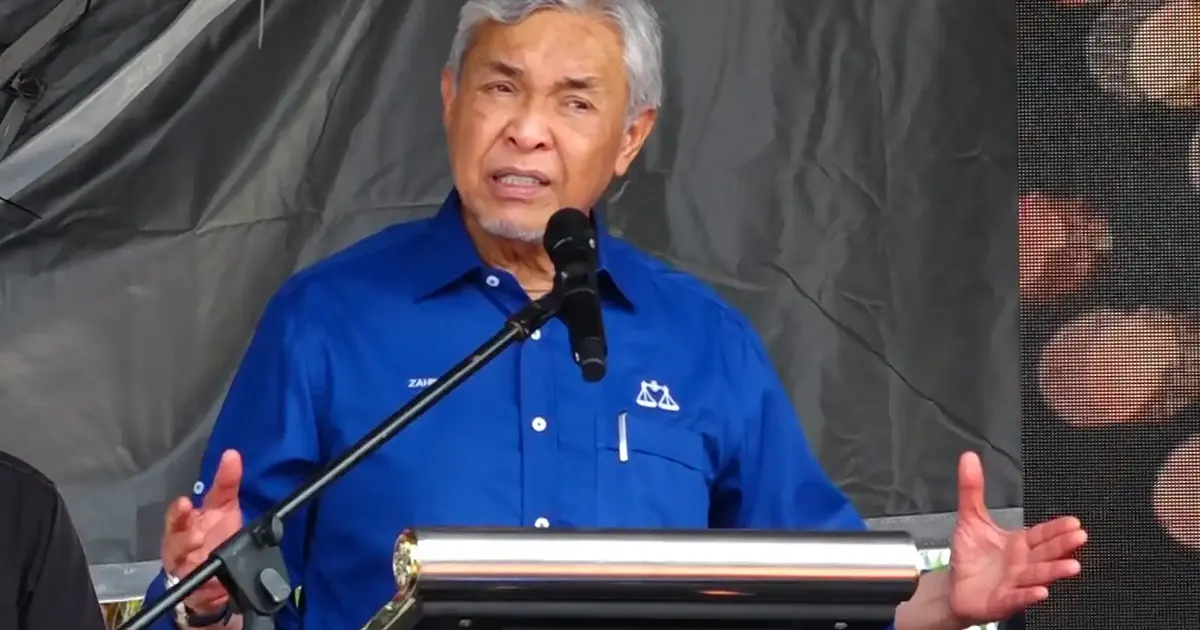
UMNO president Zahid Hamidi has told the party's electoral apparatus to dismiss any public statements made by former leader Puad Zarkashi concerning the Barisan Nasional candidate slate for the upcoming Johor state election. The directive represents an attempt by the ruling party's top leadership to contain internal dissent and maintain a unified front as it prepares for what could prove a closely contested state-level contest.
Puad Zarkashi, who previously held significant influence within UMNO's organizational structure, has emerged as a vocal critic of certain nomination decisions made by the party hierarchy. His public commentary on the choice of candidates selected to represent the coalition in Johor has evidently drawn the attention of senior party officials, prompting Zahid to intervene with guidance on how party machinery should respond to such criticism. The tensions underscore ongoing divisions within Malaysia's largest Malay-Muslim political party as it navigates the complexities of candidate selection and internal political rivalries.
The Johor state election looms as a crucial test for UMNO and its broader Barisan Nasional coalition, which has faced considerable electoral challenges in recent years following significant losses in the 2022 general election. The state remains politically important both symbolically and strategically, given its position as a stronghold that has traditionally favoured the ruling coalition. A credible performance in Johor would bolster the coalition's claims to legitimacy and provide momentum heading into future electoral contests at national and state levels.
Zahid's instruction to party operatives to essentially overlook Puad's remarks reflects a calculated approach to managing internal party discipline without escalating public conflict. Rather than engaging directly with the criticisms raised, the UMNO president has sought to minimize their political impact by framing them as noise that the party machinery can safely ignore. This strategy aims to prevent Puad's comments from gaining traction among grassroots members or attracting excessive media attention that might amplify divisions during a sensitive electoral period.
Puad's critical stance, however, signals genuine substantive disagreements within UMNO over the direction of candidate selection and the potential vulnerability of certain nominees. When former senior figures within a major political party begin publicly questioning nomination decisions, it typically reflects deeper organizational tensions and suggests that consensus among the party leadership remains fragile. The fact that Zahid felt compelled to publicly address the matter indicates that Puad's criticism has struck a nerve within the party establishment.
For Malaysian readers and observers of national politics, the Puad-Zahid dynamic illustrates a broader pattern of factional competition within UMNO that has persisted despite attempts to present a unified public image. The party has historically been prone to internal rivalries centred on personality, patronage networks, and competing visions for the organization's future direction. These dynamics have become increasingly visible to the general public in recent years, potentially undermining public confidence in UMNO's governance and organizational coherence.
The timing of this dispute also carries significance given UMNO's ongoing efforts to rebuild its political credibility and electoral prospects following major setbacks. The party requires maximum organizational cohesion and message discipline to effectively compete against a fractured but energetic opposition. Internal criticism, particularly from respected former leaders like Puad, risks distracting from the unified campaign message that UMNO seeks to project to Johor voters and the broader electorate.
Zahid's public response suggests confidence that the UMNO party machinery will follow his instruction to disregard Puad's commentary. The authority conveyed in such a directive depends entirely on the actual willingness of party members at all levels to comply. Should grassroots UMNO members or mid-level party officials view Puad's criticism as legitimate and worthy of serious engagement, Zahid's attempted suppression could backfire by appearing heavy-handed or dismissive of legitimate internal debate.
The broader question underlying this dispute concerns what role space remains within UMNO for internal criticism and different viewpoints on important decisions like candidate selection. Healthy political organizations typically benefit from internal debate that tests decisions against competing perspectives. However, excessive internecine conflict during electoral campaigns can prove damaging to overall performance and party morale. Zahid's approach attempts to resolve this tension by essentially silencing criticism in the short term, though the underlying disagreements will likely persist beyond the Johor election.
For Southeast Asian observers tracking Malaysian politics, this incident exemplifies the ongoing struggle within UMNO to balance party unity with organizational legitimacy. The manner in which UMNO manages such internal disputes will influence its capacity to govern effectively and maintain public trust. The Johor election will provide the first real test of whether Zahid's directive successfully suppresses internal dissent or whether underlying divisions continue to simmer beneath the surface.

